B2Brain vs. Badge Scanners
Last updated
The default lead-capture tool at most trade shows is a badge scanner provided by the event organizer — typically around $600 per device, per show. Here's how that compares to B2Brain.
| Capability | Standard Badge Scanner | B2Brain |
|---|---|---|
| What gets captured | Contact info only | Contact + pain point + use case + buying signals |
| Qualification | None — done after the show, if at all | Signals surfaced during the conversation |
| Meeting booking | Not available | One-tap booking before the prospect leaves |
| Follow-up speed | Days to weeks, manual | Same day, context-rich, automated |
| CRM sync | Manual CSV import | Native real-time Salesforce + HubSpot sync |
| Pipeline attribution | Difficult to prove | Per-show, per-rep, per-conversation |
| Show-over-show memory | Resets every event | Cumulative account history |
| Cost shape | ~$600 per device, every show | Subscription or per-event pricing |
For a 4-rep team attending 8 shows a year, badge-scanner rental alone runs close to $19,200 annually — for a tool that returns a contact list and nothing else.
What the difference looks like in practice
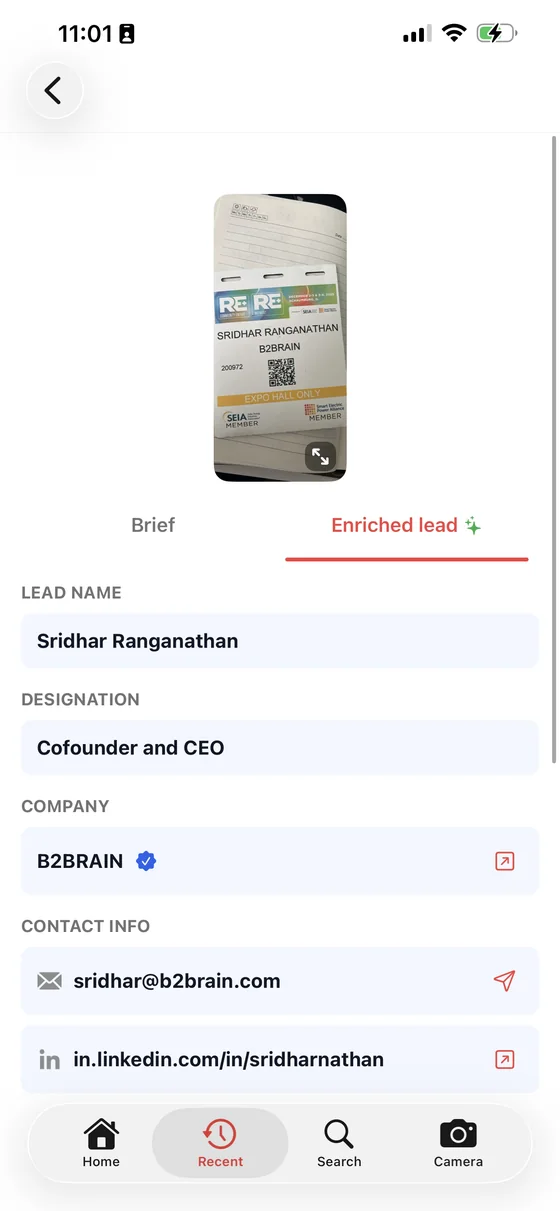
A badge scanner hands back the fields printed on the badge. The same capture in B2Brain comes back with the job title, the verified company, a working business email and a LinkedIn profile attached.
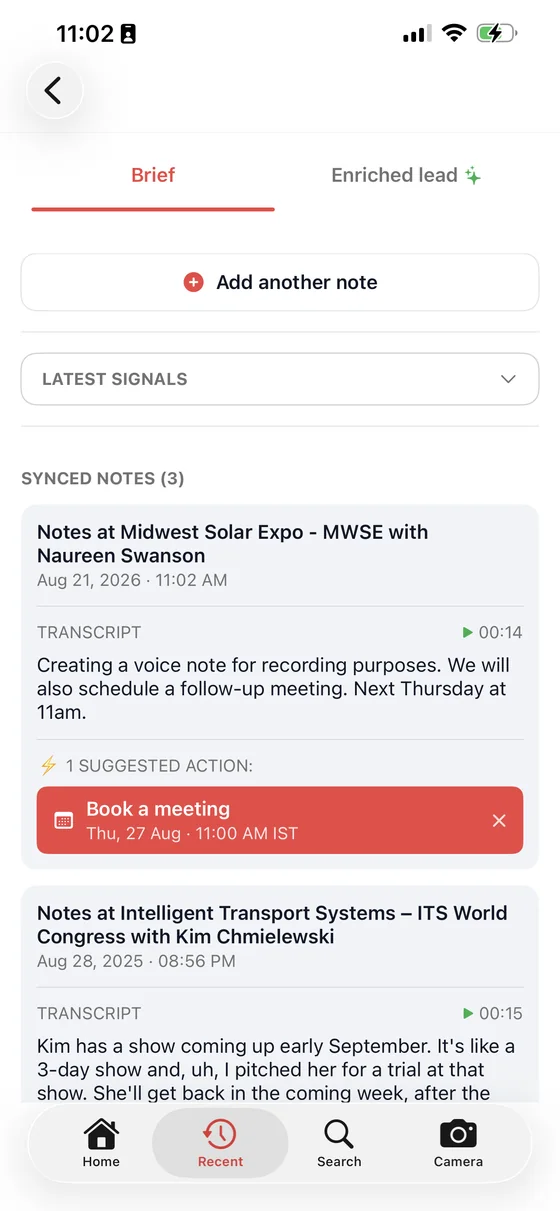
The second difference is what happens next. A scanner produces a row in a spreadsheet. B2Brain reads the note taken at the booth and proposes the follow-up meeting it implies, with the date and time already filled in.