B2Brain vs Popl: Compared on Capture Method, CRM Sync, and Team Workflow
Written by
Sridhar Ranganathan
Last Updated :
August 24, 2026
Skim in:
13
mins
TL;DR
Popl started as a digital business card platform and added event lead capture later, so its design centre is the individual rep, not the field marketer funding the booth.
B2Brain captures badges, cards, and no-badge floor contacts with voice context, books the discovery meeting at the booth, and writes it natively to Salesforce or HubSpot.
B2Brain reports 52% Leads to Meeting on the floor against an 8% industry average post event, while no competitor publishes an LTM number at all.
Popl quotes custom licences; buyers report $6,000 to $17,500 credit tiers plus roughly $0.50 to $2.00 per enriched lead, against B2Brain per-event pricing from $200.
Popl holds 4.6 out of 5 across more than 6,400 G2 reviews while B2Brain sits at 17, a gap we concede and counter on outcome rather than volume.
Normalise every quote by season spend divided by meetings booked, then test one mid-size show before migrating a full calendar.
Q1. B2Brain vs Popl: which one should you run at your next trade show? [toc=1. Verdict at a Glance]
At 9am on a Monday, a field marketing head I work with opens the show recap. On her screen sits a spreadsheet of 412 badge scans from a $38,000 booth. Her CEO asks one question, and it is not about scan volume. He asks where the pipeline is.
⭐ The verdict before you read the table
Choose B2Brain if you fund the booth and must show pipeline. B2Brain captures conversation context, books the discovery meeting on the floor, and writes attribution into Salesforce or HubSpot in real time. Choose Popl if your reps mainly need fast digital card exchange and third-party enrichment. B2Brain reports Leads to Meeting. Popl reports leads captured.
That spreadsheet is the real product of most event stacks. A 2024 CEIR study found only 47% of exhibitors track leads through the sales cycle. The leak is not the badge. It is the three weeks between the badge and the follow up.
💰 The seven criteria that actually decide this
B2Brain vs Popl vs the organizer's badge scanner, seven buying criteria
Criterion
B2Brain
Popl
Organizer badge scanner
Capture surfaces
Badge, business card, no-badge floor contacts, voice context
QR, LinkedIn QR, business card OCR
Badge fields only
Offline behaviour
Works offline, syncs on reconnect
Connectivity dependent
Device dependent
Meeting booked at the booth
Core workflow, AE calendar pulled live
Not the core motion
-
CRM sync model
Salesforce-native and HubSpot-native, real-time write
Sync plus export, varies by plan
Post-show CSV
Pipeline attribution
Per-show pipeline, LTM, morning-after report
Capture and engagement analytics
None
Cost shape
Per-event Show Pass from $200, or annual
Custom quote, buyer-reported credit tiers
Roughly $600 per device per show
Built for
Field marketing head, VP Sales, RevOps
Individual rep, card exchange
Whoever rents the device
B2Brain measures the outcome its buyers get judged on, which is meetings booked and pipeline sourced per show. That is the whole reason the row order above looks the way it does. If you want the mechanics behind those rows, how event lead capture works walks through the three-motion workflow.
⚠️ What buyers say when the scan is the job
"I didn't really use Popl because it didn't scan bar codes like I thought it would. Scanning badges should have given the name and contact info, but it didn't work when I tried it." — Drew D., Reviewer Popl G2 Verified Review
"The cost is very high considering it's mostly a digital Buisness card sharing app it's not much different then adding a QR code to my Buisness card." — Brooke N., Reviewer Popl G2 Verified Review
Both are low-star reviews, so hold them beside the aggregate. Popl carries 4.6 out of 5 across more than 6,400 G2 reviews, which is real social proof my company cannot match today. The fuller pattern sits in this breakdown of Popl reviews across G2 and Capterra.
✅ Pick this if
Pick Popl if card exchange and enrichment volume are the job, and follow up lives with an SDR team afterwards. Pick B2Brain if one in five booth visitors has to become a qualified meeting, because that is the math a $70,000 booth demands.
B2Brain is built for the person who has to answer the pipeline question with a number, so it books the meeting on the floor and reports LTM at 52% on the floor against an 8% industry average post event. I would rather be measured on that than on scan counts. If you want to see it on your own show calendar, Book a Demo.
Q2. Who is each tool actually built for, the rep or the field marketer? [toc=2. Who Each Is Built For]
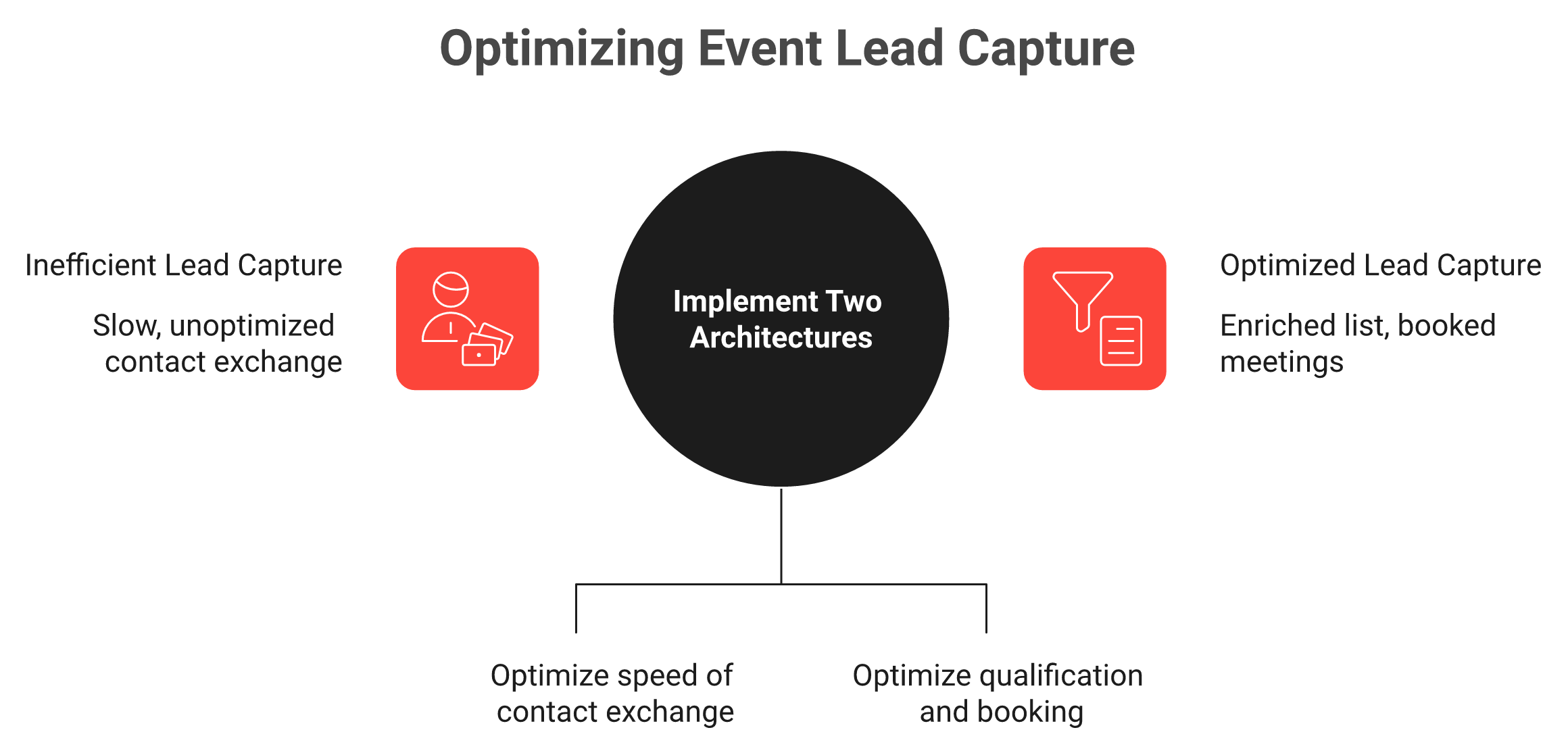
Popl began as a digital business card company and added event lead capture later, so its centre of gravity is the individual rep. B2Brain began at the field marketer's problem, which is proving pipeline from a $20,000 to $200,000 booth. Qualification, on-floor booking, and per-show attribution ship as one workflow instead of three add ons.
🧩 Popl's starting point is the card
Popl describes itself as an AI-powered event lead capture and digital business card platform. Read that order carefully. The card came first, and the booth features grew on top of it.
That lineage is not a flaw. It makes Popl genuinely good at rep-side exchange, which is what a salesperson walking a floor wants, and it is why the shortlist of Popl alternatives splits along buyer lines rather than feature lines.
⭐ The field marketer is a different buyer entirely
The same category, two different buyers: one design optimises the exchange, the other optimises what happens after it.
The person who signs the booth invoice is not the person scanning the badge. She owns the budget, the show calendar, and the number in the quarterly review. Sridhar's shorthand for this inside B2Brain is blunt, "we are the brain, they are the face."
B2Brain deliberately skips digital business cards, because a field marketer running 100 shows a year does not need a viral rep feature. She needs reps to come back with meetings, not with contacts. That is the whole premise of the workflow built for booth teams.
✅ Why buyer identity predicts every feature difference
Once you know who a tool was designed for, the differences stop looking random. Rep-first tools optimise the exchange. Marketer-first tools optimise what happens after the exchange.
One field marketer put the failure mode better than any vendor deck. Her complaint was that teams scan a lead, hand it to sales, and let sales filter out the garbage later. Her fix was scoring the lead hot, warm, or cold at the moment of capture, so the filtering work is already done.
B2Brain runs exactly that sequence, called the Golden Workflow, which is scan, add context, then execute the next best action. Booking a meeting is simply today's most common next best action, and we configure others per customer.
⚠️ Where B2Brain is the wrong choice
Being honest here saves everyone a bad quarter. B2Brain is not for solo booths, consumer-facing sellers, teams with no CRM, one-off attendance, or developer summits. The native app is iOS first, and third-party enrichment depth is lighter than Popl's.
B2Brain was designed around the Monday pipeline review, which is why qualification and meeting booking sit inside capture rather than beside it. If your problem is card exchange, that architecture is overkill.
Q3. How does capture method compare on the floor, badge, card, QR, or voice context? [toc=3. Capture Method Compared]
Popl captures via QR, LinkedIn QR, and business card OCR (optical character recognition, which reads text from a photo). Proprietary badge-format coverage is narrower than dedicated retrieval tools. B2Brain captures badges, cards, and no-badge floor contacts, then attaches voice or text context plus a qualification score. The real test is not scan count. It is whether the reason a lead mattered survives to follow up.
📱 Scan surfaces and the expo hall reality
Badge formats differ by organizer, and some are locked to the organizer's own reader. Wi-Fi at 4pm on Day 2 is worse than any demo environment. The trade-offs across formats are laid out in this guide to universal lead capture across every show floor.
B2Brain records offline and syncs on reconnect, which matters in metal-roofed halls where signal dies at the back of a 20 by 20 booth. Ask any vendor what happens to a scan with zero bars, and get the answer in writing.
⏰ The memory tax nobody prices in
Here is the part reps underestimate. By hour six, every conversation blends into the next one.
A practitioner I trust gives one rule for this. Write down a single distinguishing detail about the person, because otherwise you will not remember one from the next. That detail is what makes the follow up email sound human.
B2Brain measures this differently from a notes field, since a rep taps once, talks for about 30 seconds, and gets a structured CRM record in roughly 4.2 seconds. Context is the asset, not the contact.
⚠️ Capture failure receipts from verified reviewers
"Scanning badges should have given the name and contact info, but it didn't work when I tried it. I couldn't figure out how it works, and I needed it for scanning." — Drew D., Reviewer Popl G2 Verified Review
"The user experience was confusing and I still do not know where the information or the person I connected with is. I don't think it should prompt people to make an account to save the information of the person they just met." — Liliana P., Reviewer Popl G2 Verified Review
"Having to create an account to view the info is not practical or helpful. That creates a HUGE barrier that other competitors don't have." — Mike K., Reviewer Popl G2 Verified Review
These are one-star and half-star reviews, and the aggregate is 4.6 out of 5. My read is that they cluster on one theme, which is friction between the scan and a usable record. Reliability patterns across the category sit in this comparison of lead capture apps for trade shows.
✅ The ten badge test to run at your next show
Run this before you sign anything. Capture ten leads in the tool, in airplane mode, with a real badge and a real card.
Then check three things. Did the record arrive complete, did the context survive, and could a colleague act on it without calling you?
B2Brain treats the captured context as the deliverable, so the qualification and the note travel with the lead into Salesforce or HubSpot instead of being reconstructed days later. That is the difference between a lead list and a briefed follow up.
Q4. Where does the intelligence come from, a cold database or your own CRM pipeline? [toc=4. Enrichment and Pre-Event Intel]
Popl enriches captured contacts from third-party data and sells event intelligence as a prediction database. B2Brain grounds its intelligence in your own CRM, meaning open opportunities, target accounts, and past conversations, and briefs reps before the doors open. One tells you who a stranger probably is. The other tells you which of your accounts is walking the floor.
🧠 Two very different definitions of enrichment
Enrichment usually means appending firmographic data to a scanned contact. That is genuinely useful, and Popl's enrichment maturity is ahead of ours today. I will not pretend otherwise.
The question I keep asking is what the data is for. Appending a company size does not tell a rep whether this account already has an open opportunity. The distinction between prediction data and pipeline data is unpacked in this piece on event intelligence for exhibitors.
⚠️ The trust problem when the cold record disagrees with your CRM
Field marketers have lived this. A record arrives with a stale title, a generic company email, and a mismatched account name.
"Cannot seem to upload my contacts from my phone to the app. The app asked me for access to my contacts, but there doesn't seem to be an upload contacts button." — Howard N., Reviewer Popl G2 Verified Review
RevOps then spends a week merging duplicates. B2Brain enriches through the customer's own CRM, which is the data the revenue team already trusts, rather than a cold database. The mechanics of that write are covered in this walkthrough of lead capture into Salesforce.
🎣 Before, during, and after on one layer
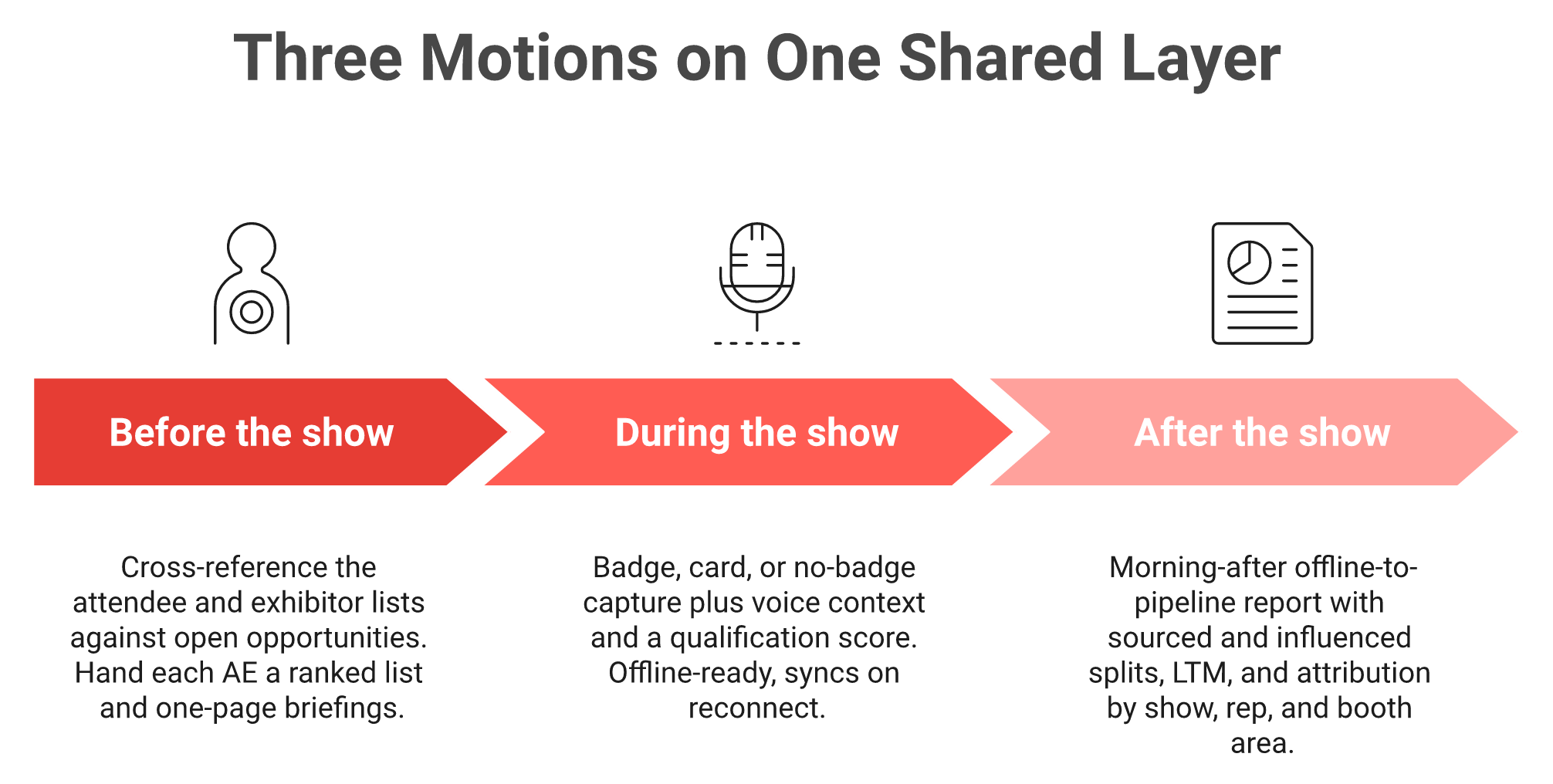
Pre-event intelligence, on-floor capture, and post-show reporting only compound when they share one data layer.
There is an old fishing line that fits event marketing well. It is easier to catch a fish when you are in the right spot with a thousand fish around your bait.
Pre-event intelligence is how you pick the spot. B2Brain runs three motions on one shared layer, which are a CRM-grounded target list and per-account briefings before the show, context-rich capture with on-spot booking during it, and the morning-after pipeline report once it ends. Popl has no equivalent before motion.
💰 Why this changes the follow up economics
Follow up dies from delay, not from bad data. Category benchmarks put average exhibitor response time near 42 hours, with conversion around 85% inside two hours falling to roughly 9% after a week.
A briefed rep skips the discovery small talk. She already knows the account has two open opportunities and a stalled renewal. If you want to model that against your own booth spend, the event ROI math for a single show is the fastest place to start.
✅ Do this before your next show
Pull your top 25 open opportunities from Salesforce or HubSpot. Cross reference them against the attendee and exhibitor lists.
Hand each AE a ranked list of five names and one page of context each. B2Brain automates that briefing from the customer's own pipeline, though I could be reading our early data too strongly, since the teams who adopt it are already disciplined about CRM hygiene. What that costs per show sits on the Show Pass and Pipeline plans page.
Q5. Which tool gets the lead into Salesforce or HubSpot faster, and how clean does it arrive? [toc=5. CRM Sync Depth]
Both tools list Salesforce and HubSpot, but the sync model differs. Ask three questions of either vendor. Is the write real-time or batched, does it create campaign member records for attribution (crediting a show for pipeline), and does it dedup when three reps scan the same visitor? A logo on a website is not a sync model.
🔌 The three questions, in the order they matter
Real-time versus batched decides whether your SDR can email during the show. Campaign member creation decides whether the show gets credit in the quarterly review. Dedup decides how much cleanup RevOps does on Monday.
B2Brain writes to Salesforce and HubSpot natively, meaning the record lands in your objects rather than arriving as an import file later. Ask any vendor to demo that write in your own sandbox, not theirs. The field-level detail sits in this walkthrough of lead capture into Salesforce.
📋 What to compare, side by side
CRM sync attributes compared across B2Brain, Popl, and the organizer badge scanner
Sync attribute
B2Brain
Popl
Organizer badge scanner
Write timing
Real-time as the conversation ends
Sync plus export, varies by plan
Post-show CSV, often days later
Campaign attribution
Per-show campaign records
Capture and engagement analytics
None, the file is the output
Dedup across reps
Handled at capture
Varies by configuration
Manual
Context in the record
Voice or text context plus score
Notes field plus enrichment
Badge fields only
The last column is the real displacement target. A rented scanner saves the lead and loses the conversation, which is the whole argument in this look at the conference badge scanner default.
⚠️ What buyers report about sync in the wild
"Sometimes Mobly can be finicky, where it doesn't sync all the leads I've scanned. We end up with a lot fewer than we expected." — Verified User in Events Services, Reviewer Mobly G2 Verified Review
"It was challenging to get it to sync with Salesforce. The integration process was difficult for my team to accomplish and took a long time." — Ece K., Reviewer Mobly G2 Verified Review
"Rather than simply adding a contact, Popl forces the recipient to complete numerous steps just to save the contact." — Vadim E., Reviewer Popl G2 Verified Review
Those are 3.5-star, 4-star, and 1-star reviews, so read them as a spread rather than a verdict. The pattern I keep seeing is that sync fails quietly, and nobody notices until the lead count is short. A fuller teardown of that vendor sits in this Mobly review.
💸 The dirty CRM failure mode
One operator described a stack where the rental car system did not talk to the sales system. Names did not match, images were missing, and the nurture sequence fired anyway. That is what a batched import produces at scale.
B2Brain measures attribution at capture time, not at reporting time, because a meeting only becomes a metric once it exists as a CRM record. Waiting until Friday to reconcile is how shows lose credit.
✅ The sandbox audit to run this week
Do this before any contract. Connect the tool to a Salesforce or HubSpot sandbox, capture five test leads, and inspect the records.
Check three fields. Did the campaign member get created, did the context survive, and did two scans of the same person merge?
B2Brain writes the lead, the context, and the booked meeting as the conversation ends, so the campaign record is complete before the rep turns to the next badge. That is the standard I would hold any vendor to, including us. If you want to watch that write happen live, Book a Demo.
Q6. Can either tool book the meeting before the prospect leaves the booth? [toc=6. On-Floor Meeting Booking]
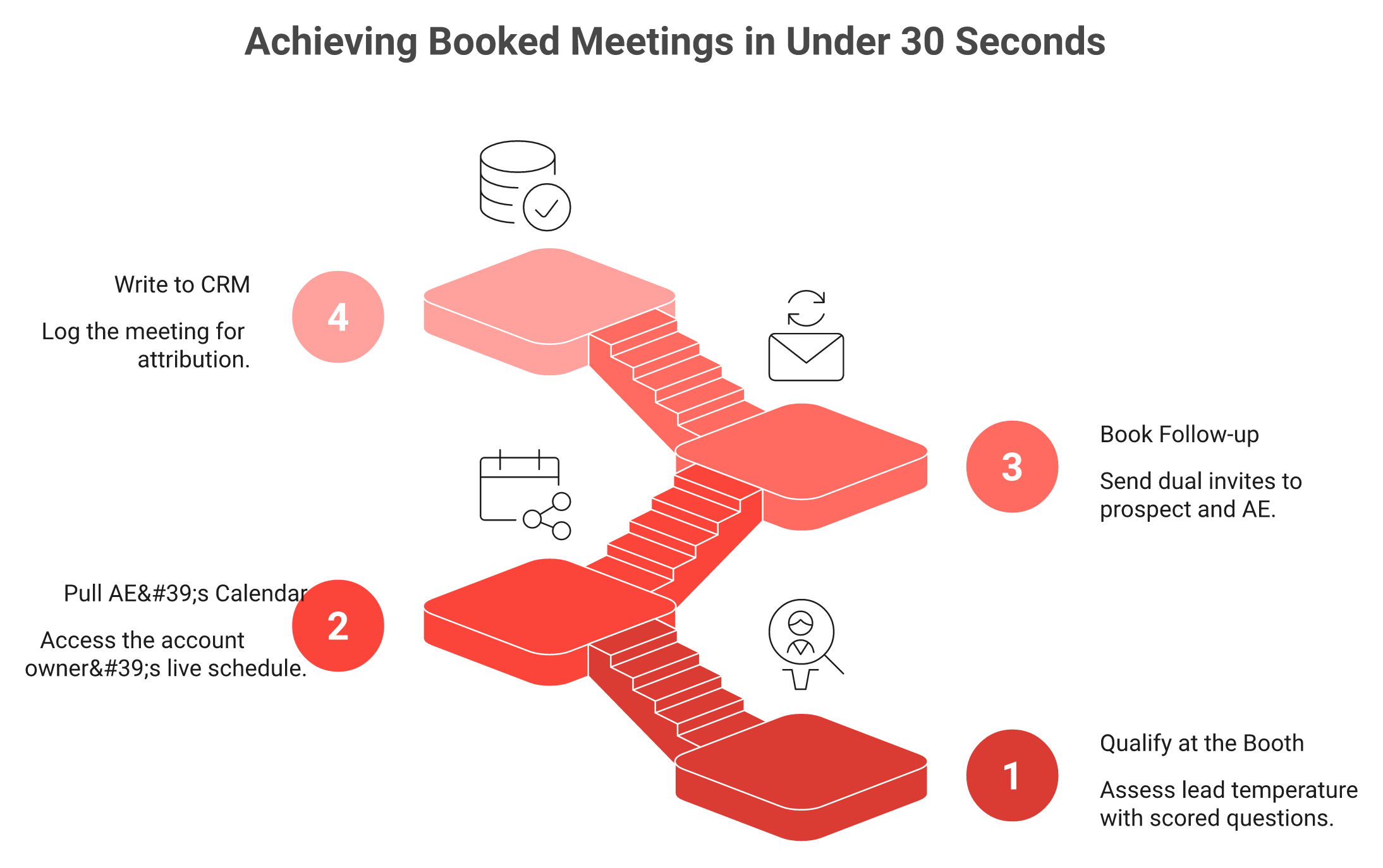
Popl's post-capture motion is enrichment plus follow up sequencing. B2Brain's motion is booking the discovery meeting at the booth, typically inside 30 seconds, routed to the right AE's calendar and synced as a CRM meeting. A post-show email competes with 400 others. A calendar invite does not.
⏰ Why the post show email loses
Follow up dies from delay, not from bad copy. Category benchmarks put average exhibitor response time near 42 hours, with conversion around 85% inside two hours falling to roughly 9% after a week. Up to 80% of event leads never reach the CRM at all.
One practitioner runs a tighter rule. He sends a short note within 15 minutes of the conversation, while the prospect still remembers his face. The sequencing that makes that possible is covered in this guide on how to collect leads at a trade show.
⭐ The mechanic, step by step
Here is the sequence that produces a booked meeting rather than an interested contact.
The difference between an interested contact and pipeline is four steps completed before the prospect walks away.
Qualify at the booth with two or three questions, scored on the spot.
Pull the owning AE's live calendar, filtered to open slots.
Book a 30-minute follow up and send a dual invite to prospect and AE.
Write the meeting to Salesforce or HubSpot against the show campaign.
B2Brain reports 52% Leads to Meeting on the floor against an 8% industry average post event, and no competitor publishes an LTM number at all. That gap is the whole argument, and I would rather be judged on it than on feature checklists. The full sequence is documented in the three-motion workflow.
💰 Booking is one next best action, not the product
The expected objection is fair. Other tools ship a booking button, so what is different?
The answer is not the button. B2Brain runs the Golden Workflow, which is scan, add context, then execute the next best action, and booking is simply today's most common action. Other actions include creating a deal, sending a champion introduction, or triggering a signal-based follow up.
Per-customer configurability matters because sales processes differ. A logistics platform with a 90-day cycle does not want the same next action as an enterprise energy vendor.
⚠️ When enrich and nurture is genuinely the better fit
I will not pretend booking always wins. Some shows are top of funnel by design, with 600 scans and no qualification time.
If your motion is volume capture into a nurture sequence, an enrichment-led tool fits better. Popl's enrichment depth is ahead of ours today, and its digital card is a feature B2Brain does not have. The trade-offs across that set are ranked in this list of Popl alternatives for trade-show pipeline.
✅ The one number to bring to your next planning meeting
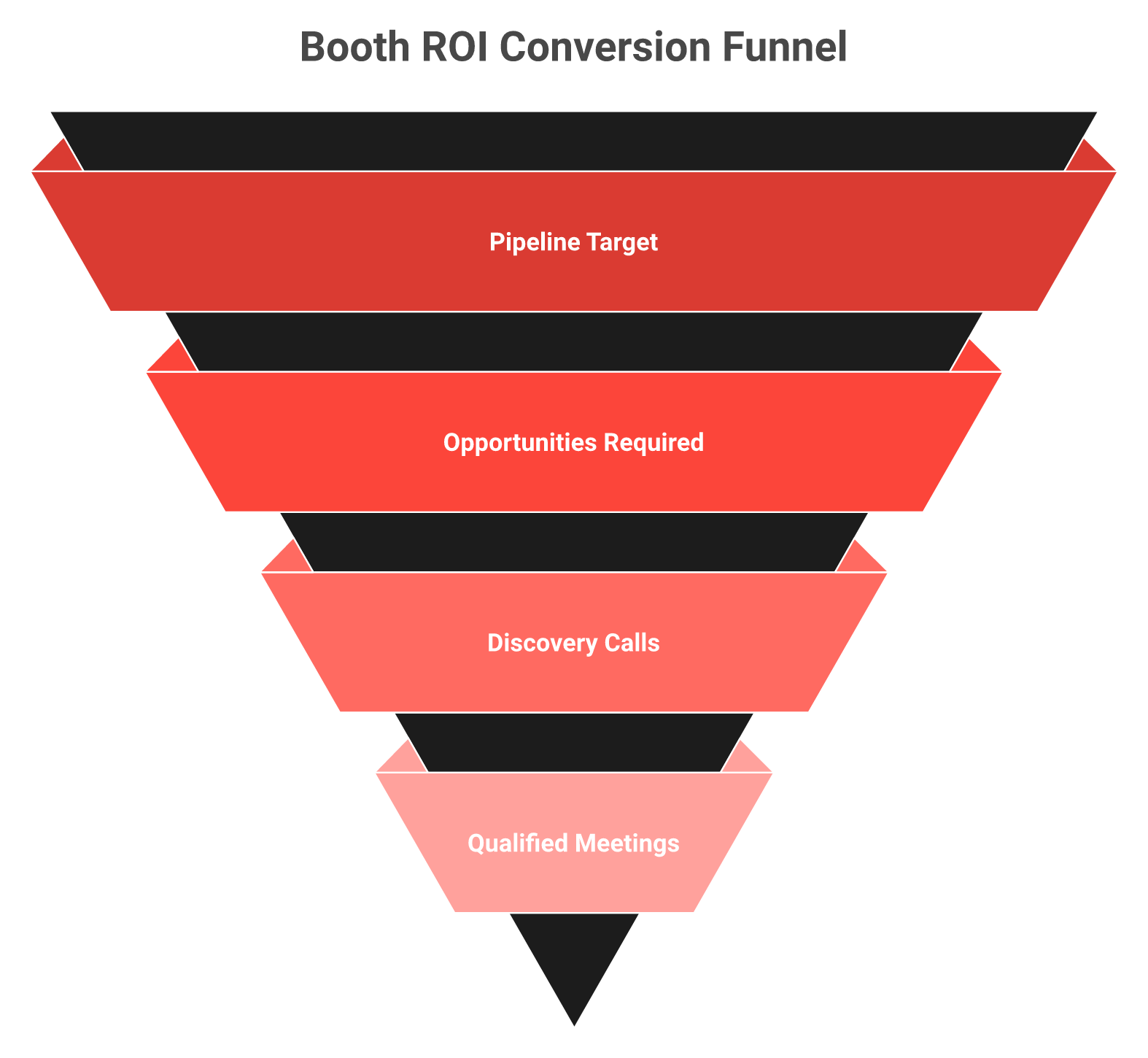
Run the math backwards from the booth invoice. A roughly $70,000 show with a 10x pipeline demand needs about 50 opportunities, which needs about 180 discovery calls.
That means roughly one in five booth visitors must become a qualified meeting. Scan volume cannot get you there, because a scan is not a commitment.
B2Brain books the meeting while the prospect is still standing at the booth and routes it to the owning AE, which is why its scoreboard is meetings per qualified lead rather than leads captured. Contact information is not where anything happens. Pipeline is.
Q7. Who does the work after the scan, and does the workflow survive a five-rep booth? [toc=7. Post-Scan Team Workflow]
Popl hands an enriched contact list to whoever owns follow up, which is where most event ROI dies. Roughly 79% of trade show leads receive no follow up at all. B2Brain assigns the next action at capture time, so ownership is decided on the floor rather than negotiated by email on Monday.
⚠️ The standard both tools get judged against
CEIR research found fewer than 70% of exhibitors have a formal follow up plan, and only about 47% track leads through the sales cycle. Those two numbers explain most bad show reports.
The tool cannot fix an absent plan. It can decide whether ownership is obvious at 4pm on Day 2. What that looks like across a booth shift is mapped out for booth teams.
🧑🤝🧑 Rep adoption is the real constraint
Reps hate data entry, so the app has to be less work than a notebook. Anything slower gets abandoned by lunch on Day 1.
B2Brain benchmarks a productive rep at 31 scans a day, which is the yardstick we use when adoption looks soft. If a rep is at eight scans, the problem is usually booth staffing, not the software.
One operator's rule on staffing is blunt. Do not accept team members who just hold your bag, because that wastes their time and your money.
📱 What buyers say about the shared booth workflow
"It's far too cumbersome when all someone wants is your contact information." — Vadim E., Reviewer Popl G2 Verified Review
"Feels a bit clunky. Never sure if details are saved. Would prefer free fields accessible from opening the app." — Verified User, Reviewer Mobly G2 Verified Review
"We really like the voice notes feature because when you're short on time between talking to people, it's very easy to get information on a lead." — Ece K., Reviewer Mobly G2 Verified Review
That spread runs 1 star to 4 star. The positive one matters most, because it confirms voice capture is what busy reps actually adopt. The same adoption pattern shows up across this comparison of lead capture apps for trade shows.
🔁 Dedup and visibility when five reps share a floor
Three reps scanning the same buyer creates three competing records. Sales then argues about ownership instead of calling.
B2Brain dedups across the booth team, so a shared visitor becomes one owned record with one next action. Field marketers running six business units need that at the account level, not just the rep level.
✅ Match the tool to the motion
Two reps walking the floor with tickets, no booth: the lightest capture tool wins, which is the pattern covered for floor-walking teams.
A staffed booth with quota-carrying AEs: qualification, booking, and dedup earn their cost.
Eight to fifteen shows a year: cross-show reporting becomes the deciding feature.
B2Brain fits the third pattern best, which is a team like the field marketer I know running roughly 100 events a year inside one of six business units. For a solo booth or a team with no CRM, honestly, we are the wrong purchase.
Q8. Which one gives you a per-show pipeline number you can defend to the CFO? [toc=8. Pipeline Reporting for CFO]
Popl reports capture volume and engagement analytics. B2Brain reports Leads to Meeting and per-show pipeline sourced from your CRM, delivered as a morning-after Offline to Pipeline summary with sourced and influenced splits. If the question you must answer is what pipeline the show produced, the reporting layer decides the tool.
📊 What each dashboard actually answers
A capture dashboard answers how many. A pipeline report answers how much, and from where.
Those are different jobs for different audiences. The rep wants the first. The CFO only funds the second, which is the case made in this piece on measuring event ROI.
🧮 The LTM formula and the chain behind it
Leads to Meeting is meetings booked divided by qualified booth leads. B2Brain measures it per show, per rep, and per booth area, which is how attribution gets specific enough to act on.
Now run the chain from the invoice. A roughly $70,000 show with a 10x pipeline demand needs about 50 opportunities, roughly 180 discovery calls, so about one in five visitors must convert.
Run the math down from the invoice and the buying criterion stops being scan volume and becomes meetings per visitor.
At a 20% close rate, that produces around 2x revenue return. If you do not know this math, the show report will always be a story instead of a number. You can run your own numbers through the event ROI calculator.
⏰ Why slow capture shows up months later
One seller described his longest enterprise deal at 524 days. Slow initial capture does not just lose leads. It stretches cycles.
Only about 47% of exhibitors track leads through the sales cycle, so most teams never see that cost. What they see is a flat quarter and a booth invoice nobody can defend.
🔍 Attribution across a season, not one show
One show is an anecdote. Eight shows is a media plan.
B2Brain compares LTM and sourced pipeline show over show, which lets a field marketer kill a weak show and double down on a strong one. My read right now is that this comparison, not the single-show report, is what changes budget allocation. That is the core of how teams generate new pipeline from events.
Sridhar's analogy for this is advertising. The event is the keyword, the attendee is the unknown click, and LTM is the events version of cost per click.
✅ The one slide to build after your next show
Build it with five rows, and nothing else.
All-in show cost, including travel, booth, and post-event nurture.
Qualified booth leads captured.
Meetings booked, with LTM as a percentage.
Pipeline sourced and pipeline influenced, split.
Cost per booked meeting, compared to your outbound cost per meeting.
That last comparison is where events usually win. A qualified event meeting costs roughly 60% of an outbound meeting and about 40% of paid acquisition, and what that runs per show sits on the Show Pass and Pipeline plans page.
B2Brain delivers that summary by 9am the next morning, deliberately unbranded, so the field marketer presents it as her own work in the Monday review. The report exists to make her the hero, not to advertise us.
Q9. What does each cost once you normalise per show and per booked meeting? [toc=9. Pricing Per Booked Meeting]
Popl quotes custom licences. Buyers report annual enrichment-credit tiers from about $6,000 for 500 credits up to $17,500 for 2,500 credits, plus roughly $0.50 to $2.00 per enriched lead. B2Brain prices per event from $200, or annually. Normalise both by season spend divided by meetings booked, not leads scanned.
💰 Two pricing shapes, two different risks
Credit-based pricing scales with volume, so a busy show costs more than a quiet one. Per-event pricing scales with your show calendar, which you already plan a year ahead.
B2Brain prices per event because show schedules fluctuate while annual pipeline goals do not, and a monthly retainer would churn the moment a quarter went quiet. That was a deliberate choice, not a packaging accident. The current tiers sit on the Show Pass and Pipeline plans page.
⚠️ The claim, beside the receipts
Popl's pricing FAQ states there are no consumption-based fees to track, with one quote and one price. Buyer reports describe per-enriched-lead charges on top of the licence. The full breakdown sits in this analysis of Popl pricing tiers and credits.
Both can be true depending on plan and year. Ask for the contract language in writing, and ask what happens at 2,501 credits.
"The cost of matches per contact, I think, is kinda high." — Ece K., Reviewer Mobly G2 Verified Review
"Given that there is no free version of the service, only a trial, it's a complete waste of precious time." — Vadim E., Reviewer Popl G2 Verified Review
"The cost is very high considering it's mostly a digital Buisness card sharing app." — Brooke N., Reviewer Popl G2 Verified Review
Those are 4-star and 1-star reviews, so treat them as signal, not verdict. A third-party review audit found "expensive" was Popl's most frequent negative theme with 385 mentions.
📊 An eight show season, modelled
Here is the arithmetic to paste into your budget deck.
Eight-show season cost, credit-based licence versus per-event passes
Line item
Credit-based licence
Per-event passes
Base cost
$6,000 to $17,500 per year
From $200 per show, eight shows
Variable cost
Roughly $0.50 to $2.00 per enriched lead
None reported
4,000 leads across the season
Add roughly $2,000 to $8,000
Included
Budget predictability
Depends on scan volume
Fixed at planning time
Now divide either total by meetings booked. That single number ends most vendor debates, and the event ROI calculator does the division for you.
💸 Compare against the two real alternatives
The organizer's scanner rents for roughly $600 per device per show, and the workflow ends at a CSV file. One operator's view of the convention economy is that organizers overcharge for basics, right down to trash services, then charge you again to reach your own leads. The rental math is unpacked in this look at the lead retrieval app rental model.
Post-show SDR outreach is the other comparison. B2Brain's customers see a qualified event meeting cost roughly 60% of an outbound meeting and about 40% of paid acquisition. That ratio, not the licence fee, is what a CFO responds to.
✅ What to do before you sign
The same operator who spent $35,000 decorating a booth set up his second show for $950. His lesson was not to spend less. It was to spend where the pipeline comes from.
B2Brain prices per show from $200 and offers a first event free for two people, so a field marketer can test one booth before committing a season's budget. Test the cheap show first, then scale the spend. If you want the numbers walked through against your own calendar, Book a Demo.
Q10. What do reviewers warn about, and how hard is it to switch mid-season? [toc=10. Reviews, Risks and Switching]
Popl earns 4.6 out of 5 across more than 6,400 G2 reviews, strongest on setup speed and card usability. Repeat complaints cluster on cost, add-on fees, scan reliability, and multi-step contact saving. B2Brain's review base is far smaller, at 17 reviews, which is a real risk to weigh. Test either by exporting your data and running one mid-size show.
⭐ The social proof reality, stated plainly
Blinq holds the top G2 position with more than 8,800 reviews, Popl has thousands, and Cvent LeadCapture carries over 2,100 in the lead capture category. B2Brain sits at 17 reviews, with a velocity campaign underway. The review-by-review pattern for the incumbent sits in this breakdown of Popl reviews and limitations.
I am not going to argue that away. The honest counter is the outcome number, which is 52% Leads to Meeting on the floor against an 8% industry average post event.
⚠️ The complaint patterns worth reading twice
"The contact information was saved, even though I didn't have the app or an account yet. It is very seamless." — Howard N., Reviewer Popl G2 Verified Review
"Having to create an account to view the info is not practical or helpful. That creates a HUGE barrier that other competitors don't have." — Mike K., Reviewer Popl G2 Verified Review
"Sometimes Mobly can be finicky, where it doesn't sync all the leads I've scanned." — Verified User in Events Services, Reviewer Mobly G2 Verified Review
The spread runs 0.5 star to 3.5 star, and the same reviewer can praise and complain in one breath. What repeats across tools is friction between the scan and a usable record. The same theme runs through this ranked set of Popl alternatives for trade-show pipeline.
❌ The default nobody reviews
The rented badge scanner escapes review sites because nobody buys it twice on purpose. One long-time exhibitor put it bluntly, saying roughly one in twenty businesses that get the organizer's lead list ever act on it, and then months later.
B2Brain treats that scanner as the displacement target rather than a software rival, because it saves the contact and loses the conversation. That is a workflow argument, not a feature fight, and it is why the category is shifting toward universal lead capture owned by the exhibitor.
🔁 Migration mechanics, in order
Export contacts, notes, and enrichment history from your current tool.
Map fields in a Salesforce or HubSpot sandbox before touching production.
Check your renewal date, since annual licences rarely prorate.
Keep the old tool live for one overlapping show as a fallback.
B2Brain runs a first-event-free pilot for two people, which is the cheapest way to compare tools on a real floor. Measure meetings booked against your last comparable show, not against the demo. The full sequence for that pilot sits inside the three-motion workflow.
✅ Who should not switch
Some teams should stay exactly where they are. If your motion is solo booth attendance, consumer sales, one-off events, or you have no CRM, B2Brain is the wrong purchase.
Popl remains the better fit for rep-side card exchange and deeper third-party enrichment. The native B2Brain app is iOS first, and there is no digital business card. For teams whose problem is the booth day rather than the card, the workflow built for booth teams is the closer fit.
Where I think this category goes next is up the stack, from capture to pipeline activation, and Popl's own move toward qualified pipeline language suggests I am not alone in reading it that way. If you are planning a fall show and want to argue the other side of that, I would genuinely like to hear it, and you can see how teams generate new pipeline from events before you decide.
FAQ's
What is the real difference between B2Brain and Popl?
The difference is architectural, not cosmetic. Popl began as a digital business card platform and layered event lead capture on top, so its centre of gravity is the individual rep exchanging contacts. B2Brain began at the field marketer's problem, which is proving pipeline from a $20,000 to $200,000 booth.
Capture: Popl leads with QR, LinkedIn QR, and business card OCR. B2Brain captures badges, cards, and no-badge floor contacts, then attaches voice context and a qualification score.
Next step: Popl enriches and sequences follow up. B2Brain books the discovery meeting at the booth and routes it to the owning AE's calendar.
Reporting: Popl reports capture and engagement analytics. B2Brain reports Leads to Meeting and per-show pipeline sourced from your own CRM.
Sridhar's shorthand for our position is that we are the brain, they are the face. Popl is genuinely strong at rep-side exchange, and we deliberately skip digital business cards because a marketer running 100 shows a year does not need a viral rep feature. If you want the full sequence, we documented the three-motion workflow across before, during, and after the show.
How much does Popl cost compared to B2Brain per show?
Popl publishes no team pricing. Its pricing FAQ states there are no consumption-based fees, with one quote and one price, while buyers report annual enrichment-credit tiers from about $6,000 for 500 credits up to $17,500 for 2,500 credits, plus roughly $0.50 to $2.00 per enriched lead. Both statements can be true depending on plan and year, so ask for contract language in writing.
Credit-based licence: cost scales with scan volume, so a busy show costs more than a quiet one.
Per-event pricing: B2Brain prices per show from $200, or annually, and includes a first event free for two people.
Organizer scanner: roughly $600 per device per show, with a CSV file as the only output.
We price per event on purpose. Show schedules fluctuate while annual pipeline goals do not, and a monthly retainer would churn the moment a quarter went quiet. The number that settles most vendor debates is season spend divided by meetings booked, not leads scanned. Our current tiers are laid out on the Show Pass and Pipeline plans page, and a qualified event meeting costs roughly 60% of an outbound meeting.
Which tool syncs leads to Salesforce or HubSpot faster?
Both list Salesforce and HubSpot, so the logos tell you nothing. Ask three questions instead, in this order.
Timing: is the write real time or batched? Real time decides whether an SDR can email while the prospect is still in the aisle.
Attribution: does it create campaign member records? That decides whether the show gets credit in the quarterly review.
Dedup: what happens when three reps scan the same visitor? That decides how much cleanup RevOps does on Monday.
B2Brain writes the lead, the context, and the booked meeting to Salesforce or HubSpot natively as the conversation ends, so the campaign record is complete before the rep turns to the next badge. Popl offers sync plus export, with behaviour varying by plan. Batched imports are where shows quietly lose credit, because names do not match and the nurture sequence fires anyway.
Before signing anything, connect the tool to a sandbox, capture five test leads, and inspect the records. We walk through the field mapping in this guide to lead capture into Salesforce.
Can Popl book a meeting at the booth, or only capture the lead?
Popl's post-capture motion is enrichment plus follow up sequencing, so the commitment happens after the show. B2Brain books the discovery meeting at the booth, typically inside 30 seconds, by pulling the owning AE's live calendar and sending a dual invite to prospect and rep.
The reason this matters is decay, not preference. Average exhibitor response time sits near 42 hours, conversion runs around 85% within two hours and falls to roughly 9% after a week, and up to 80% of event leads never reach the CRM at all. A post-show email competes with 400 others. A calendar invite does not.
Qualify at the booth with two or three scored questions.
Pull the AE's open slots and book a 30-minute follow up.
Write the meeting to the CRM against the show campaign.
Booking is simply today's most common next best action inside our Golden Workflow, which is scan, add context, then execute. Other actions include creating a deal or triggering a champion introduction. If your motion is volume capture into a nurture sequence, an enrichment-led tool fits better, and we say so. Otherwise, see how teams generate new pipeline from events.
Is it worth switching from Popl mid season, and who should not switch?
Switching is a data-portability question, not a software question. Run it in four steps.
Export contacts, notes, and enrichment history from your current tool.
Map fields in a Salesforce or HubSpot sandbox before touching production.
Check the renewal date, since annual licences rarely prorate.
Keep the old tool live for one overlapping show as a fallback.
B2Brain runs a first-event-free pilot for two people, which is the cheapest honest test: measure meetings booked against your last comparable show, not against a demo. Popl carries 4.6 out of 5 across more than 6,400 G2 reviews and we sit at 17, so the review-volume risk is real and we are not arguing it away. Our counter is the outcome, at 52% Leads to Meeting on the floor against an 8% industry average post event.
Some teams should stay put. If you run solo booth attendance, sell to consumers, attend one-off events, or have no CRM, we are the wrong purchase, and our native app is iOS first with no digital business card. For teams whose problem is the booth day, the workflow built for booth teams is the closer fit.
Enjoyed the read? Join our team for a quick 30-minute chat — no pitch, just a real conversation on how we’re rethinking Event Intelligence in B2b.

.png)

.png)
.png)