Blinq vs Popl: How They Compare on Digital Cards, Team Management, Branding Controls, and Pricing
Written by
Sridhar Ranganathan
Last Updated :
July 29, 2026
Skim in:
12
mins
TL;DR
Blinq wins on brand-controlled digital cards and design polish; Popl wins on built-in lead capture, enrichment, and CRM automation.
Both are card-first tools that added event capture later, so sticker prices mislead once lead capture add-ons and per-scan fees stack up.
Neither books a meeting on the floor nor attributes pipeline per show, the two rows that decide event ROI.
Reviews praise sharing and design, but the follow-up, scoring, and CRM entry still fall on the rep.
The buyer math matters: a six-figure booth needs roughly one in five visitors to become a qualified meeting.
We frame the real job as offline to pipeline, booking meetings at the booth and proving Leads-to-Meeting at 52 percent versus an 8 percent post-event average.
Q1. Blinq vs Popl: Which One Should You Actually Pick? [toc=1. Quick Verdict]
Last month a field marketer told me her real problem. She had spent close to $40,000 on one booth. She walked away with a CSV of badge scans nobody touched for three weeks.
She was Googling "blinq vs popl" at 11pm. But her actual question was different: which tool lets me own my lead data on my own device, so I can hit a prospect's inbox while they are still standing in the aisle?
That is the tension this comparison misses. So let me give you the answer first.
⭐ The One-Screen Verdict
Pick Blinq if you want a polished, brand-controlled digital business card that scales cleanly across a team. It leads the category on design and social proof.
Pick Popl if you want lead capture, CRM automation, and event workflows built into the card itself.
Both are strong at what they do. Both are also card-first tools that added event lead capture later. That origin shows up everywhere once you look for it.
💰 The Real Job Behind the Search
Here is my read, and I could be wrong, but I have watched this play out at a lot of booths. The card is the easy part. The hard part is the money math.
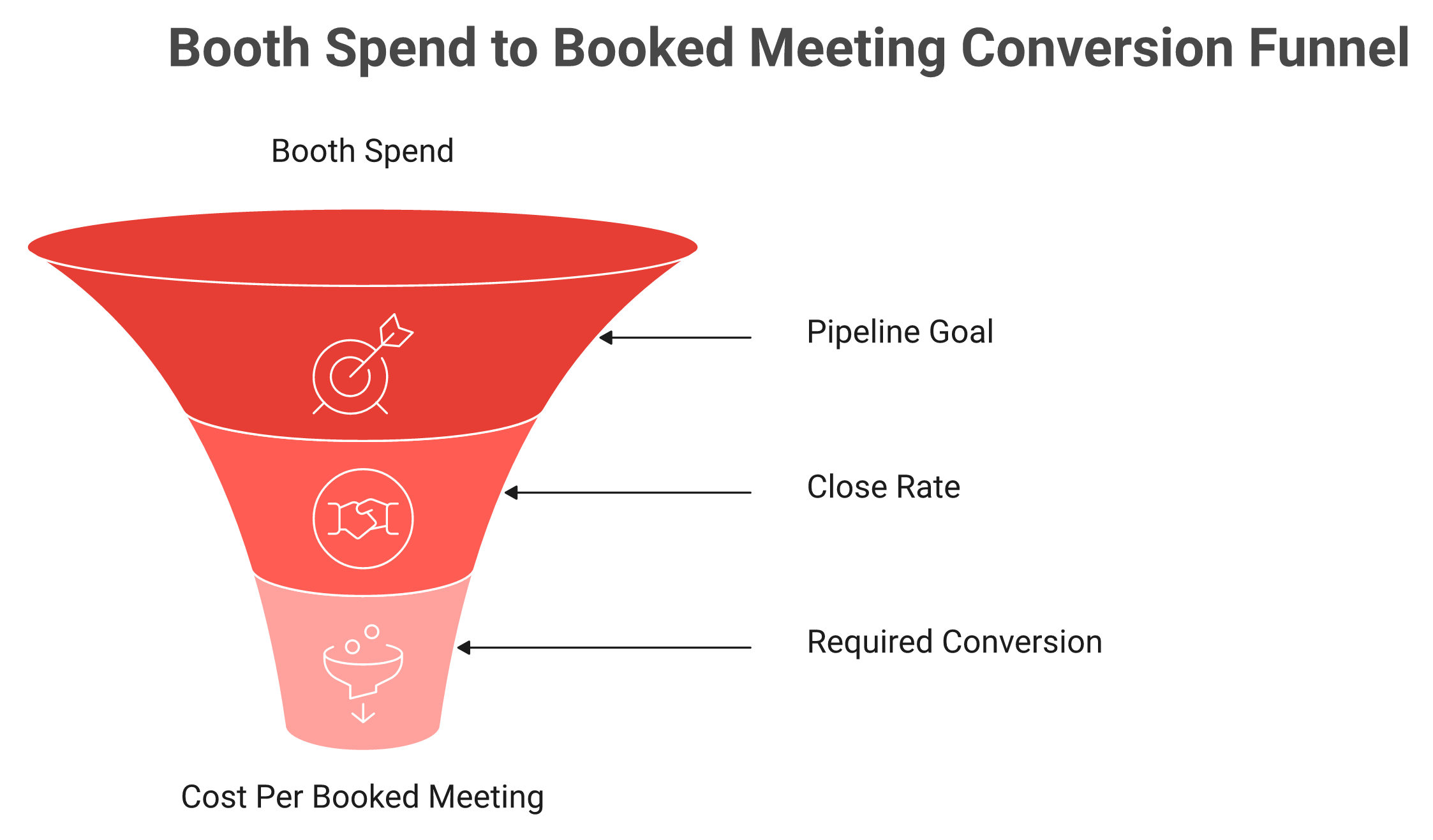
A $70,000 booth needs roughly 10x pipeline to justify itself. At a 20% close rate, that is 2x revenue back. To hit it, about 1 in 5 booth visitors has to become a qualified meeting.
A prettier card does not move that number. A booked meeting does.
✅ What Actually Wins the CFO Conversation
So the dream outcome is not "we scanned 400 people." It is walking out with meetings booked and a per-show pipeline number you can defend on Monday.
Blinq and Popl both stop at the contact. Reviewers say so plainly.
Both Blinq and Popl capture the contact, but the pipeline story only continues when the meeting is booked at the booth.
"The cost is very high considering it's mostly a digital business card sharing app." Brooke N. Popl G2 Verified Review
Read the pricing math and the show-floor reliability test below before you commit. That is where the two tools actually separate, and where a different category (the offline to pipeline layer, which is where we built B2Brain) starts to matter.
Q2. What Are Blinq and Popl, and Who Is Each Really Built For? [toc=2. What They Are]
I like walking through how a category evolved, because it tells you who a tool was built for. Paper cards became rented badge scanners. Badge scanners became app-based capture. Blinq and Popl both grew out of the "kill the paper card" moment, not the "prove the pipeline" moment.
📇 What Blinq Is
Blinq is a digital business card platform. It was built to make sharing your identity clean, branded, and consistent across a whole team.
It is the social-proof leader here. Blinq holds the #1 spot on G2 with over 8,800 reviews, and it claims adoption across much of the Fortune 500 (a vendor self-claim, worth verifying for your own use case).
Best fit: teams that care most about a sharp, on-brand networking identity at scale.
📱 What Popl Is
Popl started as a tap-to-share NFC card. NFC just means "tap your phone to share." Over time, Popl layered on lead capture, CRM sync, and an event mode on top of that card base.
So Popl optimizes for turning a handshake into a CRM record. Blinq optimizes for the polished handshake itself.
Best fit: sales-led teams that want capture and automation baked into the card.
🎯 Who Neither Was Built For
Here is the part the comparison blogs skip. Both tools were designed for the rep who wants to swap a card and discover buyers at the event.
Neither was designed for the field marketer who funds the booth and has to show pipeline. That is a different buyer with a different job.
One field marketer put the gap this way: every scanned lead just gets handed to sales as-is, when it should be scored hot, warm, or cold the moment you capture it. Scoring and pipeline are a different design target than sharing a card. That distinction (built for the rep versus built for the pipeline owner) is exactly the seam the booth-day workflow in B2Brain was built to fill.
Q3. How Do Blinq and Popl Compare on Digital Cards and Sharing? [toc=3. Digital Cards & Sharing]
Watch a rep at a busy booth and you learn something fast. Sharing your own card is the easy 10%. Capturing the other person's context in seconds is the hard 90%.
Both tools nail the easy part. Let me show you where they land.
🔀 Sharing, Side by Side
The good news for either choice: recipients can view and save your details in a browser. No forced download in the basic flow.
Blinq vs Popl: Digital Card and Sharing Features
Capability
Blinq
Popl
Sharing tech
QR and link, one-tap
NFC cards, tags, QR forms
Wallet support
✅ Apple and Google Wallet
✅ Apple and Google Wallet
Design and brand control
✅ Strong, template-led
Good, more per-user
Physical hardware
Optional card
Core NFC product line
Recipient app needed
Not for basic save
Not for basic save
Blinq wins on card-design polish and instant sharing. Popl leans harder on physical NFC products.
⚠️ Where Sharing Gets Shaky
Both tools draw real complaints when the scan has to work under pressure. Read these before an important show.
"It doesn't always work reliably when scanning the barcode, especially in places with poor internet connectivity." Kasha A. Blinq G2 Verified Review
"It didn't scan bar codes like I thought it would... it didn't work when I tried it." Drew D. Popl G2 Verified Review
✅ The Direction That Actually Drives Pipeline
Here is my honest take. A card exchange records who you met. It does not record why you talked, or what to do next.
That "why" is the context that becomes pipeline. It is why we built B2Brain around voice-first capture at trade shows: tap once, talk about 30 seconds, and get a structured CRM record out in roughly 4.2 seconds, offline-ready when the hall Wi-Fi dies. Sharing a card is table stakes. Capturing context fast, at 4pm on Day 2, is the real test.
Q4. Which Handles Team Management, Admin, and Enterprise Security Better? [toc=4. Team Management & Security]
I once sat with a RevOps lead after a big show. Her complaint was not the tool. It was that four reps had captured leads four different ways, and her Salesforce data was now junk.
That is the real stakes of team management. It is not about seats. It is about whether the data you roll up is trustworthy enough to attribute pipeline.
🛠️ Admin Depth, Side by Side
Popl and Blinq take different paths here. One goes deep. One goes fast.
Blinq vs Popl: Team Management and Enterprise Security
Capability
Blinq
Popl
Team roles
Flatter, quick setup
Multi-level roles, sub-teams
Bulk provisioning
✅ Directory sync
✅ Bulk data mappings
Admin dashboard
Clean, simple
Deeper, more granular
SSO
✅ Enterprise tier
✅ Enterprise tier
SCIM provisioning
✅
✅
SOC 2 and GDPR
✅
✅
Popl offers deeper multi-level roles and sub-teams for larger, automation-heavy orgs. Blinq keeps admin flatter and faster to stand up. Both cover SSO, SCIM, and SOC 2 and GDPR at their enterprise tiers.
⚠️ Where Admins Get Frustrated
Depth on paper is not the same as reliable in practice. Admins flag this on both sides.
"Using the backend panel as an administrator is buggy and unreliable... if staff can't rely on it to work for all recipients then it's easier to use a different solution." Verified User in Hospitality Blinq G2 Verified Review
"The user experience was confusing and I still do not know where the information or the person I connected with is." Liliana P. Popl G2 Verified Review
✅ The Layer Both Leave to Your CRM
So which scales cleaner? One booth crew, pick Blinq for speed. Many reps with routing rules, Popl's structure holds up better.
But notice what neither gives you: rep-level, per-show pipeline accountability. As one operator put it, every event should live in Salesforce by campaign, tracking sourced and influenced pipeline, or you never know if the show worked.
Consistent capture only pays off when it rolls up to a number. That is the job B2Brain takes on with the Salesforce-native pipeline report: pipeline sourced, meetings booked, and LTM by show, rep, and segment, on your CMO's desk by 9am. Team management should serve attribution, not just seat admin. If you want to see how event lead capture works across before, during, and after the show, or Book a Demo, that is the fastest way to compare it against your current stack.
Q5. Which Gives You Tighter Branding and Template Controls? [toc=5. Branding & Template Controls]
Picture 20 reps at one booth, each building their own digital card the night before. Different fonts. Wrong logo. One person's title still says an old role. That is brand drift, and it looks sloppy to a buyer.
⭐ The Short Verdict
Blinq is the stronger brand-governance tool. It gives admins Field Locking (a setting that stops reps from editing locked design elements), enforced templates, and centralized control over logos and colors.
Popl offers customization and templates too, but it leans toward per-user flexibility over strict lockdown. If protecting one consistent identity across a large team is your priority, Blinq edges it.
Blinq vs Popl: Branding and Template Controls
Branding control
Blinq
Popl
Field and element locking
✅ Strong
Partial
Enforced templates
✅ Centralized
✅ Available
Per-user freedom
Lower by design
Higher
🎯 Why Clarity Beats Decoration
Here is where I push back on the whole "prettier card" framing. A buyer's brain has about seven seconds to decide if you are worth their attention. Walking a busy floor, they should instantly know what you sell.
So brand control matters, but as clarity that converts, not vanity. I have seen booths with signage that says something like "synergizing your dynamics," and nobody has a clue what the company does. A locked-down template does not fix a fuzzy message.
That is the honest limit of this whole axis. Blinq can make every rep's card perfectly on-brand. It still cannot answer the question your CFO asks after the show: what pipeline did this booth generate?
A brand-consistent card is table stakes. The thing that actually renews your event budget is the morning-after pipeline report, and that sits outside both Blinq and Popl. It is the piece we built B2Brain to own: capturing each conversation with context, then tying it to a per-show pipeline number leadership can see. Branding earns the glance. Pipeline earns the budget.
Q6. Blinq vs Popl Pricing: Which Is Cheaper Once You Add Lead Capture? [toc=6. Pricing & True Cost]
Sticker prices mislead here, and that is where teams get burned. The base seat looks cheap. The add-ons are where the money actually goes.
💰 What Each One Really Costs
Blinq's team plan starts low per user, but lead capture is a paid add-on (roughly $199/month on top). Popl bundles more capture into its plans, then layers per-scan and event fees.
For a team running several shows a year, the true cost is those extras, not the base seat. Popl's own reviewers say the cost bites.
"The cost is very high considering it's mostly a digital business card sharing app." Brooke N. Popl G2 Verified Review
"The price, $140 a year? No way, would rather print thousands of business cards." Fabian T. Popl G2 Verified Review
📊 A Worked Example: 20 Reps, 2 Shows
Let me model a real team so the numbers stop being abstract. Twenty reps. Two shows a year. Salesforce in the stack.
Blinq vs Popl: True Cost of Ownership Shape
Cost line
Rough shape
Base seats (20 users)
Low per-user monthly fee
Lead capture layer
Blinq add-on ~$199/mo; Popl per-scan and event fees
Scaling risk
Costs climb with reps and scans, not value
The point is not the exact dollar figure. It is that both tools price on cards and scans, not on outcomes.
⏰ The Only Number That Matters
So reframe the whole question. Do not ask "cost per card." Ask "cost per booked meeting."
Here is the math I walk buyers through. A $70,000 booth, a boss who wants 10x pipeline, a 20% close rate: roughly 1 in 5 visitors has to become a qualified meeting. If your tool does not move that ratio, the seat price is irrelevant. Our event ROI calculator walks that math end to end.
Do not ask cost per card, ask cost per booked meeting, the number that decides whether a booth pays off.
That is the lens we price B2Brain on. In our data, a qualified event meeting costs around 60% of an outbound meeting and about 40% of paid acquisition. Cheaper cards do not lower cost-per-meeting. Booked meetings on the floor do. If you want to compare what B2Brain costs per event against your current stack, the plans are laid out there.
Q7. How Do They Handle Lead Capture and CRM Sync at a Live Booth? [toc=7. Lead Capture & CRM Sync]
It is 2pm on Day 2. The booth is slammed. The hall Wi-Fi is crawling. This is the moment that separates a card app from an event tool.
🔌 Capability, Side by Side
Popl has the more built-out event stack. It offers badge scanning, AI enrichment (auto-filling company and title data), and real-time sync to Salesforce and HubSpot.
Blinq added AI and capture, but it stays card-first, with lead capture as a paid layer. Both sync contacts. Neither books the meeting or attributes pipeline per show.
Blinq vs Popl: On-Floor Lead Capture and CRM Sync
Capability
Blinq
Popl
The gap
Badge scan
Paid layer
✅
-
Enrichment
Basic
✅ Stronger
-
Native CRM sync
✅
✅
-
Offline capture
⚠️ Shaky
⚠️ Shaky
Both wobble
In-booth meeting booking
❌
❌
Unfilled
Per-show pipeline attribution
❌
❌
Unfilled
⚠️ Where Sync Breaks Under Pressure
The offline and sync complaints are not rare. They show up right when the floor is busiest.
"Sometimes Mobly can be finicky, where it doesn't sync all the leads I've scanned... this can really affect the overall success of our event." Verified User in Events Services Mobly G2 Verified Review
"It didn't scan bar codes like I thought it would... it really didn't work for me." Drew D. Popl G2 Verified Review
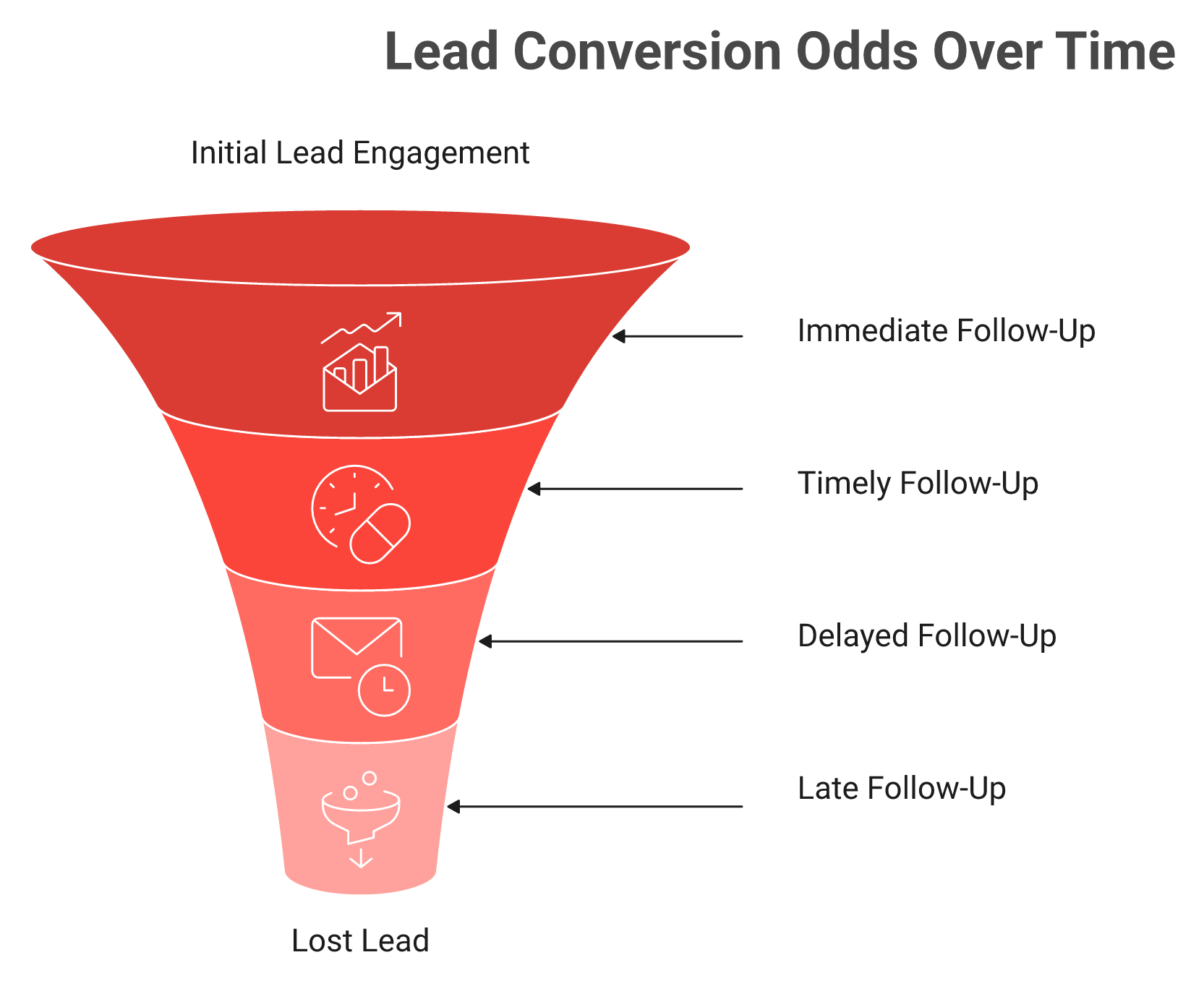
Here is the operator truth. When an app hesitates, reps quietly give up and revert to snapping a photo of the badge. That contact then dies in a CSV nobody acts on for weeks. A prospect's conversion odds fall from about 85% within two hours to roughly 9% after a week.
The real test is not feature count, it is whether you follow up before a lead's odds decay from 85 percent to 9 percent.
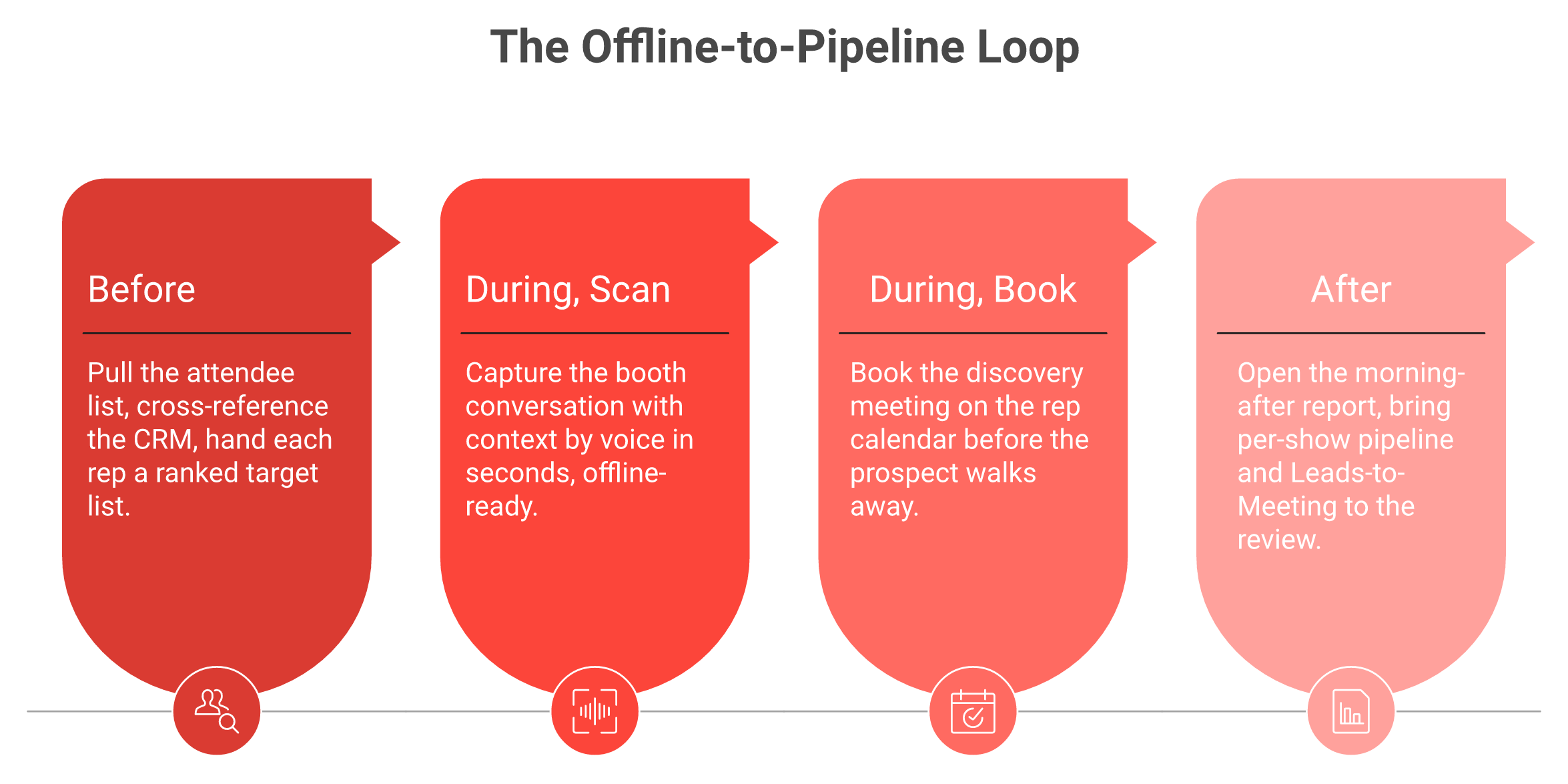
Those two blank rows in the table (booking and attribution) are exactly the category B2Brain sits in. We capture the conversation with context in seconds, offline-ready, then book the follow-up on the AE's live calendar before the prospect walks away. That is the loop both card tools leave open, and it is why we built Salesforce-native lead capture and the booth-day workflow around it.
Q8. What Do Real Users Say About Blinq and Popl? [toc=8. What Users Say]
Let me be straight about the scoreboard first, because it matters. Blinq holds #1 on G2 with over 8,800 reviews. Popl has thousands too. B2Brain has 17, and we will say that plainly rather than hide it.
👍 What Blinq Users Praise and Gripe
Blinq earns top marks for design and easy setup. The gripes cluster around reliability and finding contacts later.
"It doesn't always work reliably when scanning the barcode, especially in places with poor internet connectivity." Kasha A. Blinq G2 Verified Review
"With Blinq, all the follow ups are just in your sea of contacts you have to try and remember." Madison Z. Blinq G2 Verified Review
💸 The Popl Complaint Pattern
Popl is well-rated, but two themes repeat: cost and friction forcing recipients into an account.
"Having to create an account to view the info is not practical or helpful... That creates a HUGE barrier that other competitors don't have." Mike K. Popl G2 Verified Review
✅ The Blind Spot Both Share
Read enough of these and one truth surfaces. Users love the card and the sharing. But the lead still needs a human to score it, follow up fast, and get it into the CRM before the trail goes cold.
The scoreboard says review count. The floor says follow-up. In one experiment I like, a seller handed out 100 cards; a week later just two people had reached out. That is roughly a 95% follow-up failure rate, and no volume of reviews fixes it.
That follow-up gap is the exact problem we built B2Brain around. Book the meeting at the booth, capture the context by voice, and let the morning-after report do the chasing. We would rather win on the LTM outcome (52% of leads to a meeting on the floor versus about 8% industry average post-event) than on a review-count wall. If that outcome is the number you are measured on, Book a Demo and we will run your booth math together.
Q9. Blinq vs Popl vs the Pipeline Alternative: Which Fits Your Job to Be Done? [toc=9. Which Fits Your Job]
Let me be honest before I point anywhere. For a lot of people, Blinq or Popl is the right answer, and I will not pretend otherwise.
✅ When a Card Tool Is Genuinely Enough
If your reps just need a clean way to swap contact details, either tool does the job well. Solo networkers, consumer-facing sellers, and teams with no CRM should stop reading comparisons and just pick one.
Blinq wins for brand-controlled cards. Popl wins for automation-heavy, card-plus-capture sales workflows. That is a real, defensible choice, and our roundup of Popl alternatives covers the edge cases.
🎯 Match the Tool to Your Accountability
The split comes down to one question: what number are you measured on?
Blinq vs Popl vs the Pipeline Alternative: Job-to-Be-Done Fit
Tool
Best-for buyer
Core job
Pricing shape
Metric it proves
B2Brain
Field marketer, VP Sales funding a booth
Book meetings, prove per-show pipeline
Per-event or annual, outcome-led
Leads-to-Meeting (LTM)
Blinq
Individual, brand-led team
Share a polished card
Per user plus capture add-on
Cards shared
Popl
Sales team wanting capture built in
Card sharing plus lead capture
Per user plus per-scan or event
Contacts captured
If you report card taps, pick a card tool. If you report pipeline to a CFO, you need the tool built for that number, which is why we built the offline to pipeline layer.
💰 The Job Neither Card Tool Was Built For
Here is my point of view, and the standard "blinq vs popl" read gets this backwards. When you fund a six-figure booth, the job is not a prettier card. It is exhibitor pipeline you can defend.
That means booking the meeting while the buyer is still at the booth, capturing why you talked to them, and proving it per show. Roughly 60% of lost sales trace back to poor qualification, and the money at a trade show is made in the follow-up, not the scan.
That is the exact category we built B2Brain for. We are the brain, the reps are the face. The morning-after report puts a pipeline number on the CMO's desk by 9am (pipeline sourced, meetings booked, and LTM by rep and segment) so the field marketer walks into Monday's review with an answer, not a CSV. You can see how event lead capture works across the full three-motion workflow, or read the deeper event intelligence breakdown.
I will name our gaps too. B2Brain is iOS-only native, has lighter third-party enrichment than Popl or Mobly, and does not do a digital business card. If those matter more than pipeline, a card tool fits better, and comparisons like Popl vs iCapture or HiHello vs Blinq are worth a look.
⏰ The Question I'm Sitting With
My read right now is that differentiation is shifting up the stack, from capture to pipeline activation. In our data, 52% of booth leads convert to a meeting on the floor, against roughly 8% industry average post-event.
So here is what I keep asking operators. When your CEO asks "where is the pipeline?" next quarter, do you want to hand over a contact list, or a number? If it is the number, Book a Demo and we will compare notes on how you are measuring it today.
One shared layer across before, during, and after the show turns a booth conversation into a pipeline number.
FAQ's
What is the main difference between Blinq and Popl?
The short version: both are digital business card tools, but they optimize for different jobs.
Blinq leads on the polished, brand-controlled card, with strong template and Field Locking controls for large teams.
Popl leans harder into lead capture, AI enrichment, and CRM automation built onto its NFC card base.
Blinq holds the top spot on G2 with over 8,800 reviews, so its social proof is real. Popl offers the more built-out event stack, with badge scanning and real-time sync to Salesforce and HubSpot.
Here is our honest read. Both were designed for the rep who wants to swap a card, not the field marketer who funds the booth and answers for pipeline. A card records who you met, not why you talked or what to do next.
That context is where pipeline lives, which is why we built B2Brain around voice-first capture at trade shows that writes a structured CRM record in seconds. Pick Blinq for brand polish, Popl for capture automation, and a pipeline layer when the CFO asks for a number.
Is Blinq or Popl cheaper once you add lead capture?
Sticker prices mislead here, because the base seat is not where the money goes.
Blinq starts low per user, but lead capture is a paid add-on (roughly 199 dollars per month on top).
Popl bundles more capture into its plans, then layers per-scan and event fees.
For a team running several shows a year, the true cost is those extras, not the base seat. Popl's own reviewers repeatedly flag cost and additional fees on G2.
So we reframe the question. Do not ask cost per card, ask cost per booked meeting. A 70,000 dollar booth aiming for ten times pipeline at a 20 percent close rate needs roughly one in five visitors to become a qualified meeting.
A cheaper card does not move that ratio. A booked meeting does. In our data, a qualified event meeting costs around 60 percent of an outbound meeting and about 40 percent of paid acquisition.
You can model your own season and compare what B2Brain costs per event against add-on-heavy card pricing before you commit.
How do Blinq and Popl handle lead capture and CRM sync at a live booth?
Popl has the more built-out event stack, with badge scanning, AI enrichment, and real-time sync to Salesforce and HubSpot. Blinq added AI and capture but stays card-first, with lead capture as a paid layer.
Both sync contacts. Neither books the meeting on the floor nor attributes pipeline per show.
The test that matters is not feature count. It is whether the tool still works at 2pm on day two with dead Wi-Fi.
When an app hesitates, reps quietly revert to snapping a badge photo.
That contact then dies in a CSV nobody acts on for weeks.
A prospect's conversion odds fall from about 85 percent within two hours to roughly 9 percent after a week.
That decay is why speed and offline reliability beat a longer feature list. We built B2Brain to capture context in seconds, offline-ready, then book the follow-up on the account executive's live calendar before the prospect walks away.
Which is better for team management, admin, and enterprise security?
Popl and Blinq take different paths on team management.
Popl offers deeper multi-level roles and sub-teams for larger, automation-heavy organizations.
Blinq keeps admin flatter and faster to stand up.
Both cover SSO, SCIM provisioning, and SOC 2 and GDPR at their enterprise tiers, so the security floor is comparable. One booth crew should pick Blinq for speed, while many reps with routing rules will find Popl's structure holds up better.
Here is the stakes, though. Team management is not really about seats, it is about whether the data you roll up is trustworthy enough to attribute pipeline.
When four reps capture leads four different ways, the CRM becomes junk and attribution breaks. Neither tool gives you rep-level, per-show pipeline accountability.
That is the layer we take on. B2Brain rolls capture into a report that shows pipeline sourced, meetings booked, and Leads-to-Meeting by show, rep, and segment. You can explore how event lead capture works across before, during, and after the show.
Which gives you tighter branding and template controls?
Blinq is the stronger brand-governance tool.
It gives admins Field Locking, which stops reps from editing locked design elements.
It enforces templates and centralizes control over logos and colors.
Popl offers customization and templates too, but it leans toward per-user flexibility over strict lockdown. If protecting one consistent identity across a large team is the priority, Blinq edges it.
We push back on the prettier-card framing, though. A buyer's brain has about seven seconds to decide if you are worth their attention on a busy floor.
So brand control matters as clarity that converts, not vanity. A locked-down template does not fix a fuzzy message that nobody understands.
A brand-consistent card is table stakes. The thing that renews your event budget is the morning-after pipeline report, and that sits outside both tools.
That report is the piece we built to own, tying each captured conversation to a defensible number. See how we generate new pipeline from events rather than stop at the card.
Enjoyed the read? Join our team for a quick 30-minute chat — no pitch, just a real conversation on how we’re rethinking Event Intelligence in B2b.

.png)

.webp)

.png)