Convention Center Wifi costs 79.99 dollars a day for 1.5 Mbps. When does your booth need it?
Written by
Sridhar Ranganathan
Last Updated :
November 17, 2026
Skim in:
5 min read
mins
TL;DR
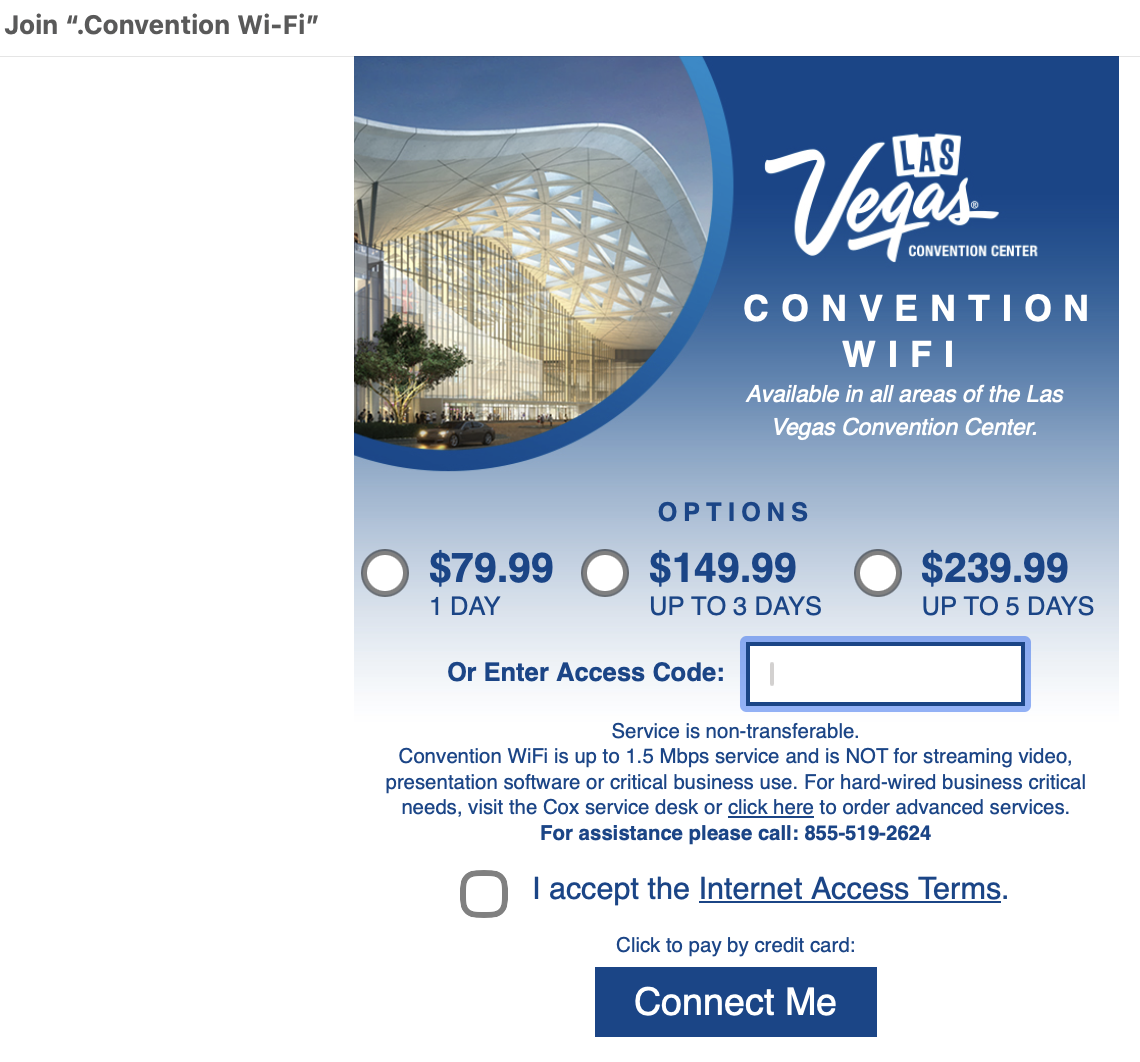
The Las Vegas Convention Center charges 79.99 US dollars for one day, 149.99 US dollars for three days and 239.99 US dollars for five days of wifi, for a connection its own terms cap at 1.5 Mbps.
That same page says the service is not for streaming video, presentation software or critical business use.
A phone hotspot measured on the floor gave 78.7 Mbps down but only 0.64 Mbps up, with 205 ms latency. Upload is the lane lead capture needs, and it is the first to fail on a packed show floor.
Order a hard-wired line for a live demo. For capturing who you met, use something that works with no connection at all.
RE+ 2026 runs 16 to 19 November at the Las Vegas Convention Center. Here is what convention wifi costs, what it actually delivers, and why the lead capture part of your booth should not depend on it at all.
That is the purchase screen on the Las Vegas Convention Center network. Three options: 79.99 US dollars for one day, 149.99 US dollars for up to three days, 239.99 US dollars for up to five days.
Read the small print under the prices, because it is the convention center telling you what you are buying. "Convention WiFi is up to 1.5 Mbps service and is NOT for streaming video, presentation software or critical business use."
Take that at face value. For a four-day show like RE+, the up-to-five-days option costs 239.99 US dollars per device. One connection is not enough for a booth. Put four people on the stand and you are at 959.96 US dollars for the show, for a service whose own terms exclude the demo you came to run.
Work out the price per megabit. At 239.99 US dollars for 1.5 Mbps across five days, you are paying roughly 160 US dollars per Mbps for the week. The same money buys a year of mobile data on most business plans.
What a phone hotspot gives you instead
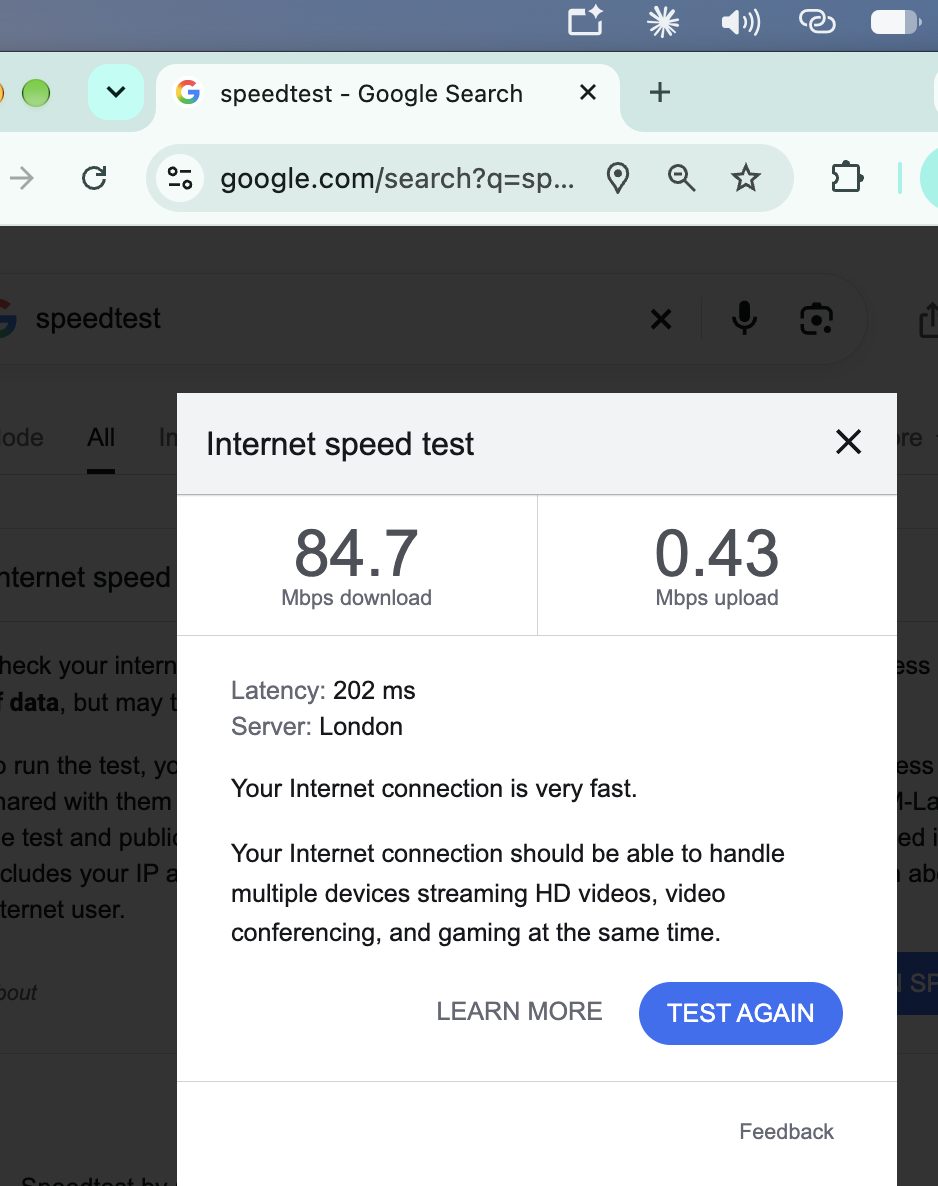
That is a speed test taken on the floor at the Las Vegas Convention Center, on a phone hotspot, at no extra cost. Download is 78.7 Mbps, which is roughly fifty times the 1.5 Mbps the convention center sells.
Now look at the number most people skip. Upload is 0.64 Mbps. Latency is 205 ms.
That number matters more than the download figure, and it is the reason this article is not simply telling you to use a hotspot. On a show floor, with thousands of phones competing for the same cell towers and the convention center network saturated, upload is the lane that collapses first. Lead capture is an upload: the badge photo, the voice note, the qualification you typed all have to travel from the phone to a server. On this connection, the lane your lead capture needs is slower than the convention center paid service.
So the honest conclusion is not "buy a hotspot instead of convention wifi." It is this: at a large show, every connection is unreliable in the direction you need, including the one you paid 239.99 US dollars for.
What should actually depend on the network
Split your booth into two lists.
Things that genuinely need a connection: a live product demo, a video wall, a payment terminal, a screen share with someone back at the office. For these, do not use shared convention wifi. The convention center page points you to the Cox service desk for a hard-wired line, and that is the right call for a critical demo. Book it before the show, not on day one.
Things that should never need a connection: capturing who you met and what they said. This is the largest part of booth work by volume and the part most often lost. If it depends on a network, it fails on the floor, and nobody notices until the data is already gone.
Why we built capture to work offline
B2Brain captures leads on the rep's own phone. The rep photographs the badge or the business card, adds a voice note or types a note against that lead, and the app holds all of it locally. Nothing has to leave the phone at the moment of capture. When the phone reaches a usable connection, back at the hotel or in the airport lounge, everything syncs. Check more here.
That changes the economics of the booth. If capture does not need the network, the 79.99 US dollars per day per device is not a reduced cost. It is a line you can delete for the people whose job is walking the floor and talking to attendees.
It also removes a failure mode that costs more than the wifi does. A rep who cannot save a lead stops capturing and tells himself he will remember. He does not. Across the event reports we have produced, the gap between badges scanned and notes written is the single biggest source of lost pipeline, and a dead connection at the moment of capture makes it worse.
The honest comparison
LVCC convention wifi. 239.99 US dollars for four days, one person. Up to 1.5 Mbps, excluded from critical business use by its own terms. Does not work when the network is down.
Phone hotspot. Usually included in an existing business plan. 78.7 Mbps down and 0.64 Mbps up, measured on the floor. Does not work when the network is down.
Hard-wired Cox line. Quoted per booth, ordered in advance. Dedicated bandwidth suitable for a live demo. Works reliably for that booth.
Offline-first lead capture. No network cost. Capture with no connection, sync later. Works when everything else is down.
These are not alternatives to each other. A booth running a live demo should order the wired line. Every booth should assume the shared network will fail, and make sure that lead capture does not care when it does.
Try it at RE+ 2026
B2Brain is free for first-time customers at RE+ 2026. Your reps install it on the phones they already carry, capture works with no connection, and after the show you get one consolidated dataset with every rep's leads and notes in it, ready for your CRM.
If you are on the floor this week, find us and we will set your team up in ten minutes.
FAQ's
How much does wifi cost at the Las Vegas Convention Center?
The convention wifi purchase screen lists three options: 79.99 US dollars for one day, 149.99 US dollars for up to three days, and 239.99 US dollars for up to five days. The price is per device, so a four-person booth buying five-day access pays 959.96 US dollars for the show.
How fast is Las Vegas Convention Center wifi?
The purchase page states the service is up to 1.5 Mbps, and adds that it is not intended for streaming video, presentation software or critical business use. For a live demo the convention center directs exhibitors to the Cox service desk for a hard-wired line instead.
Can I use a phone hotspot instead of convention wifi?
You can, and the download speed is far better: a hotspot measured on the floor gave 78.7 Mbps down against the convention center's 1.5 Mbps. But the same test showed 0.64 Mbps upload and 205 ms latency. Lead capture is an upload, so a hotspot is not a reliable substitute for the capture part of your booth. It is a reasonable substitute for browsing and email.
What should an exhibitor actually pay for?
Pay for a hard-wired line if you are running a live demo, a video wall or anything that fails visibly in front of a prospect. Do not pay per device for shared convention wifi so that reps can save leads. Use a lead capture tool that works offline, and the connectivity question stops applying to the largest part of your booth activity.
Enjoyed the read? Join our team for a quick 30-minute chat — no pitch, just a real conversation on how we’re rethinking Event Intelligence in B2b.