

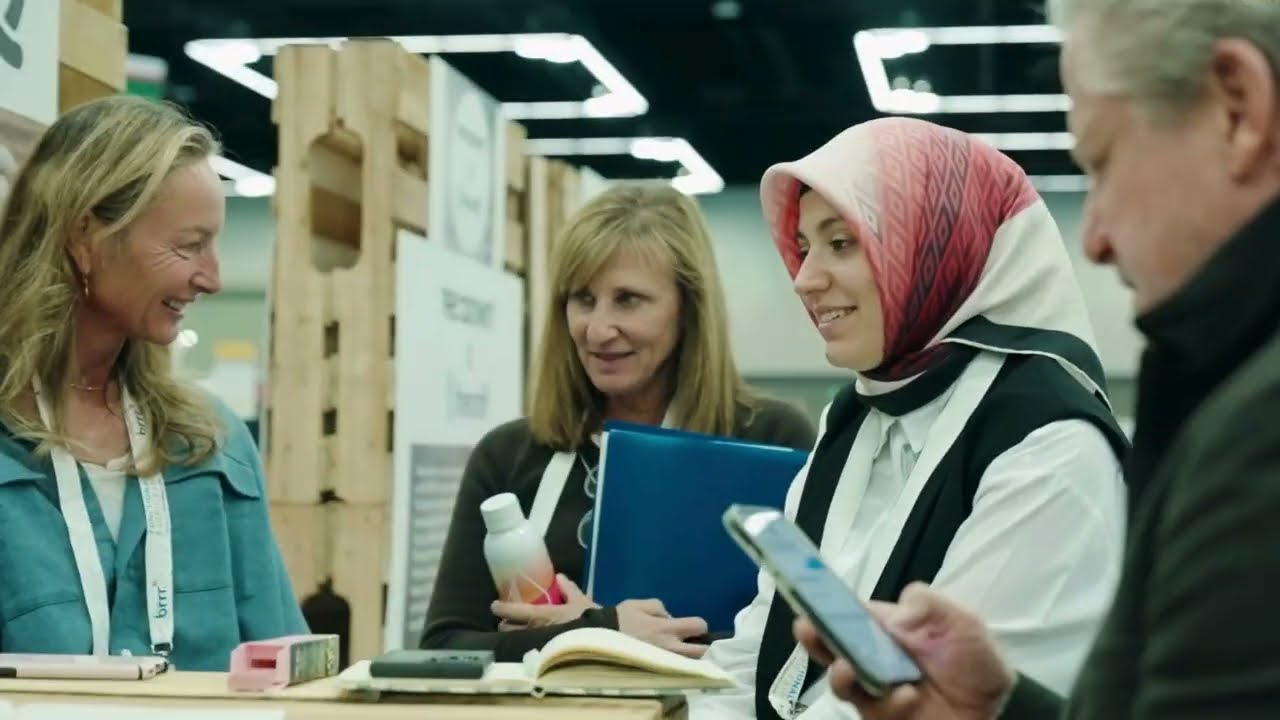

Functional Fabric Fair Fall 2026 at a glance
- Day 0 runs October 26 from 8:00 AM to 3:30 PM, followed by 17 exhibit-hall hours across October 27 and 28.
- The event is at the Oregon Convention Center, 777 NE Martin Luther King Jr Boulevard in Portland.
- The live exhibitor directory reports 341 companies across performance fabrics, finishes, trims and accessories.
- Standard floor access is free; Premium Access is $100, while conference packages rise on October 12.
- Connections Housing manages the official room block, with an October 1 reservation deadline.
- The organizer documents Lead Manager App and Colleqt QR Codes for exhibitor capture.
What makes Functional Fabric Fair Fall 2026 a focused textile sourcing event?
Functional Fabric Fair Fall 2026 runs October 26 through 28 at the Oregon Convention Center in Portland. RX and PERFORMANCE DAYS organize the trade-only program for performance textiles, trims and accessories, with Day 0 devoted to outdoor-industry sustainability and two subsequent days combining sourcing with Expert Talks.
The Fall Spotlight covers workwear, sportswear, outdoor activewear, lifestyle wear, bodywear and rain gear. The 2026 edition is positioned around materials for the 2027 and 2028 fall season, so the useful conversations concern specifications, compliance, testing, development timing and supplier fit rather than consumer retail.
Which buyers and suppliers belong at the Portland Fall fair?
The published attendee criteria name verified designers, product specialists, purchasing experts, material managers and sustainability directors. Exhibitors are curated fabric mills and branded technology companies supplying functional fabrics, finishes, trims and accessories for outdoor, lifestyle and activewear markets.
The fit is narrow by design. Apparel teams with live material briefs, testing requirements or responsible-sourcing questions have a direct reason to attend. Consumer shoppers and broad business-service sellers are outside the stated trade audience, and the registration process is built around professional qualification.
When are Day 0, the exhibit hall and Expert Talks open?
Day 0 OIA Catalyst Conference runs Monday, October 26, from 8:00 AM to 3:30 PM. The exhibit hall and Expert Talks open Tuesday, October 27, from 9:00 AM to 6:00 PM, then Wednesday, October 28, from 9:00 AM to 5:00 PM. The two sourcing days therefore provide 17 published hall hours.
Tuesday is the longer floor day at nine hours. Wednesday supplies eight hours and closes at 5:00 PM. Complimentary coffee is scheduled near registration from 8:00 AM to 10:00 AM on both show days, while Premium Access and Full Engagement badges include one hour of early floor access.
How should a three-day Functional Fabric Fair schedule be divided?
Monday contributes 7.5 hours for the OIA Catalyst Conference, Tuesday contributes nine exhibit-hall hours, and Wednesday contributes eight. A practical division is education and sustainability work on October 26, supplier discovery on October 27, then samples, technical questions and unresolved meetings before the 5:00 PM close on October 28.
The official program also starts before the conference: a hike and a hosted happy hour are listed for October 25. Those welcome activities create a separate relationship-building window without consuming either of the 17 exhibit-hall hours.
How is the Oregon Convention Center floor organized for the fair?
The event is at the Oregon Convention Center, 777 NE Martin Luther King Jr Boulevard, Portland, Oregon 97232. Its published key areas separate sourcing and education into named forums, lounges and archives rather than presenting one undifferentiated booth grid.
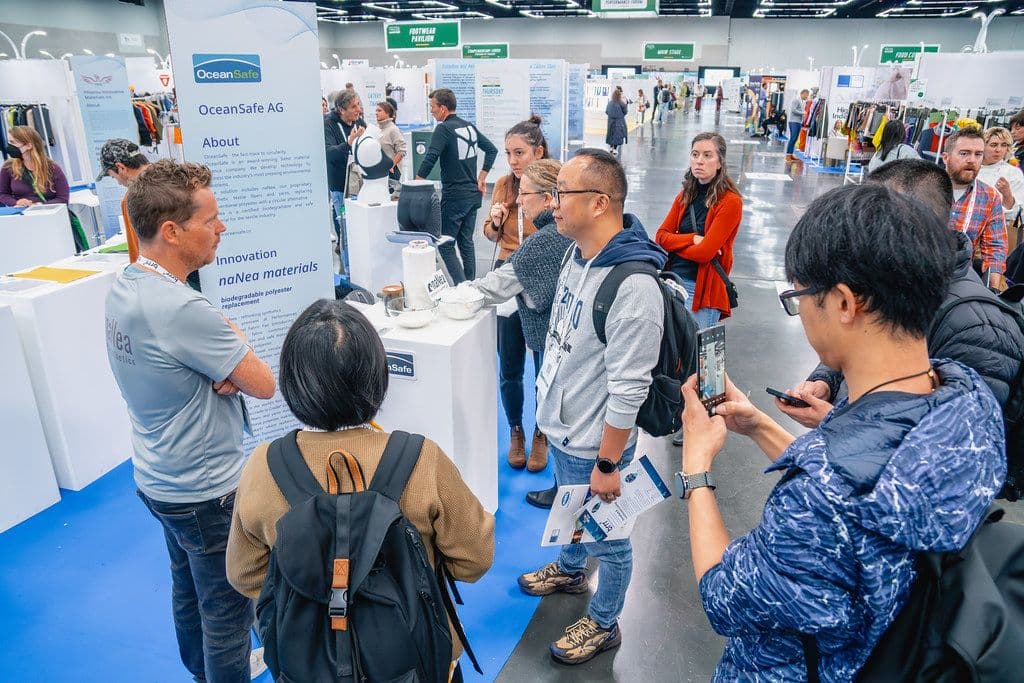
Current areas include the Bodywear Forum, new Cellulose Forum, Cotton Forum, Future Fabrics Expo Innovation Hub, Innovation Zone, Outdoor Recreation Archive, Sustainability Lounge, Trend Forum, VIP Lounge and Wool Forum. The Trend Forum alone organizes material discovery across 12 fabric categories.
What location details are confirmed before traveling to Portland?
The organizer confirms the Oregon Convention Center address and provides official hotel booking through Connections Housing. Its hotel portal includes property descriptions, distances to the venue and an interactive map, which are the most specific current trip-planning details on the event site.
The reviewed 2026 pages do not publish an event shuttle timetable, airport transfer estimate or event-specific parking rate. Those values are therefore not stated here. Travelers can anchor plans to the venue address, the housing map and their selected hotel's published route rather than a generic Portland estimate.
Which 2026 badge package matches each level of access?
Four published packages separate floor access from the Day 0 conference. Standard Attendee is free for October 27 and 28. Premium Access is $100 and adds a VIP line, one hour of early floor access, a $25 food voucher, guided tours and Knowledge Hub access.
Attendee Conference is $300 through October 11 and rises to $400 on October 12. Full Engagement is $400 through October 11 and rises to $500 on October 12, adding the conference, VIP Lounge and Premium benefits. Day 0 capacity is first come, first served.
What trade-access and media rules affect registration?
Functional Fabric Fair Fall is trade-exclusive and lists designers, product, purchasing, material and sustainability professionals among its qualified audience. Conference seats are limited, so a badge upgrade does not imply unlimited Day 0 capacity.
Accredited editors, reporters, bloggers, podcasters, photographers, producers, bookers and writers may receive complimentary media admission. Publishers, advertising representatives, media sales staff and custom publishers are not eligible for media registration, although they may use general registration.
How does the official hotel block work for Fall 2026?
Connections Housing manages the official Fall 2026 hotel program. The reservation deadline is October 1, 2026, and the booking portal shows real-time availability, property descriptions, amenities, venue distances and maps. Requests for 10 or more rooms use a separate room-block form.
The organizer states that Connections Housing does not charge an advance room deposit and that official group rates require booking through the approved portal. Direct reservations with listed hotels do not receive the event's contracted terms.
What arrival and departure window protects the published program?
The first official welcome activities occur Sunday, October 25, while Day 0 begins at 8:00 AM on Monday, October 26. A schedule that includes either window requires arrival no later than October 25. Teams attending only the exhibit hall need to be ready before the 9:00 AM opening on October 27.
The final hall closes at 5:00 PM on Wednesday, October 28. Any departure plan should leave the close intact and use the actual hotel-to-airport transfer for the selected property. The organizer does not publish a single transfer duration that applies to every route.
What can buyers source from the current exhibitor directory?
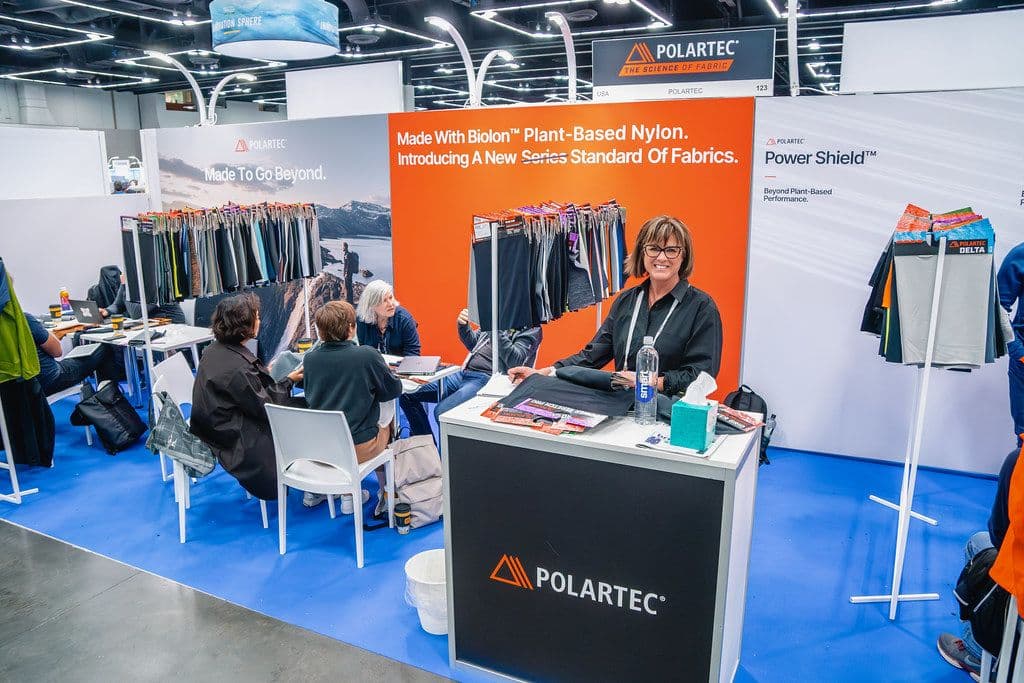
The live directory reports 341 exhibitors and provides branch and product-category filters. The event's own product framing covers high-performance fabrics, finishes, trims and accessories, with garment applications spanning workwear, sportswear, outdoor activewear, lifestyle wear, bodywear and rain gear.
Floor research can also start with the forum structure: cotton, wool, cellulose, bodywear, circular materials and innovation each have dedicated areas. Company participation and booth positions should be taken from the live directory and map because prior-edition rosters do not prove a 2026 booth.
How should a team turn 341 directory entries into a target list?
The official directory's 341 entries are too many for equal coverage across 17 hall hours. Dividing the list by floor time produces roughly 20 exhibitors per hour before breaks or meetings, so the workable list must be narrower than the full directory.
Branch and product-category filters can reduce the list to suppliers that match a named garment program, material property or compliance need. The show planner then holds selected companies and the floor map, while a separate account brief records commercial fit, existing supplier status and the question each booth owner must answer.
Which 2026 education topics and speakers are already published?
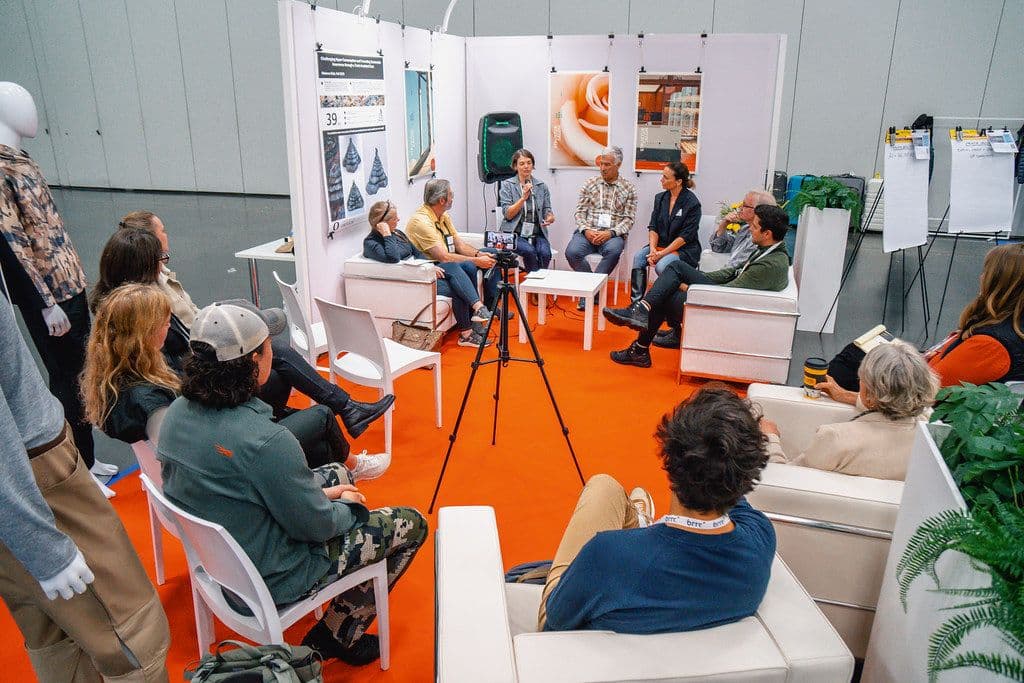
The Fall 2026 education lineup includes Day 0 OIA Catalyst content and Main Stage Expert Talks. Published sessions cover Digital Product Passport requirements, antimicrobial regulation, multi-method material testing and Autumn/Winter 2028 trend intelligence.
Named contributors include James Pollack of Marten Law, Barry McGeough of QMT Quick Med Technologies, Bernd Leisenfeld of QMT, Harrie Schoots of AATCC, Patel Himanshu of KEEN Footwear and trend specialist Nichole de Carle. The session directory remains the source for late program changes.
Where do supplier meetings fit around the Main Stage program?
Tuesday's hall remains open from 9:00 AM to 6:00 PM while published Main Stage sessions run at 11:40 AM, 12:25 PM, 2:40 PM and 4:10 PM. Teams can protect chosen education blocks and place supplier meetings in the remaining windows instead of letting every booth conversation compete with the same sessions.
Wednesday offers 9:00 AM to 5:00 PM for the final route. The most reliable meeting inventory is the 17 total hall hours minus the exact talks each attendee selects, because the value of a session varies by role and product brief.
Does the attendee profile match a B2B textile sales motion?
The verified audience includes designers, product specialists, purchasing experts, material managers and sustainability directors. That mix spans specification, sourcing, compliance and approval work, so the qualification question is not simply whether a visitor likes a fabric but whether the material fits an active development program.
The event is less suitable for sellers without a direct connection to apparel, footwear, textiles or related supply-chain work. A useful booth plan distinguishes technical evaluators from purchasing owners and records which product season, garment category and decision stage each person represents.
How can exhibitors prioritize accounts without an attendee count?
The organizer publishes professional roles and a 341-company exhibitor directory but does not provide a current audited attendee total on the reviewed pages. That prevents a defensible attendees-per-exhibitor ratio and rules out claims about visitor density.
Account selection can still use sourced attributes: outdoor, lifestyle and activewear focus; verified design, product, purchasing, material and sustainability roles; and the forum categories. Each target should connect one named company to one material need, one likely buying role and one intended meeting outcome.
What do My Show, meeting planning and Colleqt each do?
The event site provides My Show planning, an exhibitor directory, product directory, show map and a meetings platform for qualified attendees to connect with exhibitors in advance. Those tools organize discovery and planned visits before a badge interaction occurs.
Colleqt QR Codes and the Lead Manager App serve the exhibitor capture workflow. Colleqt lets visitors leave contact details when staff are occupied, while Lead Manager records a scanned lead, custom answers and conversation notes.
Where does itinerary planning end and lead capture begin?
My Show and the meetings platform answer where to go and which supplier to meet. Lead Manager and Colleqt answer who engaged at a booth and what the exhibitor captured. Treating those jobs as interchangeable would leave either the route or the conversation record incomplete.
A planned supplier meeting can therefore exist in the itinerary before any lead record exists. After the discussion, the capture layer needs the visitor's role, stated material requirement, response to custom questions and next action, not only the company selected in the planner.
What exhibitor costs are public for the 2026 Fall edition?
The reviewed public pages do not publish a 2026 booth rate, corner premium, service package or total exhibit-space price. The visible $0, $100, $300 and $400 figures are attendee badge prices and cannot be substituted for exhibitor investment.
Because freight, labor, utilities, travel and space pricing are not publicly itemized, this draft keeps the cost gap explicit. It does not create a booth range or ROI result from attendee admission prices.
How many reps cover the 17 exhibit-hall hours?
The hall operates for nine hours Tuesday and eight hours Wednesday, totaling 17. At B2Brain's benchmark of 31 scans per productive rep-day, two reps working both days create capacity for 124 scans: 2 reps multiplied by 2 days multiplied by 31.
That figure is a staffing benchmark, not an attendance forecast or outcome guarantee. A materials booth may need separate technical and commercial coverage, especially when one person attends an Expert Talk or handles a scheduled supplier meeting away from the stand.
What does the official Lead Manager capture?
The organizer's current Fall exhibitor page names Lead Manager App, Colleqt QR Codes and Lead Booster. Lead Manager supports fast capture, custom qualification questions and conversation notes. Colleqt provides unattended QR capture when booth staff are busy.
The same guide documents team setup, lead scoring, form customization, visitor-interest data, ratings, personalized notes and real-time monitoring. It also recommends placing multiple Colleqt codes when a booth contains several stations.
Which Lead Manager limits remain unpublished?
The public guide describes custom questions, scoring, notes, interests, ratings, QR collection and real-time monitoring. It does not publish a Fall 2026 device price, license count, offline behavior, export format or native CRM integration list.
Those gaps matter because they prevent a complete cost or system comparison. The page therefore states only the functions documented by the organizer and leaves unsupported integration and availability claims out of the draft.
How does B2Brain differ from the event's capture layer?
Lead Manager and Colleqt are the organizer-documented capture options for the booth. B2Brain runs a broader sequence across pre-event targeting, on-floor capture and booking, then post-event Leads-to-Meeting and opportunity attribution.
B2Brain reports capture in under 30 seconds per conversation and event-to-CRM attribution for deal and opportunity creation, not contact sync alone. Those are B2Brain claims, not statements about Lead Manager's undocumented limits, and the tools may be used together when organizer access is required.
Should exhibitors use Lead Manager, B2Brain or both?
Lead Manager or Colleqt may be required for the organizer's badge and QR workflow, while B2Brain can carry the account brief, conversation context, meeting commitment and pipeline attribution. The operational choice depends on badge access and the exhibitor's required CRM record.
The organizer has not published a current Lead Manager price or order deadline on the reviewed public page, so a price-based decision rule is not possible. No B2Brain price is quoted on an event page.
What information belongs in every textile-sourcing conversation?
A useful Functional Fabric Fair record includes the garment segment, intended use, required performance property, material composition, testing or regulatory constraint, product season, buying role, evaluation timing and agreed next action. Those fields mirror the event's published audience and product structure.
For a live brief, the rep can also capture sample quantity, incumbent material, target date and the technical stakeholder who must review it. B2Brain keeps the buying process, blocker, role and next step alongside the contact rather than leaving those facts in separate handwritten notes.
How can 341 exhibitors be worked without lowering lead quality?
The current directory contains 341 exhibitors across 17 floor hours, or roughly 20 booths for every available hour if a visitor attempted complete coverage. B2Brain's productive-rep benchmark is 31 scans per day, which is far below indiscriminate contact collection across the whole directory.
Quality control therefore begins with exclusion: use the forum and directory categories to remove suppliers unrelated to the active brief. During each conversation, require a material need, authority signal, timing and next action before classifying the record as qualified.
When should Fall 2026 leads be routed after the final close?
The final hall closes Wednesday, October 28, at 5:00 PM. B2Brain's lead-decay reference puts the strongest response window within two hours, so first routing runs through 7:00 PM that evening. The one-week exception review falls on Wednesday, November 4, 2026.
Owners can be assigned by garment program, sourcing requirement or account tier. The next-morning review should separate booked meetings, sample requests, technical follow-ups and unqualified scans so each record receives an action that matches the actual conversation.
How should exhibitors measure return without a public booth price?
A defensible ROI calculation needs total event spend, qualified conversations, meetings booked and opportunity value. The event site publishes attendee badges and 17 hall hours but not the current exhibit-space or service cost, so this draft does not manufacture a cost-per-meeting result.
After the show, exhibitors can record actual space, freight, labor, travel and staffing costs, then divide total spend by meetings booked from qualified booth leads. LTM means meetings booked divided by qualified booth leads. B2Brain reports 52 percent LTM on the floor against an 8 percent industry average for post-event follow-up.