




What to know before TechCrunch Disrupt 2026
- TechCrunch Disrupt 2026 runs Tuesday October 13 through Thursday October 15 at Moscone West, 800 Howard Street, San Francisco.
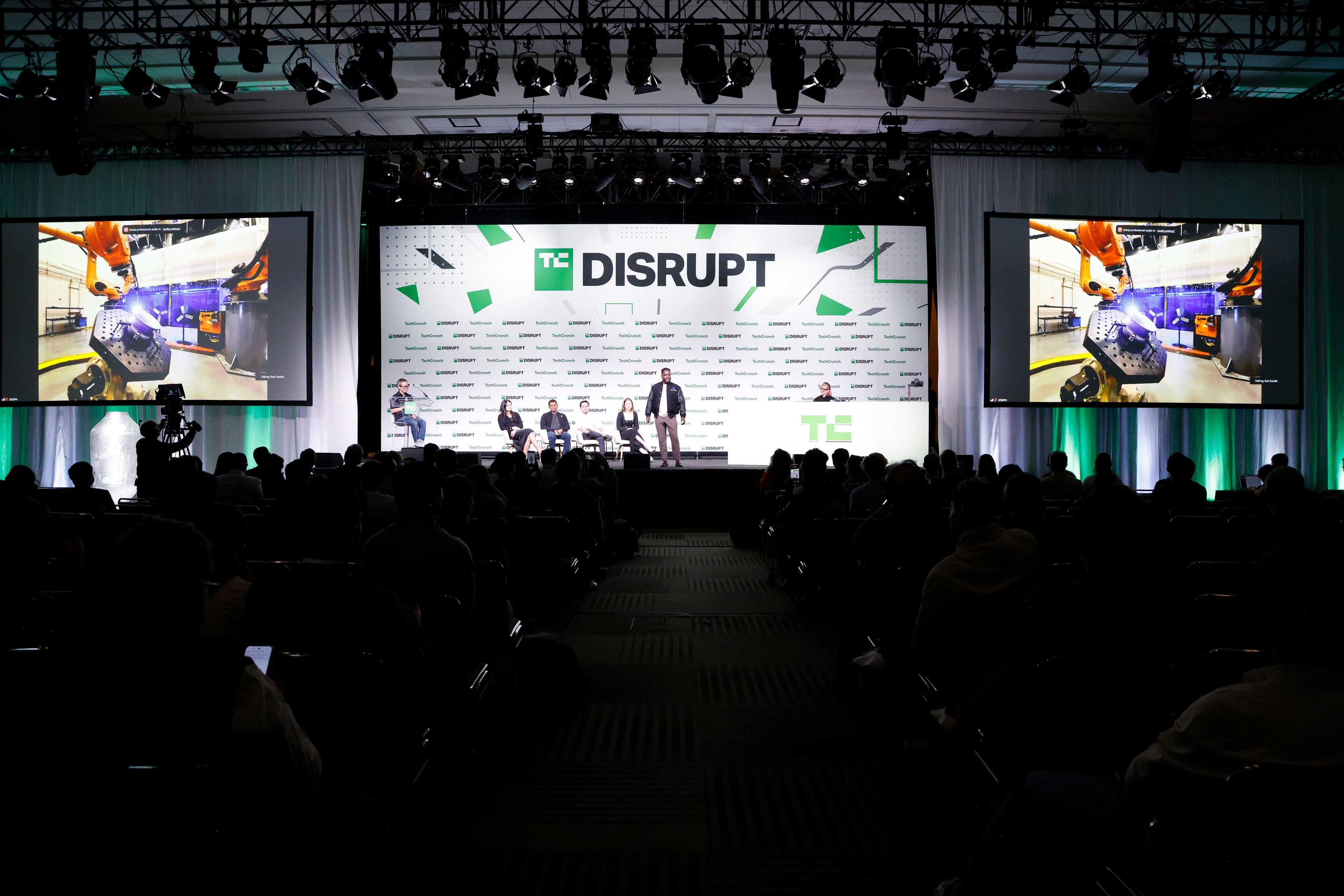
- TechCrunch programmes six stages, more than 200 sessions and the Startup Battlefield competition across the three days.
- The organizer advertises more than 10,000 attendees and more than 20,000 connections made.
- Early pricing lists the Attendee Pass at $849, the Founder Pass at $899 and the Investor Pass at $999, each below its regular rate.
- The 2026 agenda spans four tracks: building and scaling, AI and the physical world, digital finance, and machines, infrastructure and energy.
- The reviewed 2026 TechCrunch pages name no official lead-retrieval product, so exhibitors confirm capture terms from the current order form.
- B2Brain treats booked meetings and event-to-CRM opportunities as stronger outcomes than badge-scan volume.
What is TechCrunch Disrupt 2026, and why does it matter?
TechCrunch Disrupt 2026 is TechCrunch's three-day startup and technology conference at Moscone West in San Francisco, running October 13 to 15. It matters because one venue holds the six stages, the expo and the Startup Battlefield competition, which is how a founder, investor and operator crowd becomes reachable inside a single week.
TechCrunch is the named organizer, and the programme is built around four tracks: building and scaling, AI and the physical world, digital finance, and machines, infrastructure and energy. Prior recaps such as the 2025 Startup Battlefield footage are background only; this edition's dates, stages and rosters come from the current TechCrunch pages.
Who should attend or exhibit at TechCrunch Disrupt 2026?
Disrupt 2026 works for vendors selling to startup founders, venture investors and technology operators. The vendors with most to gain sell startup technology, finance, recruiting, cloud, AI, developer and growth tools, whose buyers fill the Moscone West floor and the Startup Battlefield audience.
TechCrunch names its audience as founders, investors, operators, startup employees, enterprise innovators, students and technology partners. Chasing new logos calls for named startup or investor accounts already planning to be in San Francisco that week; a team with no reachable buyer among those roles gets more from a few booked meetings than from paid floor space.
When is TechCrunch Disrupt 2026, and what are the show hours?
TechCrunch Disrupt 2026 runs Tuesday October 13 through Thursday October 15 at Moscone West, on Pacific Time. October 13 is the opening programme, October 14 is the main conference and expo, and October 15 is the closing programme, so the heaviest floor and meeting traffic falls on the Wednesday.
The agenda carries three day entries with session starts such as 10:30 AM on the Builders Stage and 10:00 AM on the Real World AI Stage, all in Pacific Time. Exact expo open and close hours sit on the live agenda, so a team reads each day's window there before setting booth shifts and checks it again the night before.
How should teams plan each day at TechCrunch Disrupt 2026?
Each Disrupt day is planned from the live agenda, not a standard routine. The October 13 opening and October 15 closing carry lighter floor time than the October 14 conference and expo, so booked meetings weight toward the Wednesday. A morning anchors on a session a target account cares about, such as Competing for AI Talent on the Builders Stage or Operating at the Edge on the Real World AI Stage, with two or three meeting slots kept outside the busiest expo hours.
Where is TechCrunch Disrupt 2026, and how is the venue organised?
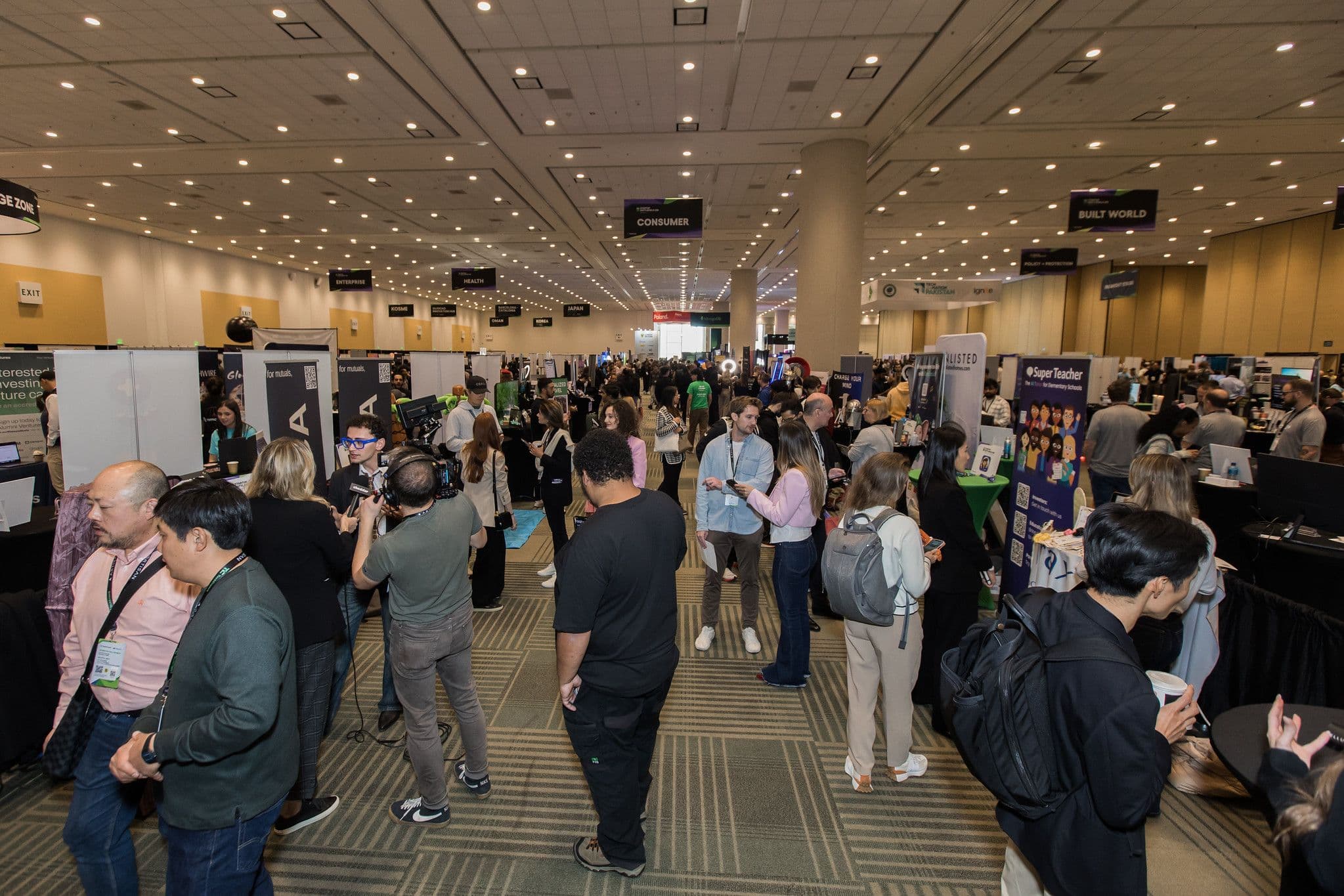
TechCrunch Disrupt 2026 is held at Moscone West, 800 Howard Street, San Francisco, CA 94103. The building stacks its programme over several floors and houses the six stages, the expo and Startup Battlefield, so a booth's position relative to those stages sets how many conversations a rep can reach between sessions.
Any session held elsewhere is named on the agenda, and the 800 Howard Street address is the one used for travel, freight and rideshare planning. The venue floor plan covers halls, badge pickup, entrances, food and accessibility; kept on each rep's phone with one fixed meeting point, it protects a fifteen-minute account slot from being lost to walking between floors.
How should attendees navigate the TechCrunch Disrupt 2026 venue and surrounding area?
Navigation at Disrupt 2026 is settled before arrival, because a missed floor, a badge queue or a rideshare line at Moscone West can eat a short meeting window. The venue and floor-plan links are saved, one team meeting point is fixed near the stages, and walking time between the expo and the six stages is built in. Wi-Fi, charging and rideshare details are confirmed directly, with a San Francisco airport and transport buffers into the SoMa district, and an October forecast check keeps reps moving along Howard Street.
How do attendees register for TechCrunch Disrupt 2026, and which pass should they choose?
Registration runs through TechCrunch's official ticket path, and the pass is chosen by role and access rather than name. The Attendee, Founder and Investor passes carry different entry to sessions, expo and separately ticketed activities, which changes how much of the three days each holder can use.
The Attendee Pass lists at $849 against a $1,049 regular price, the Founder Pass at $899 against $1,099, and the Investor Pass at $999 against $1,199, with non-profit, student and Expo+ options also published. Prices move by deadline, and Founder and Investor passes can carry eligibility rules and matchmaking access the Attendee Pass does not.
What badge, cancellation, and access rules apply at TechCrunch Disrupt 2026?
Badge and access rules follow the pass category and TechCrunch's current policy. Registration states the identification to bring, badges are collected during published pickup hours at Moscone West, and a floor badge does not open paid sessions or invitation-only functions on its own. Cancellation, refund and transfer terms are read from the live registration page while flights and hotels are still refundable, because Founder and Investor access and side events can each sit behind their own rule.
Where should attendees stay for TechCrunch Disrupt 2026?
Housing books through the official TechCrunch Disrupt hotel page for San Francisco when a current block is open, chosen for distance to Moscone West rather than nightly rate. Emails offering private attendee or hotel blocks without organizer confirmation are ignored as a common trade-show scam. A central SoMa or Union Square base shortens the walk between the venue, customer dinners and morning stand-ups, which protects early starts and end-of-day rep debriefs.
What travel plan protects the most useful time at TechCrunch Disrupt 2026?
The safest Disrupt 2026 travel plan lands before the October 13 opening or the first required team briefing and leaves after the last priority meeting on October 15. Flights are booked around those points, not the nominal expo hours, with buffers for San Francisco transport and venue entry at Moscone West. Exhibitors add freight and booth-material deadlines to the same plan, and international visitors follow TechCrunch's own visa-letter instructions where the organizer provides them.
Which exhibitors, sectors, and products are represented at TechCrunch Disrupt 2026?
Disrupt 2026 concentrates startup, venture, AI, digital-finance and infrastructure companies around its expo and Startup Battlefield. The live directory separates confirmed 2026 participants from prior-edition names and groups companies by whether each is a buyer, a partner or a competitor before outreach begins.
TechCrunch advertises more than 10,000 attendees and more than 20,000 connections made across the event. Pavilions, sponsors and product zones hint at where account clusters sit on the Moscone West floor, but they do not prove a brand seen in a 2025 recap has returned, so current names come from the live directory.
How should teams research the TechCrunch Disrupt 2026 exhibitor directory?
The Disrupt 2026 directory is worked as a live account map, not a one-time download. Current exhibitors are filtered to the startup, AI and finance categories that match the ICP, searched by company, category and booth number, and cross-checked against CRM accounts, with buyers, prospects, partners and competitors marked separately. Sales then receives a reason to meet, an account tier and an owner for each name, not a raw export copied from a roster that keeps changing.
Which sessions, speakers, and floor formats matter at TechCrunch Disrupt 2026?
The sessions that matter at Disrupt 2026 are the ones tied to a live account question. With six stages and more than 200 sessions, time is protected for the tracks a team's buyers care about, such as AI and the physical world or digital finance, while open slots hold booked meetings and product demonstrations.
Named stages include the Builders Stage and the Real World AI Stage, and Startup Battlefield sits among the sessions; current times and rooms are set on the live TechCrunch agenda. Speaker research surfaces a buyer's priorities before outreach, and a gap left around a high-traffic session keeps a rep free when its audience spills back onto the floor.
How should attendees build a TechCrunch Disrupt 2026 agenda around meetings?
The Disrupt 2026 agenda is built around confirmed conversations first, then sessions that sharpen them. Priority sessions and opt-in networking are saved in the TechCrunch event app where the current tool allows, clashes between the six stages are flagged, and the team is staggered so an education choice never leaves the booth unattended during the October 14 expo peak. Receptions and Startup Battlefield open natural meeting windows to fill with booked conversations.
Who attends TechCrunch Disrupt 2026, and does the audience match the ICP?
The Disrupt 2026 audience fits an exhibitor's ICP only where published roles and sectors overlap named target accounts. Scale, more than 10,000 attendees, helps size the floor but says nothing about whether the right founders, investors and operators will be reachable.
TechCrunch publishes more than 10,000 attendees on the official event page, more than 200 sessions across six stages, and more than 20,000 connections made as an organizer metric. Those figures describe reach, not buyer access, so attendees are weighed by role, seniority, sector, company size and region against the ICP, with any published percentage used only with its stated year and basis.
How can exhibitors identify target accounts for TechCrunch Disrupt 2026?
A Disrupt 2026 target list is built without buying an attendee list. It starts from CRM customers and open opportunities, adds founders, investors and companies drawn from the official directory and speaker pages, then ranks each account by ICP fit and a specific reason to meet in San Francisco.
Authorized organizer directories, CRM history and public speaker information are the defensible inputs; a purchased or unauthorized attendee list is not. Each name is given an account tier and owner, and outreach opens with a credible topic tied to a session or track on the published agenda.
What can the official TechCrunch Disrupt 2026 app or show planner do?
The official planning layer for Disrupt 2026 is the TechCrunch event app with its agenda and opt-in networking lists. It handles the published programme, exhibitor and navigation functions it was built for, and its login, device access, schedule syncing, floor navigation and messaging are confirmed for the 2026 edition. It is rechecked before travel because sessions across the six stages can move, and it is not assumed to store private conversation notes or route records to CRM.
Where does the TechCrunch Disrupt 2026 planner stop and lead capture begin?
The Disrupt 2026 planner stops where a private sales conversation starts. It organizes the published agenda and floor navigation, but it does not handle consent, account qualification, conversation notes, ownership, offline capture or the CRM handoff that follow a discussion on the Moscone West floor. A screenshot or printed schedule covers an app outage, while offline-ready capture protects qualification and ownership when connectivity drops inside the halls.
What does it cost to exhibit at TechCrunch Disrupt 2026?
Exhibiting at Disrupt 2026 costs well past the floor-space line. A defensible budget adds Moscone West services, travel into San Francisco, staffing, connectivity, material handling and the follow-up capacity to work the leads, then measures that total against expected pipeline rather than the booth quote alone.
Attendee registration lists $849 for an Attendee Pass, $899 for a Founder Pass and $999 for an Investor Pass, each below its regular rate; exhibiting is quoted separately. The exhibit budget covers the application, booth size, official contractors and Moscone West power, internet, furniture, freight, labor and insurance, on current 2026 contractor deadlines that can shift the total faster than the base rate.
How should exhibitors staff and operate a booth at TechCrunch Disrupt 2026?
A Disrupt 2026 booth runs on named shifts, a shared qualification standard and daily meeting targets rather than improvisation, sized from the October 14 expo peak and the number of pre-booked meetings. B2Brain recommends a consistent opener, a small set of required qualification fields and a named handoff owner, with an offline capture path kept and hot leads and duplicate records reviewed before the team leaves Moscone West each evening.
What official lead-retrieval tool is offered at TechCrunch Disrupt 2026?
The reviewed 2026 TechCrunch pages for Disrupt name no current lead-retrieval product. As of the September 2026 review, the public pages document attendee ticketing but not an exhibitor capture product, and a registration portal or event agenda is not evidence of a badge-scanning contract.
This page therefore names no vendor. The organizer is asked for the product name, provider, ordering path, deadlines, prices, licences, devices, badge method, training, onsite service and privacy terms, and until those appear in 2026 material the page will not borrow a vendor named at an earlier Disrupt edition.
What can the official lead-capture tool capture at TechCrunch Disrupt 2026, and what are its limits?
Because Disrupt 2026 names no capture product on its public pages, its exact fields and limits stay an open question until the current order form answers it. Capture features are not inferred from the registration vendor or the event app; attendee fields, custom questions, free-text notes, ratings, photos, offline use, duplicate handling, export formats, CRM integrations and manager reporting are all verified in the 2026 order form, and anything undocumented stays an open purchasing question rather than a fault charged against the tool.
Is B2Brain an alternative to the official lead-capture tool for TechCrunch Disrupt 2026?
B2Brain can act as an alternative or a companion to whatever capture route Disrupt 2026 offers, once that route is named, when a team needs account briefing, conversation context, meeting booking and event-to-CRM attribution. The comparison stays job by job and invents nothing for an organizer tool the 2026 pages leave undocumented.
B2Brain runs three motions: pre-event targeting, on-floor capture and booking, and post-event meeting conversion and attribution. It reports booth capture in under 30 seconds per conversation, and 52 percent Leads-to-Meeting on the floor against an 8 percent industry average for post-event follow-up, where Leads-to-Meeting means meetings booked divided by qualified booth leads.
Should exhibitors use B2Brain, the official lead-capture tool, or both at TechCrunch Disrupt 2026?
The right Disrupt 2026 setup depends on the commercial jobs a team needs done. If the only requirement is organizer-approved badge data and its export, an official route can be enough; where account briefing, contextual qualification, booked meetings and CRM attribution matter, B2Brain adds them. Using the two together keeps official badge data alongside B2Brain qualification once consent, deduplication, one owner and the CRM system of record are agreed before the show.
What should reps capture in every TechCrunch Disrupt 2026 conversation?
Every Disrupt 2026 conversation worth keeping holds the account, contact, buying role, business problem, current process, blocker, urgency and agreed next step. B2Brain stores that context beside the lead and lets the rep book the next meeting and assign an owner while the detail is fresh, so a founder or investor discussion at Moscone West becomes an owned commercial action rather than an isolated scan that leaves follow-up nothing specific to say.
How can teams maintain lead quality on the TechCrunch Disrupt 2026 show floor?
Lead quality at Disrupt 2026 rests on one fast, repeatable capture standard used by every rep. B2Brain reports capture in under 30 seconds per conversation, but speed only counts when the required fields stay useful, so the smallest useful set is required, an offline fallback covers weak spots in the Moscone West halls, and managers check duplicates, ownership and incomplete records in a daily debrief so hot conversations do not cool overnight.
How should TechCrunch Disrupt 2026 leads be routed and followed up?
Disrupt 2026 conversations are routed while the context is still precise. Each qualified booth record needs an owner, a priority, an agreed next step and a meeting status, with the buyer's problem attached, so sales receives a reason to call rather than an anonymous San Francisco contact export.
B2Brain delivers a morning-after offline-to-pipeline report to the CMO by 9am and reports 100 percent event-to-CRM attribution through deal and opportunity creation, not contact sync alone. It puts conversation-to-conversion probability at about 85 percent within two hours and about 9 percent after one week, which sets the follow-up clock: booked meetings first, then urgent records to their named owner.
How should exhibitors measure TechCrunch Disrupt 2026 pipeline, ROI, and the decision to return?
Disrupt 2026 is measured on full event cost, qualified conversations, meetings booked, opportunities created and attributable revenue pipeline. Badge scans on the Moscone West floor are only an activity count, and the decision to return in 2027 rests on measurable commercial movement inside an agreed post-event window.
B2Brain uses 31 scans a day as its productive-rep benchmark and reports 2.4 times more booth meetings than cold floor-walking when reps work a pre-event briefing. That benchmark sizes rep output, but the return still turns on qualification rate, conversion, contract value and the length of the measurement window, tracked as cost per qualified conversation and per opportunity.