


Key takeaways
- Oracle AI World 2026 runs October 25 to October 28 at The Venetian Convention and Expo Center in Las Vegas.
- The general attendee pass is $2,399, while the group pass is $1,899 when 5+ colleagues attend.
- The AI World Hub opens at 11:00 AM on Monday, 8:00 AM on Tuesday, and 9:00 AM on Wednesday.
- Oracle lists Oracle Cloud Infrastructure, Oracle AI Database, AI Data Platform, Fusion Cloud Applications, Industry Solutions, and Customer Success Services as content areas.
- The planning guide says all hotel blocks have closed, so discounted conference rooms are no longer guaranteed.
What defines Oracle AI World 2026 for an exhibitor?
Oracle AI World 2026 is Oracle's Las Vegas conference from October 25 to October 28. Its programme combines mainstage keynotes, product demonstrations, and customer case studies around Oracle technology. For an exhibitor, that makes the useful unit of conversation a named Oracle workload or implementation question, rather than a broad interest in AI.
Which buyer teams will find relevant work at Oracle AI World?
Oracle AI World 2026 is built for customers and partners working with Oracle products and technologies. The published areas span Oracle Cloud Infrastructure, Oracle AI Database, AI Data Platform, Fusion Cloud Applications, Industry Solutions, and Customer Success Services. The partner programme also includes the Partner Success Summit. Teams selling into those specific product environments have a clearer reason to attend than vendors with no Oracle connection.
When are the 2026 dates, registration hours, and Hub hours?
Oracle AI World 2026 starts Sunday, October 25, and ends Wednesday, October 28. Sunday registration runs 7:30 AM to 6:30 PM; Monday registration runs 7:00 AM to 7:00 PM. The AI World Hub opens Monday at 11:00 AM, Tuesday at 8:00 AM, and Wednesday at 9:00 AM. These are separate windows from the broader conference programme.
How does the four-day programme change from Sunday to Wednesday?
Oracle AI World 2026 uses Sunday, October 25, for orientation, Oracle University training, AI Agent Hackathons, and the Partner Success Summit. Monday has a 9:30 AM to 11:00 AM keynote and a 5:00 PM to 7:00 PM welcome reception. Tuesday, October 27, includes Oracle Vision and Strategy at 3:30 p.m. and The Party with Maroon 5; Wednesday's Hub opens at 9:00 AM.
Which floors of The Venetian hold the main event functions?
Oracle AI World 2026 uses The Venetian Convention and Expo Center. The planning map places registration, the AI World Hub, keynotes, and the Partner Briefing Center on Level 2. Attendee meals and more content sessions are on Level 1, while the Executive Summit is on Level 5. The floor split matters when moving between a session and a booth meeting.
How can attendees reach and move through the venue?
Oracle AI World 2026 is at The Venetian Convention and Expo Center on the Las Vegas Strip, with Harry Reid International Airport as the arrival airport identified by Oracle. Onsite maps and signage supplement the Oracle Events mobile app. Sunday's orientation includes a 25-minute guided session and a venue tour, giving first-time attendees a way to locate registration and meeting routes before Monday's programme.
What do the 2026 passes cost and include?
Oracle AI World 2026 lists a $2,399 general attendee pass, a $1,899 group pass for 5+ colleagues, and a $1,399 public-sector pass. The free On Air option covers selected digital programming. An Oracle University instructor-led course costs $795 extra. These options have different physical access, so a digital registration should not be treated as a Hub pass.
Which badge, session, and cancellation rules affect access?
Oracle AI World 2026 requires attendees to wear their conference badge throughout the event. A lost badge may incur a $75 replacement fee. Session seating is first-come, first-served even when a session is saved in My Schedule. Cancellation requests go to the registration team by email, with eligibility governed by the event terms; hotel cancellations are handled separately.
What is the current 2026 hotel position?
The Oracle AI World 2026 planning guide says all conference hotel blocks have closed and discounted rooms cannot be guaranteed. The guide still names The Venetian Resort, The Palazzo, Wynn, Encore, and other conference properties. Oracle directs registered attendees to the Attendee Portal for their reservation details. The FAQ says an entire hotel reservation generally needs cancellation at least 72 hours before arrival to avoid a one-night penalty.
What travel details are still useful after the hotel blocks close?
Oracle AI World 2026 names Harry Reid International Airport for Las Vegas arrivals and places the conference at The Venetian Convention and Expo Center. The planning guide says the hotel blocks have closed, so current room availability sits with the properties rather than a guaranteed conference rate. Registration is in the Venetian Ballroom on Level 2, a practical first destination before moving to sessions or the Hub.
Which sponsors and Oracle product areas will appear in the Hub?
Oracle AI World 2026 names Accenture, AMD, Deloitte, KPMG, and PwC in Hub activities. It also identifies Capgemini, Cognizant, IBM, Infosys, and TCS as Premier Sponsors with booths. The Oracle product areas include OCI, AI Database, AI Data Platform, Fusion Cloud Applications, Industry Solutions, and Customer Success Services. That is a published set of presences, not a complete exhibitor directory.
Is a complete 2026 exhibitor directory public?
The reviewed Oracle AI World 2026 Hub and sponsor pages identify selected partner booths and sponsor activations, including the Premier Sponsors. They do not provide a full, public exhibitor roster with booth numbers in the material reviewed on October 7, 2026. The Attendee Portal and session planning tools are available to registered attendees, while the public Hub page supports only selected named examples.
Which 2026 sessions and stage formats are confirmed?
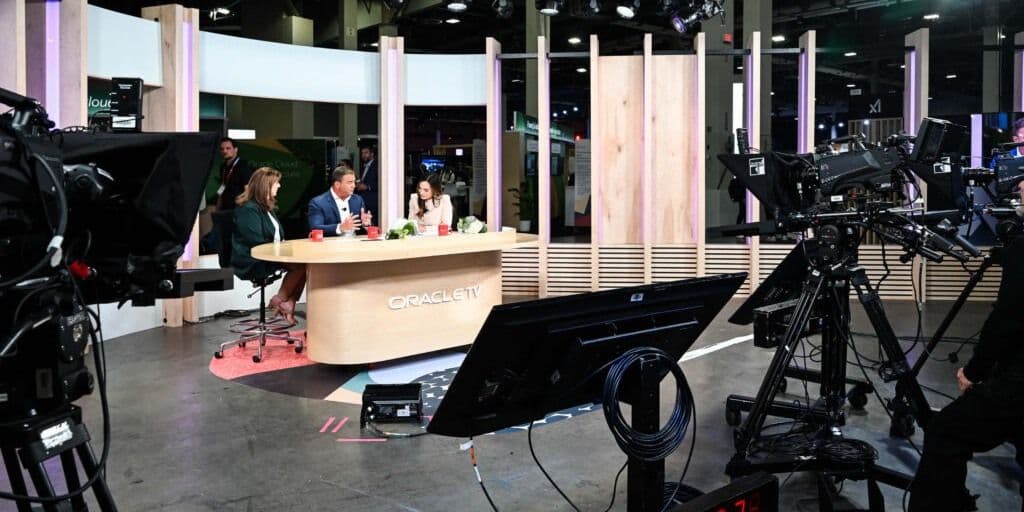
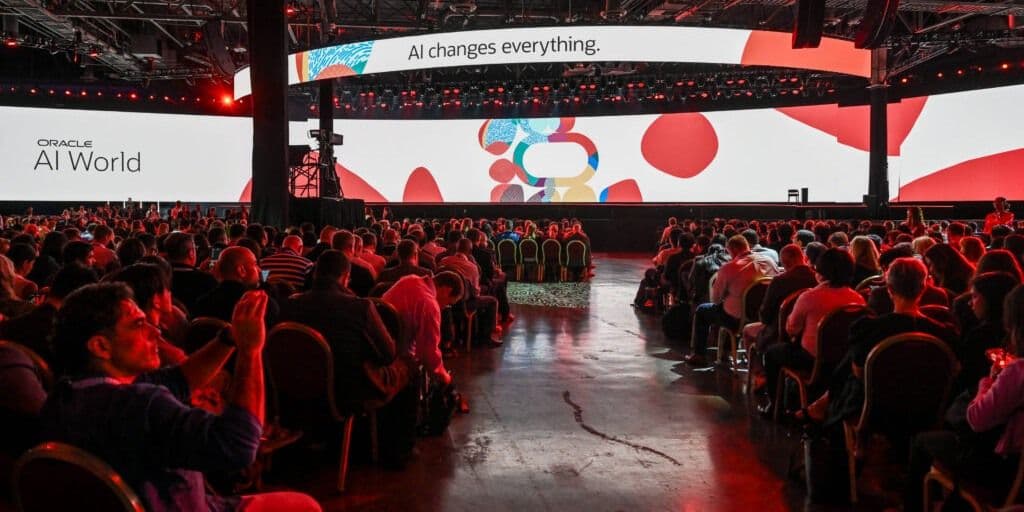
Oracle AI World 2026 lists mainstage keynotes, product demonstrations, customer case studies, and technical learning and training sessions. The keynote page schedules its opening session Monday, October 26, at 9:30 a.m., and Oracle Vision and Strategy Tuesday, October 27, at 3:30 p.m. The Hub adds 20-minute theater talks and Oracle TV interviews. These formats serve different depths of product discussion.
Where can meetings fit around the published schedule?
Oracle AI World 2026 opens the Hub Monday from 11:00 AM to 7:00 PM, Tuesday from 8:00 AM to 6:00 PM, and Wednesday from 9:00 AM to 2:00 PM. That is 23 published Hub hours across three days. The Monday welcome reception takes 5:00 PM to 7:00 PM; Tuesday's Dedicated Hub Hour runs 5:00 PM to 6:00 PM. See the event meeting guide.
What does Oracle publish about the audience mix?
Oracle AI World 2026 describes a community of customers, partners, and Oracle product experts. Its public programme is centred on Oracle products and technologies, not a general AI marketplace. The sponsor page addresses partners seeking exhibit space, conference sessions, and receptions. The reviewed 2026 pages do not publish an audited split of buyer titles or company sizes, so those proportions cannot be assigned to the audience.
Can a team identify named target accounts before the show?
Oracle AI World 2026 provides product tracks and selected sponsor names, but the reviewed public pages do not publish a full attendee company list. The Hub page identifies Premier Sponsors, while the sponsor page invites sponsor participation in exhibit spaces, conference sessions, and receptions. Those facts support segment-level preparation; they do not establish which individual customer accounts will attend or agree to meetings.
What does the Oracle Events app and My Schedule support?
Oracle AI World 2026 uses the Oracle Events mobile app for the event agenda and onsite information. In the Attendee Portal, registered attendees can use My Schedule to save sessions, view conflicts, and add meetings, demos, and personal activities. The Hub's Digital Passport asks participants to finish 8 of the 12 challenges for a prize. Session seats remain first-come, first-served.
Does the published planner describe booth lead capture?
The reviewed Oracle AI World 2026 planning pages describe My Schedule, the Oracle Events mobile app, and the option to add meetings, demos, and personal activities. The Hub also describes a Digital Passport. They do not describe the fields, export process, or supplier for sponsor badge capture. An attendee scheduling feature is not evidence that a sponsor's conversation record is created or routed to its CRM.
What public 2026 exhibiting prices are available?
Oracle AI World 2026 invites partners to sponsor exhibit spaces, conference sessions, and receptions. The reviewed public sponsor page does not list a booth rate, sponsor-tier price, equipment charge, or freight tariff as of October 7, 2026. The published $2,399 general attendee pass is an attendance price, not a sponsor package or exhibit-space estimate.
How much Hub time is available to staff a booth?
Oracle AI World 2026 publishes 11:00 AM to 7:00 PM on Monday, 8:00 AM to 6:00 PM on Tuesday, and 9:00 AM to 2:00 PM on Wednesday for the Hub. Those intervals total 23 hours of published Hub access. The Monday welcome reception overlaps 5:00 PM to 7:00 PM, while Tuesday has a Dedicated Hub Hour from 5:00 PM to 6:00 PM. See the event meeting guide.
Is an official 2026 lead-retrieval vendor confirmed?
Oracle AI World's public 2026 sponsor, Hub, and FAQ pages reviewed on October 7, 2026 describe sponsor opportunities and attendee activities, but they do not name the lead-retrieval contractor or a current-edition order form. A named vendor would need a 2026 exhibitor-services page or order form. The public evidence available here establishes the Hub and sponsor programme, not that supplier.
Which data fields can the official capture tool retain?
The reviewed 2026 Oracle AI World pages do not publish a current lead-capture product specification. The Attendee Portal supports My Schedule, and the mobile app carries agenda information, but those attendee features do not establish sponsor capture fields or exports. Without a 2026 product document, claims about custom questions, notes, consent, or CRM integration would go beyond the available source material.
How does B2Brain compare with the event's capture tool?
Oracle AI World 2026 has not publicly identified a current lead-retrieval supplier in the reviewed material, so a feature comparison cannot be attributed to that tool. The published information concerns sponsor presence, My Schedule, and the Hub rather than badge-scan specifications. A B2Brain comparison can therefore state its own documented workflow, but cannot claim the unknown event tool lacks any capability.
Is there evidence for using one tool or both?
The Oracle AI World 2026 public pages reviewed on October 7 identify sponsor opportunities and My Schedule for attendees, not the sponsor lead-retrieval product or its terms. They establish no requirement to use a particular scanner and no evidence that a second workflow is prohibited. A decision between tools, or a combined setup, remains a procurement question until the current exhibitor kit is available.
What conversation context belongs with a booth contact?
Oracle AI World 2026 covers OCI, AI Database, AI Data Platform, Fusion Cloud Applications, Industry Solutions, and Customer Success Services. Those product areas make a contact's workload, implementation stage, buying role, and agreed next step more useful than a badge record alone. The public pages do not specify which of those fields an official sponsor tool can store, so this is a planning framework rather than a claim about that tool.
What makes a lead relevant to this show?
Oracle AI World 2026 is focused on Oracle products and technologies, with a programme for the Oracle community of customers and partners. A relevant booth conversation can be tied to a named Oracle environment or project, such as OCI, AI Database, or Fusion Cloud Applications. The reviewed sources do not provide an event-specific definition of a qualified lead or a benchmark for conversion, so any scored threshold would be speculative.
When should post-event routing begin?
Oracle AI World 2026 ends Wednesday, October 28, and its Hub closes at 2:00 PM that day. A next-business-day routing window therefore begins Thursday, October 29, one calendar day after the floor closes. The event's 30 days of On Air access can support content follow-up, but it is separate from the initial contact handoff. See the event meeting guide.
Can an exhibitor calculate a defensible 2026 ROI now?
Oracle AI World 2026 publishes attendance pass prices, including $2,399 for a general attendee and $1,899 for a qualifying group member. Its reviewed public sponsor page does not provide booth-package pricing, and no event source provides an exhibitor's average contract value or meeting conversion. The pass prices are real cost inputs; they cannot alone produce a defensible return-on-investment figure.