


IEEE PES T&D 2026 at a glance
- The Chicago edition ran May 4 to 7, 2026 in McCormick Place's South Building.
- The organiser's recap records more than 18,000 professionals, 933 exhibitors and 89 countries.
- The exhibit hall provided 20 hours across Tuesday, Wednesday and Thursday.
- Map Your Show connected the exhibitor directory, products, sessions and interactive floor plan.
- The program combined more than 100 sessions and panels with four exhibit-floor stages.
- Public sources did not verify a named 2026 lead-capture product or complete booth-cost schedule.
What made IEEE PES T&D 2026 a distinct power-industry meeting?
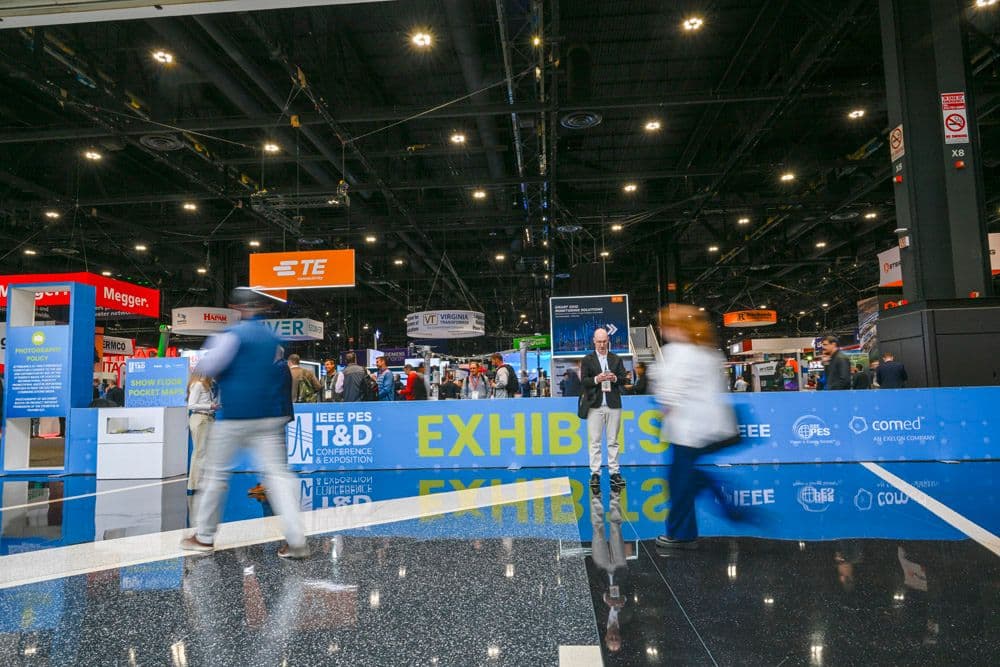
IEEE PES T&D Conference & Exposition 2026 ran May 4 to 7 in McCormick Place's South Building in Chicago. IEEE Power & Energy Society produced the biennial event with ComEd as host utility. The post-event recap records more than 18,000 professionals, 933 exhibitors and 89 countries, while the program combined technical education with equipment demonstrations across the exhibit floor.
Which utility and grid teams were the best fit for IEEE PES T&D 2026?
The published audience included utility executives, power-system and electrical engineers, system planners, regulators, consultants, manufacturers, IT providers, researchers and students. The call for participation named work in substations, distribution automation, protection and control, communications, storage, distributed energy, microgrids and grid data. General business offers without a direct transmission, distribution or utility-operations use case were a weaker fit.
When did the conference and Chicago exhibit hall operate?
Conference activity ran Monday, May 4 through Thursday, May 7, 2026. The exhibit hall opened Tuesday from 10:00 a.m. to 5:00 p.m., Wednesday from 10:00 a.m. to 6:00 p.m. and Thursday from 10:00 a.m. to 3:00 p.m., for 20 published floor hours. Onsite registration began Sunday, May 3 and continued through Thursday afternoon.
How did the four-day IEEE PES T&D schedule divide floor and education time?
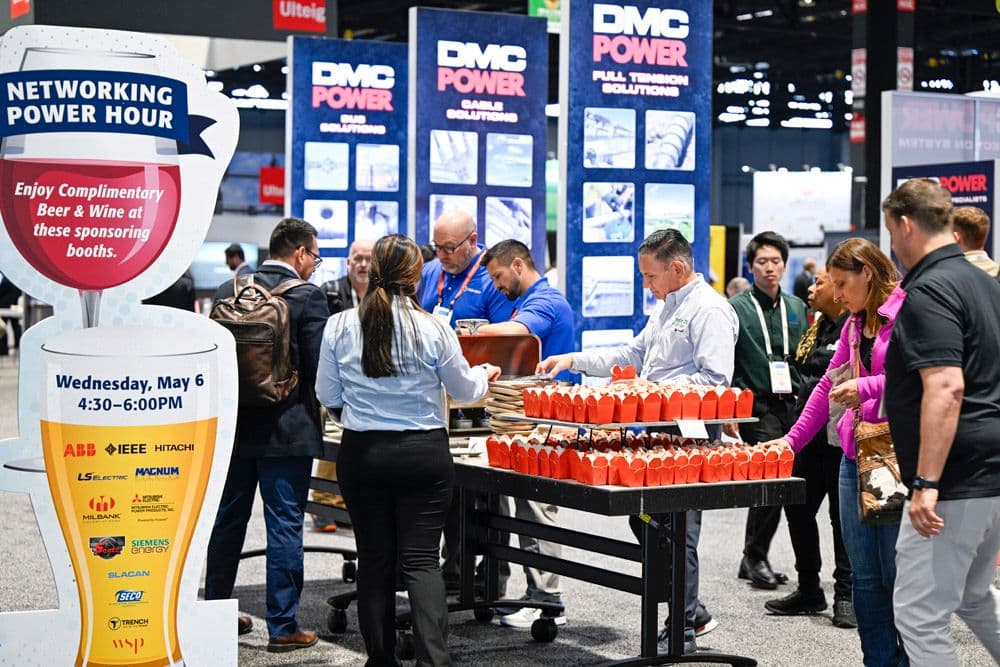
Monday centered on tutorials, Plain Talk courses, technical tours and the 6:00 p.m. welcome reception. Tuesday began with the 8:00 a.m. opening program before the exhibit hall opened at 10:00 a.m. Wednesday paired an eight-hour floor day with the Power Hour reception from 4:30 to 6:00 p.m. Thursday closed the hall at 3:00 p.m. while technical panels continued to 5:00 p.m.
Where inside McCormick Place did IEEE PES T&D 2026 run?
The event occupied McCormick Place's South Building at 2301 South King Drive in Chicago. Registration support was listed in the South Hall lobby, and the official Map Your Show floor plan linked booth locations, exhibitors, sessions and products. Four exhibit-floor stages had published booth locations: Data Center at 4467, Grid Edge at 4606, Innovation at 4839, and Resilience and Renewables at 2691.
What travel and onsite services supported the Chicago edition?
Full-conference registration included complimentary bus transportation from contracted hotels. The attendee hub linked the hotel block, shuttle schedule, parking and public transit information, venue maps, accessibility services, bag and coat services, and international travel resources. The archived pages do not preserve a single verified hotel-rate table, so this draft does not state expired room prices or promise availability.
Which 2026 registration package matched each attendance plan?
Standard full-conference rates were $750 for IEEE PES members, $780 for IEEE members and $1,100 for non-members. A one-day pass cost $525, $575 or $650 for those same groups. Exhibit-only access ranged from $275 for one day as a PES member to $650 for three days as a non-member. Full packages covered technical sessions, floor stages, receptions, proceedings, planner tools, lunch and Wi-Fi.
Which badge, refund and age rules applied in Chicago?
Written cancellations received by April 3, 2026 qualified for a refund less a $35 fee. One-day exhibit registrations, individual Utility Saver registrations and opening-reception tickets were nonrefundable. Attendees had to be at least 16 years old, student rates could require current identification, and a lost or stolen badge could incur a $65 processing fee. Credit cards were required because onsite cash was not accepted.
What did the official housing record establish for 2026?
IEEE PES T&D offered an official hotel room block and bus transport from contracted properties. Exhibitor housing opened October 21, 2025 through the Exhibitor Resource Center. The currently available archive does not retain a complete list of nightly rates, distances and cancellation dates for the closed block, so the draft records the service without turning superseded lodging data into current advice.
How should a completed 2026 travel plan be interpreted now?
For the historical Chicago edition, arrival by Sunday, May 3 allowed time for noon-to-5:00 p.m. registration before Monday tutorials. Exhibitors followed targeted move-in from April 30 and May 1, then general move-in May 2 through May 4. Move-out began after the Thursday hall closed at 3:00 p.m. and continued Friday from 8:00 a.m. to 5:00 p.m. These dates describe 2026 operations, not the 2028 Atlanta event.
What scale and product coverage did the 2026 exhibit floor reach?
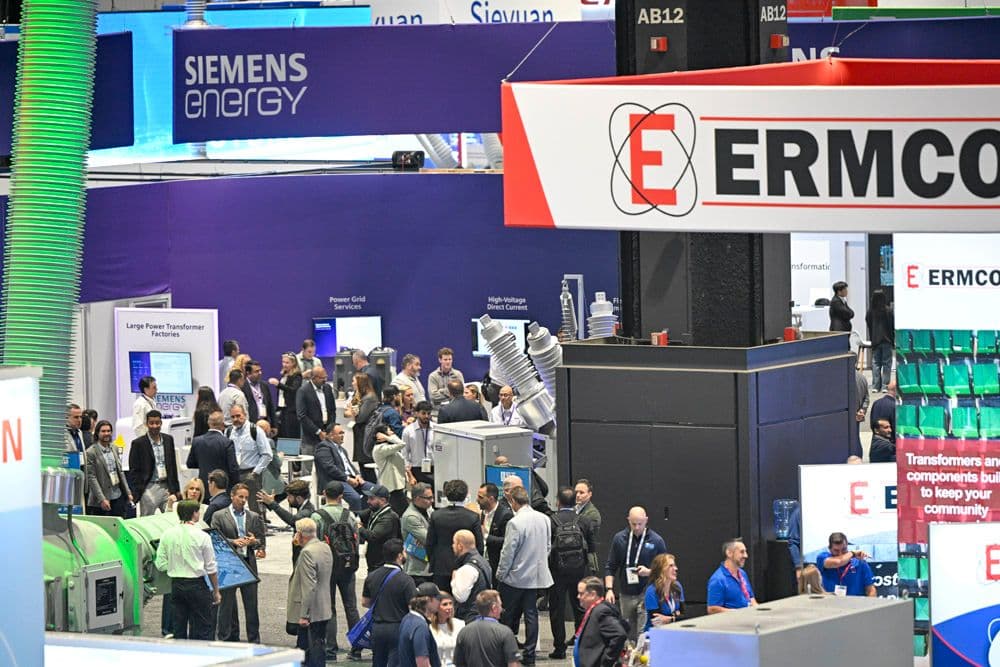
The organiser's recap lists 933 exhibitors and says 36 percent were new that year. The program covered transmission equipment, distribution automation, substations, protection and control, energy storage, data centers, distributed energy, microgrids, cyber and physical security, robotics and advanced grid controls. That breadth made product category and utility use case more useful filters than a generic exhibitor priority list.
How could teams research the archived exhibitor directory?
The attendee resource hub identified Map Your Show as the interactive guide for exhibitors, sessions, products and the floor plan. A research list could therefore combine directory category, booth location and a target utility requirement. The 2026 post-event total of 933 exhibitors provides the scale, but the live planner rather than an copied roster remained the source for company names and booth numbers.
Which speakers, sessions and show-floor formats shaped the program?
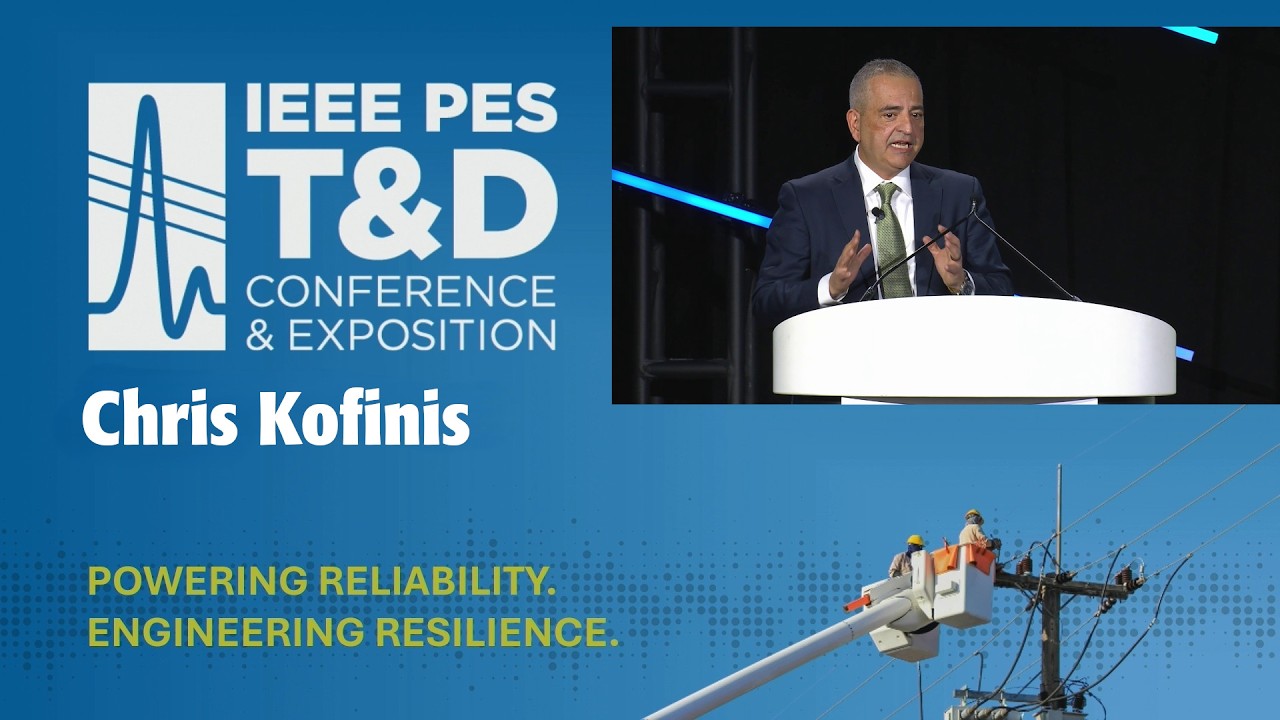
Chris Kofinis delivered the 2050 IEEE PES Vision keynote during the May 5 opening program. Joseph E. Svachula welcomed attendees as conference director, and IEEE PES President C.Y. Chung introduced the society's global research. The wider schedule listed more than 100 sessions and panels, technical tours, poster sessions, Plain Talk courses, tutorials, Super Sessions and four dedicated exhibit-floor stages.
Where were the strongest published meeting windows?
Tuesday offered seven exhibit hours after the 8:00 to 10:00 a.m. opening program. Wednesday provided the longest continuous floor window, 10:00 a.m. to 6:00 p.m., with Power Hour embedded from 4:30 to 6:00 p.m. Thursday ran 10:00 a.m. to 3:00 p.m. Booth meetings therefore had 20 total hall hours, while keynote and technical-program appointments could be placed outside those windows.
Did the reported audience match utility-market account plans?
Post-event reporting counted more than 18,000 professionals from 89 countries and a 20 percent increase in utility attendance compared with the 2024 edition. The organiser separately named utility executives, engineers, policymakers, consultants, manufacturers and IT providers. Those categories support account plans tied to grid investment or operations, but they do not prove a particular title mix, buying authority or sales outcome for an individual booth.
How large was the account-selection problem for exhibitors?
Dividing more than 18,000 professionals by 933 exhibitors gives roughly 19 participants per exhibitor across the full event population. That is not a booth-traffic forecast because attendees divide their time among education, tours and 932 other exhibitors. A usable target list therefore needs utility type, grid function, geography and the technical requirement that connects an account to the exhibitor's equipment or service.
What did the official app and Map Your Show planner cover?
The full-conference package included mobile-app and planner tools. The attendee hub described Map Your Show as the place to search exhibitors, sessions and products and to open the interactive floor plan. It also linked a separate mobile app for daily planning, navigation and live updates. Those functions establish agenda and discovery support, not a verified exhibitor lead-capture product or access to private attendee records.
Where did planning tools end and booth conversation capture begin?
The verified 2026 pages document Map Your Show for directory, floor-plan and schedule use. They do not identify a contracted lead-capture product by name in publicly accessible edition-specific material; the Freeman services manual placed lead options behind the Exhibitor Dashboard. This draft therefore treats planning and conversation capture as separate jobs and does not assign features to an unnamed vendor.
Which 2026 costs were public, and which remained private?
Attendance prices were public, including $750 for a PES-member full pass, $1,100 for a non-member full pass and $650 for a three-day non-member exhibit pass. Sponsorship pages listed selected items, including a $4,000 pre-show planner advertisement and a sold $2,000 Power Hour sponsorship. Booth-space rates and a complete service-cost schedule remained inside exhibitor systems, so no total exhibit budget is fabricated here.
How many booth staff could cover the published floor hours?
The hall provided 20 hours across three days: seven Tuesday, eight Wednesday and five Thursday. Using B2Brain's benchmark of 31 scans per productive rep-day, two reps would represent 186 benchmark scans across three days, while three would represent 279. Those figures are workload references, not attendance or meeting guarantees, and do not include time spent in stage sessions or prebooked appointments.
Was an official 2026 lead-capture vendor publicly verified?
The organiser's exhibitor-resource page said the Freeman manual included lead retrieval options, but the public page did not name the provider, package or price. The manual itself required Exhibitor Dashboard access. Under the V6 evidence rule, that is insufficient to name a contracted product for the 2026 edition. The comparison module consequently uses the neutral On your own label rather than guessing a vendor.
Which capture fields and export limits were documented?
No publicly accessible 2026 order form reviewed for this refresh established the official tool's capture fields, number of users, export format, integration support or device limit. Those specifications remain an evidence gap. The draft preserves the question because exhibitors need the answer, but it does not convert generic lead-scanner capabilities into event facts or infer terms from a registration provider.
What role could B2Brain play without a named official product?
B2Brain runs three motions: pre-event targeting, on-floor capture and booking, then post-event LTM and attribution. For IEEE PES T&D, that workflow can preserve the utility type, grid function, operating constraint, project timing, buying role and agreed next step. It is not presented as a feature-by-feature replacement for the unnamed official option, and it does not grant event admission or private registration data.
Could exhibitors need both an official service and B2Brain?
The public evidence does not establish whether the Freeman manual made a specific scanner mandatory, optional or bundled. A booth might still need the organiser-approved mechanism for badge data while using B2Brain for account context, conversation notes, meeting commitment and opportunity attribution. Without a named package, price and order rule, this page cannot calculate the trade-off or claim that one route replaces the other.
Which IEEE PES T&D conversation fields made follow-up specific?
The event's published subject areas support six core fields: utility or company type, transmission or distribution function, asset or operating problem, technology category, project timing and buying role. The rep also needs the promised next action. Capturing those details separates a grid-automation evaluation from a data-center interconnection question, a protection upgrade, a storage project or early-stage research.
How could floor teams protect lead quality at a 933-exhibitor show?
The reported ratio was about 19 participants per exhibitor, while the floor contained 933 competing companies and 20 open hours. B2Brain's 31-scans-per-day benchmark should therefore be treated as a staffing reference, not a quota. Quality depends on connecting each record to a named grid requirement and a next step, then excluding booth traffic that lacks a plausible account or project fit.
What follow-up calendar followed the May 7 close?
The exhibit hall closed Thursday, May 7 at 3:00 p.m. Central. B2Brain's approved lead-decay benchmark places the strongest conversation-to-conversion probability within two hours and about 9 percent after one week. That makes the immediate routing window May 7 before 5:00 p.m., with unresolved records reviewed before May 14. The dates are operational checkpoints, not promised conversion results.
How should the 2026 return decision be measured without invented ROI?
The archived public sources provide registration and selected sponsorship prices but not a verified booth-space total, service bill, average contract value or actual qualified-conversation count. A defensible return calculation therefore cannot be prefilled. The post-event decision should use recorded exhibit spend, qualified conversations, meetings booked, opportunities created and attributed pipeline. LTM means meetings booked divided by qualified booth leads; it is measured from actual results rather than forecast here.