



What to know before The Global Produce & Floral Show 2026
- The Global Produce & Floral Show 2026 runs Wednesday October 14 to Friday October 16 at the Orange County Convention Center, 9800 International Drive, Orlando, FL 32819.
- The International Fresh Produce Association organises the show for produce and floral buyers, growers, shippers, retailers, foodservice leaders, importers, exporters and solution providers.
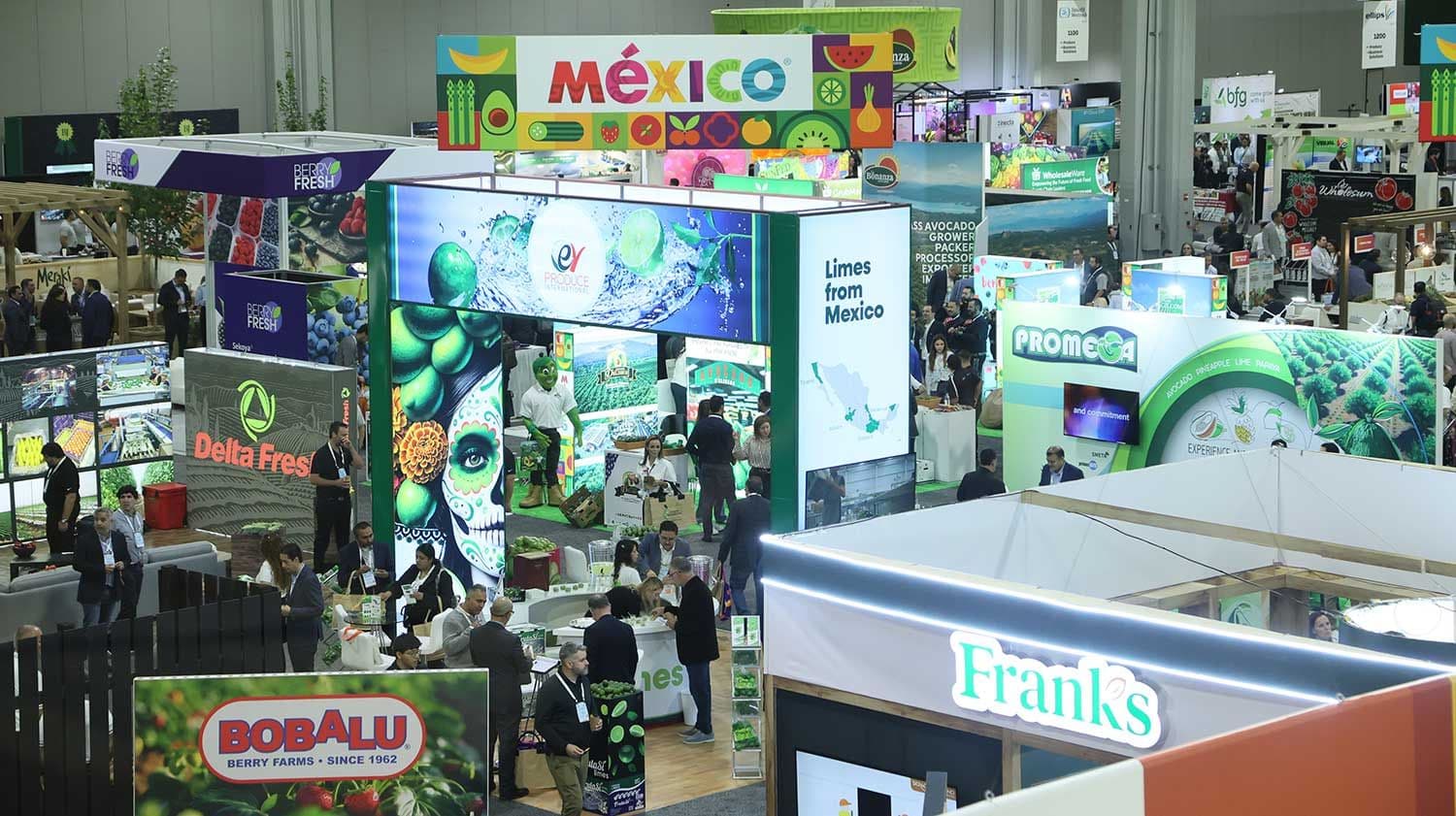
- The 2026 prospectus reports 20,000 attendees, more than 1,100 exhibitors, more than 5,000 decision makers and participation from more than 70 countries.
- Early Trade Show Only registration is listed at $1,195 for members and $1,795 for non-members before September 21, with an exhibitor booth-worker pass at $295.
- ExpoBadge is named on the 2026 order form as the show's lead-retrieval service, with a September 21 discount deadline and detailed prices set in the exhibitor materials.
- B2Brain reports 52 percent Leads-to-Meeting on the floor against an 8 percent industry average for post-event follow-up, treating booked meetings as a stronger result than badge scans.
What is The Global Produce & Floral Show 2026, and why does it matter?
The Global Produce & Floral Show 2026 is a three-day International Fresh Produce Association trade show at the Orange County Convention Center in Orlando, Florida, running Wednesday October 14 to Friday October 16. It concentrates fresh produce, floral products, retail, foodservice, supply chains, technology, sustainability and global sourcing in one programme, and the current IFPA pages carry the 2026 dates and roster while older recaps stay prior-edition context.
Who should attend or exhibit at The Global Produce & Floral Show 2026?
The show fits companies selling into produce and floral buyers, growers, shippers, retailers, foodservice leaders, importers, exporters and solution providers. The clearest exhibitor case belongs to growers, suppliers, packaging, logistics, retail, foodservice, technology and sustainability vendors with a reachable buyer, while a team without a produce or floral buyer has the weakest reason to fund a booth.
When is The Global Produce & Floral Show 2026, and what are the show hours?
The Global Produce & Floral Show 2026 runs Wednesday October 14 through Friday October 16 in Eastern Time, with the convention opening on the 14th and the expo floor occupying the final two days. The published agenda carries three day entries at the Orange County Convention Center, and IFPA sets detailed session and floor times on its live 2026 schedule that meeting plans should follow.
How should teams plan each day at The Global Produce & Floral Show 2026?
Each day works best anchored to the live IFPA programme rather than a generic routine, with account meetings held outside the busiest expo hours and space kept for produce and floral sessions tied to active deals. The four 2026 tracks run from produce and floral sourcing to retail and foodservice, technology and innovation, and education and networking.
Where is The Global Produce & Floral Show 2026, and how is the venue organised?
The Global Produce & Floral Show 2026 is held at the Orange County Convention Center, 9800 International Drive, Orlando, FL 32819. Hall location, badge pickup, meeting points and walking time shape how many produce and floral conversations a rep can reach, and the official floor plan covers the halls, entrances, food, accessibility and security rules.
How should attendees navigate the Global Produce & Floral Show 2026 venue and the surrounding Orlando area?
Movement around the Orange County Convention Center is worth planning before arrival, because a missed hall, badge stop or rideshare queue can swallow a short meeting window. Wi-Fi, charging, parking and rideshare guidance come from the venue directly, and International Drive sits near the main Orlando airports, so the Map Your Show floor plan and realistic walking buffers keep the day on schedule.
How do attendees register for The Global Produce & Floral Show 2026, and which pass should they choose?
Registration runs through the International Fresh Produce Association 2026 path, and the pass is best chosen by access rather than label. Trade Show Only entry, paid education, buyer classification and separately ticketed functions each change how much useful floor and meeting time a badge actually buys.
Early Trade Show Only registration is listed at $1,195 for members and $1,795 for non-members before September 21, and the exhibitor booth-worker pass is $295 at the member rate. Every paid produce or floral workshop and special function is recorded separately so the Orlando ticket budget and the working agenda agree, and rates are worth rechecking in the live portal.
What badge, cancellation, and access rules apply at The Global Produce & Floral Show 2026?
Badge and access rules depend on the registration category and current IFPA policy. The identification requested at registration, the published badge-collection window and the transfer, refund and cancellation terms all sit on the live registration page, and an expo badge does not automatically include paid education, guest programmes, receptions or invitation-only functions.
Where should attendees stay for The Global Produce & Floral Show 2026?
IFPA publishes official Orlando hotel inventory for the show through Expovision, with rates and availability varying by property. A room close to the Orange County Convention Center, or on an official shuttle, protects early starts and evening networking, and booking through Expovision rather than an unsolicited seller avoids payment risk and keeps the deadline, change terms and shuttle status in the travel plan.
What travel plan protects the most useful time at The Global Produce & Floral Show 2026?
A dependable travel plan reaches Orlando before badge pickup or the first required team briefing and leaves after the last priority meeting, not simply when the expo floor closes on October 16. Flights are best set around the first programme item and the final meeting, and where IFPA provides them, official visa-letter instructions govern documentation for the more than 70 countries the show draws.
Which exhibitors, sectors, and products are represented at The Global Produce & Floral Show 2026?
The floor spans fresh produce, floral products, retail, foodservice, supply chains, technology, sustainability and global sourcing. The live Map Your Show directory separates confirmed 2026 exhibitors from prior-edition participants, and that current list is the one worth grouping by buyer, partner and competitor relevance before outreach begins.
The 2026 prospectus reports 20,000 attendees, more than 1,100 exhibitors, more than 5,000 decision makers and participation from more than 70 countries. Pavilions, sponsors and product zones can reveal account clusters in Orlando, but they do not prove that every prior brand has returned for this edition, so the live directory settles who is actually present.
How should teams research the Global Produce & Floral Show 2026 exhibitor directory?
The Map Your Show directory is best treated as a changing account map rather than a one-time download. Filtering current exhibitors by the produce and floral categories that match the ICP, recording booth numbers and roles, and marking buyers, prospects, partners and competitors separately turns it into a handoff that carries a reason to meet, an account tier and an owner.
Which sessions, speakers, and floor formats matter at The Global Produce & Floral Show 2026?
The most useful programme choices connect a current session or floor feature to a live account question. The 2026 tracks span produce and floral sourcing, retail and foodservice, technology and innovation, and education and networking, and speaker research often surfaces buyer priorities before outreach, so open space around high-traffic sessions keeps a rep free when relevant attendees return.
How should attendees build a Global Produce & Floral Show 2026 agenda around meetings?
A meeting-first agenda starts from confirmed account conversations and then adds the sessions that improve them. Priority sessions can be saved in the IFPA attendee portal and the Map Your Show directory where the current tool supports it, and staggering the team keeps the produce and floral booth covered while individual reps step away for education.
Who attends The Global Produce & Floral Show 2026, and does the audience match the ICP?
The audience matches an exhibitor's ICP only where published roles, sectors and company context overlap with named target accounts. The Orlando scale, 20,000 attendees and more than 5,000 decision makers among produce and floral buyers, growers, shippers, retailers, foodservice leaders, importers, exporters and solution providers, helps size the floor but cannot replace account-level fit, and purchase influence matters more than headline attendance.
How can exhibitors identify target accounts for The Global Produce & Floral Show 2026?
Target accounts can be built without buying an attendee list. The starting point is CRM customers and open opportunities, extended with companies and speakers tied to produce and floral from the current IFPA and Map Your Show directories, then ranked by ICP fit and a specific reason to meet against the published October programme, and unauthorised attendee-list sales are best rejected.
What can the official Global Produce & Floral Show 2026 app or show planner do?
The official planning layer is the IFPA attendee portal and the Map Your Show directory, which handle documented programme, exhibitor and navigation functions for the 2026 show. Private qualification and CRM ownership stay in the exhibitor's own workflow, since a public planner does not store private conversation notes or route records to CRM, and an offline Orlando plan covers weak connectivity.
Where does the Global Produce & Floral Show 2026 planner stop and lead capture begin?
The IFPA planner stops where a private sales conversation begins. It can organise published programme and navigation detail, but consent, account qualification, conversation notes, ownership, offline resilience and CRM handoff after a floor discussion need a separate exhibitor workflow. A screenshot or printed schedule covers an app outage, and offline-ready capture protects qualification and ownership when connectivity at the Orange County Convention Center is weak.
What does it cost to exhibit at The Global Produce & Floral Show 2026?
The cost to exhibit reaches well beyond floor space. A defensible Orlando budget adds the published booth basis, mandatory Orange County Convention Center services, travel, staffing, connectivity, material handling and follow-up capacity before it is weighed against expected pipeline.
For attendance, early Trade Show Only registration is listed at $1,195 for members and $1,795 for non-members, with an exhibitor booth-worker pass at $295, all rechecked in the live portal. Move-in and contractor deadlines in the current 2026 materials can change the total faster than the base booth rate, so the service calendar belongs beside the booth quote rather than a prior-edition figure.
How should exhibitors staff and operate a booth at The Global Produce & Floral Show 2026?
A booth runs better on named shifts, a shared qualification standard and meeting targets than on improvisation. Staffing follows from the expo hours, the pre-booked meetings and the minimum number of reps needed to keep one conversation private, and each evening before the team leaves the Orange County Convention Center, hot leads, duplicate records and the next day's meetings are worth a short review.
What official lead-retrieval tool is offered at The Global Produce & Floral Show 2026?
The official 2026 order form names ExpoBadge as the show's lead-retrieval service, with a September 21 discount deadline. That page establishes the vendor and the role for the Global Produce & Floral Show rather than a full public feature set, so devices, fields, exports and support terms stay order-form questions.
ExpoBadge is verified for the 2026 lead-retrieval role at the Orange County Convention Center, not for every possible feature. The current ordering path, prices, licences, device support, badge method, onsite service, privacy terms and retention policy come from the IFPA exhibitor process, which the reviewed public page does not fully document.
What can the official lead-capture tool capture at The Global Produce & Floral Show 2026, and what are its limits?
The exact ExpoBadge capabilities at the show, meaning the data fields, notes, ratings, devices, offline behaviour, exports and support, sit in the current 2026 order form rather than the public pages, which tend to explain badge access without the full exhibitor workflow. Features should not be inferred from a registration vendor or the event app, and anything undocumented stays an open purchasing question.
Is B2Brain an alternative to the official lead-capture tool for The Global Produce & Floral Show 2026?
B2Brain can work as an alternative or a companion to ExpoBadge at the show when account briefing, conversation context, meeting booking and event-to-CRM attribution are the jobs that matter. The comparison stays specific to those jobs for produce and floral teams and does not assume undocumented ExpoBadge features.
B2Brain runs three motions across the show: pre-event targeting, on-floor capture and booking, then post-event Leads-to-Meeting and attribution. LTM, or Leads-to-Meeting, means meetings booked divided by qualified booth leads, and B2Brain reports capture in under 30 seconds per conversation and 52 percent LTM on the floor against an 8 percent post-event industry average.
Should exhibitors use B2Brain, the official lead-capture tool, or both at The Global Produce & Floral Show 2026?
The right setup depends on which commercial jobs the show has to do. ExpoBadge may be enough for permitted badge data and its documented export, while B2Brain adds target-account briefing, contextual qualification, meeting commitment and CRM attribution on top of it. Running both can preserve official badge data alongside B2Brain qualification, provided consent, deduplication, a single owner and one CRM system of record are agreed before the Orlando floor opens.
What should reps capture in every Global Produce & Floral Show 2026 conversation?
Every worthwhile floor conversation preserves the account, contact, buying role, business problem, current process, blocker, urgency and the agreed next step. Held beside the lead, that context turns a produce or floral discussion into an owned commercial action rather than an isolated badge scan once the team leaves Orlando.
B2Brain structures each record around identity, buying role, use case, current process, blocker, urgency, qualification, consent and the next step, and lets the rep book the next meeting while the context is fresh and assign an owner before moving on. That record gives follow-up a reason to exist beyond a generic event email.
How can teams keep lead quality high on the Global Produce & Floral Show 2026 show floor?
Lead quality holds up when every rep works one fast, repeatable capture standard: the smallest useful set of qualification fields, an offline fallback, duplicate and ownership checks at the daily debrief and same-day escalation of hot produce and floral opportunities. B2Brain reports capture in under 30 seconds per conversation, though speed only helps when the required fields stay useful.
How should The Global Produce & Floral Show 2026 leads be routed and followed up?
Leads are best routed while the produce and floral context is still precise. Each qualified booth record needs an owner, a priority, an agreed next step and a meeting status, with the buyer's problem preserved so sales receives more than an anonymous contact export from Orlando.
B2Brain reports conversation-to-conversion probability at about 85 percent within two hours and about 9 percent after one week, which sets the follow-up clock. It delivers a morning-after offline-to-pipeline report to the CMO by 9am and reports 100 percent event-to-CRM attribution through deal and opportunity creation, not contact sync alone.
How should exhibitors measure The Global Produce & Floral Show 2026 pipeline, ROI, and the decision to return?
A sound measure runs on full event cost, qualified conversations, meetings booked, opportunities created and attributable revenue pipeline. Badge scans around produce and floral remain an activity count, so the decision to return depends on measurable commercial movement inside an agreed post-event window.
B2Brain uses 31 scans per day as its productive-rep benchmark and reports 2.4 times more booth meetings than cold floor-walking when reps work a pre-event briefing. Cost per qualified conversation and per opportunity, tracked beside accepted meetings and attributed pipeline, still turns on qualification, conversion, contract value and the measurement window rather than the benchmark alone.