

Automate 2026 TL;DR
- - June 22–25, 2026 at McCormick Place, Chicago. Show floor spans North and South halls. Registration is free. Show hours: 9:00–17:00 CDT Monday–Wednesday; 9:00–15:00 CDT Thursday. Conference sessions begin Sunday June 21 for paid conference attendees.
- - 50,000+ attendees, 1,000+ exhibitors, 450,000 sq ft. The 2025 Detroit show drew 45,000+ registrants — 2026 in Chicago at the largest convention center in North America is expected to exceed it. The full automation buying committee is here: engineers who specify, managers who sign off, systems integrators who recommend, and executives who fund.
- - Free registration means high volume and self-selection. Every person who registered chose to attend a show about robotics and automation. That intent is more valuable than a captive audience — but it means your capture workflow needs to qualify fast. Thirty seconds of voice notes per conversation beats 300 uncontextualized badge scans.
- - The Humanoid Robot Forum is new for 2026 and it's the single biggest theme on the floor. This paid add-on event signals where the industry conversation is heading. Whether your product touches humanoids or not, understanding that conversation shapes how you position your booth messaging in the weeks before the show.
- - Systems integrators are the hidden power buyers at Automate. More so than at IMTS or FABTECH, Automate draws a heavy systems integrator audience — the firms that specify which hardware and software vendors end up in a customer's facility. A conversation with an SI is often more valuable than a conversation with the end user. Build them into your Tier 1 target list explicitly.
- - A typical 20×20 booth runs $75,000–$120,000 all-in. At a 9% LTM rate (scanner-only baseline), a 400-conversation booth converts to ~36 booked meetings. At B2Brain's customer median of 41% for manufacturing and automation shows, the same booth converts to ~164 meetings. Cost per meeting: $450 vs. $2,100.
- - Pull your target list 6 weeks out (ideally). The Automate attendee registration rolls in from April onward. Cross-referencing the pre-registration list against your CRM 6 weeks out gives SDRs enough runway for pre-show LinkedIn outreach. At 6-week lead time, response rates run 16–22% for manufacturing buyers. At 2 weeks, they drop to under 4%. If you're starting just now, step up your outbound calling to book slots.
What to know before you fly to Chicago
Automate 2026 runs Monday June 22 through Thursday June 25 at McCormick Place — the largest convention facility in North America, located at 2301 S. Dr. Martin Luther King Jr. Drive on Chicago's lakefront. The show uses both North and South Halls, totaling 450,000 sq ft of exhibit space. If you're exhibiting or running a major booth, plan your team's travel for Sunday June 21 to allow for setup.
The Automate Conference — the paid educational program — runs alongside the show floor with sessions on Monday through Thursday. Key paid events including the Humanoid Robot Forum also start Monday. The show floor proper opens Monday morning and runs through Thursday afternoon.
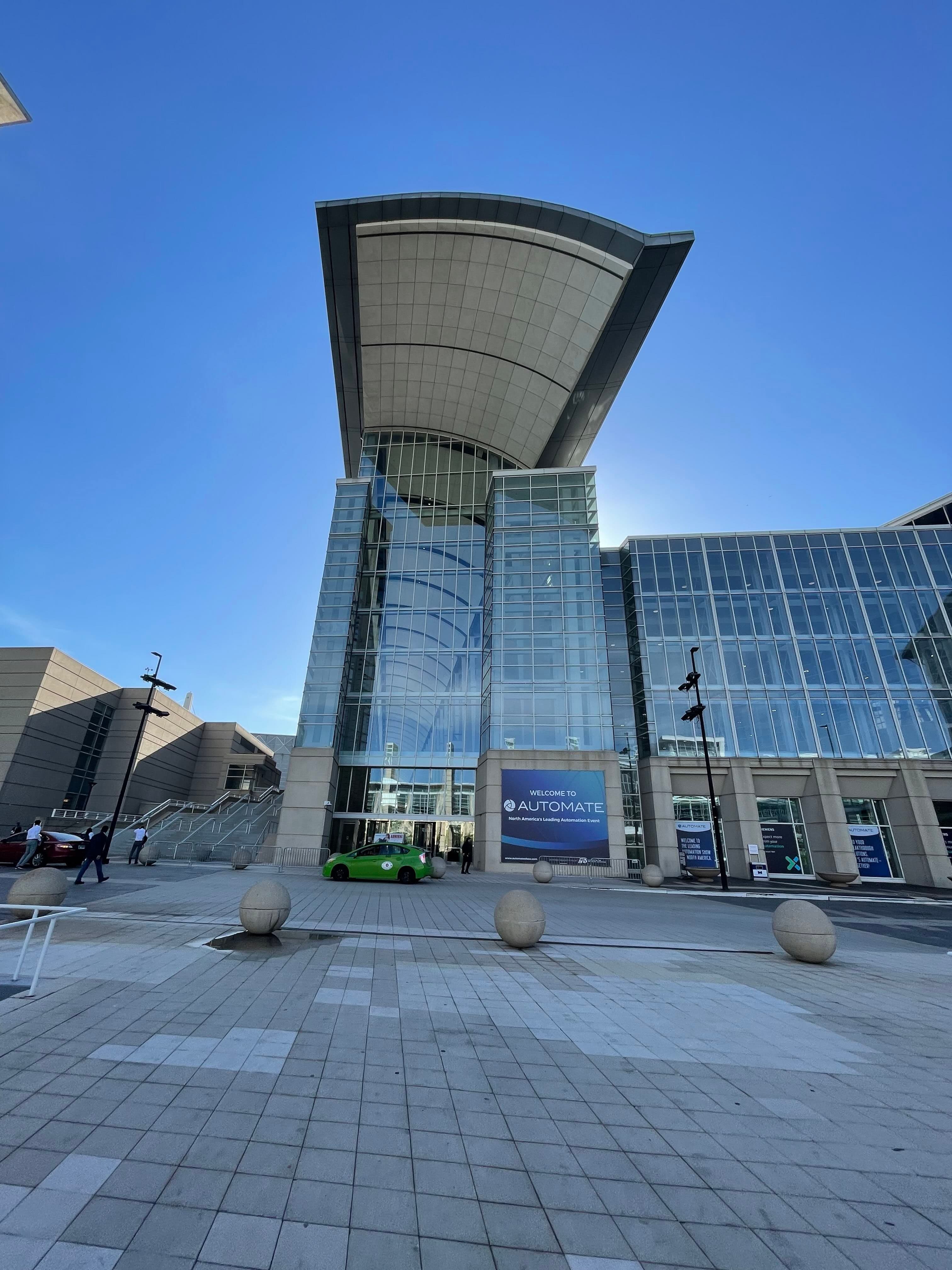
McCormick Place is a 10–15 minute rideshare from the Chicago Loop and about 20 minutes from O'Hare, 10 minutes from Midway. Delta has a discounted fare program for Automate attendees (available through the Automate travel portal). Hotels on the lakefront near McCormick Place fill fast — book at least 8–10 weeks out. The Hyatt Regency McCormick Place is connected via skybridge and tends to be where the most senior booth traffic stays.
The show is free to attend for anyone 12 and older, which means the floor traffic volume is genuinely high but the qualification range is wide. Your booth team needs a fast qualifying question for cold walk-ups — 30 seconds to determine if someone is actively evaluating, researching for a future project, or just curious. The context capture for each category is different.
The Automate mobile app launches 3–4 weeks before the show. Exhibitors with complete booth profiles in the app get flagged visits from attendees doing pre-show planning. If your team doesn't have the app profile complete before June 1, you're invisible to pre-planners.
Field Marketing Tip
Treat systems integrators as a separate ICP segment, not just channel noise.
At most manufacturing shows, systems integrators show up and you don't have a clear playbook for how to handle them. At Automate, they represent 15%+ of the high-value audience and they are the vendor-recommendation engine for a large share of end-user decisions. An SI who specifies your product to three clients is worth more than three individual end-user leads.
Build a dedicated SI track in your pre-show prep: identify the 20–30 most relevant integration firms in your product category, research their active project verticals, and enter the show with a specific value proposition for SIs that is distinct from your end-user pitch. B2Brain's pre-show briefing module lets you tag account types separately — tag SIs, end users, and potential partners distinctly so your post-show follow-up is segmented correctly.
Who's actually on the Automate floor
Automate's attendee base spans from front-line engineers to C-suite executives and covers 90+ industries. The buyer breakdown for automation technology vendors:
Automation / Controls Engineer — ~22% of attendees.
The technical champion and primary specifier. They run the evaluation, write the technical requirements, and often have veto power even when they don't have budget authority. Conversations with this group need to go deep on integration, protocol compatibility, and installation complexity. If you can't speak their language, you lose the deal at the technical evaluation stage.
VP / Director of Manufacturing or Operations — ~18%.
The economic buyer for CapEx automation decisions at mid-market and enterprise manufacturers. They arrive at Automate with budget already allocated or in approval for the current fiscal year. These are the conversations you need to book a follow-up from before they leave the floor. At a 4-day show, Day 2 and Day 3 are when they're most accessible.
Systems Integrator (SI) — ~15%.
The most undervalued segment in most booth strategies. SIs recommend products to their end-user clients across multiple projects. A single SI relationship can drive 4–8 downstream deals. They're evaluating your product's integratability, your support model, and whether you're easy to resell. Treat them as a channel partner conversation, not a lead.
Plant / Site Manager — ~12%.
Operational decision-makers who own uptime, OEE, and labor efficiency. They have budget authority at the plant level, typically for decisions under $250K. Their conversations are practical — they want to see the demo, understand the install complexity, and hear a peer reference.
R&D / Product Development Lead — ~10%.
Early-stage evaluators from manufacturers building new production lines or redesigning existing ones. They're often 12–24 months from a purchase decision, but their evaluation work shapes the spec that procurement issues. Planting a flag here is a long-game move, but Automate is the highest-concentration venue to do it.
C-Suite / VP of Engineering (Corporate) — ~8%.
Strategic conversations for multi-site rollouts, platform standardization decisions, or major capital programs. They tend to show up on Day 1, spend 3 hours on the floor, and don't return. The Day 1 meeting slot with a C-suite target is the most valuable single conversation of the show.
Procurement / Strategic Sourcing — ~7%.
Late-stage in the buying process but often the blocker. Their presence at Automate signals an active evaluation that is reaching approval stage. If they're walking your competitor's booth, you need to know.
International visitors — 20%+ of total.
Automate draws strong representation from Europe, Asia-Pacific, and Latin America (the LATAM Business Reception is a dedicated networking event). If international manufacturing accounts are in your pipeline, this is the most efficient conference in North America to build those relationships without flying to their home markets.
The largest corporate delegations come from automotive OEMs and their supplier networks (Toyota, GM, Ford, Rivian, Stellantis), aerospace (Boeing, Lockheed Martin, Raytheon), major consumer goods manufacturers (P&G, Nestlé, Tyson, Coca-Cola), logistics and warehousing (Amazon, UPS, FedEx, DHL), and pharmaceutical manufacturers (Pfizer, AbbVie, Abbott).
The 4-day floor strategy at Automate
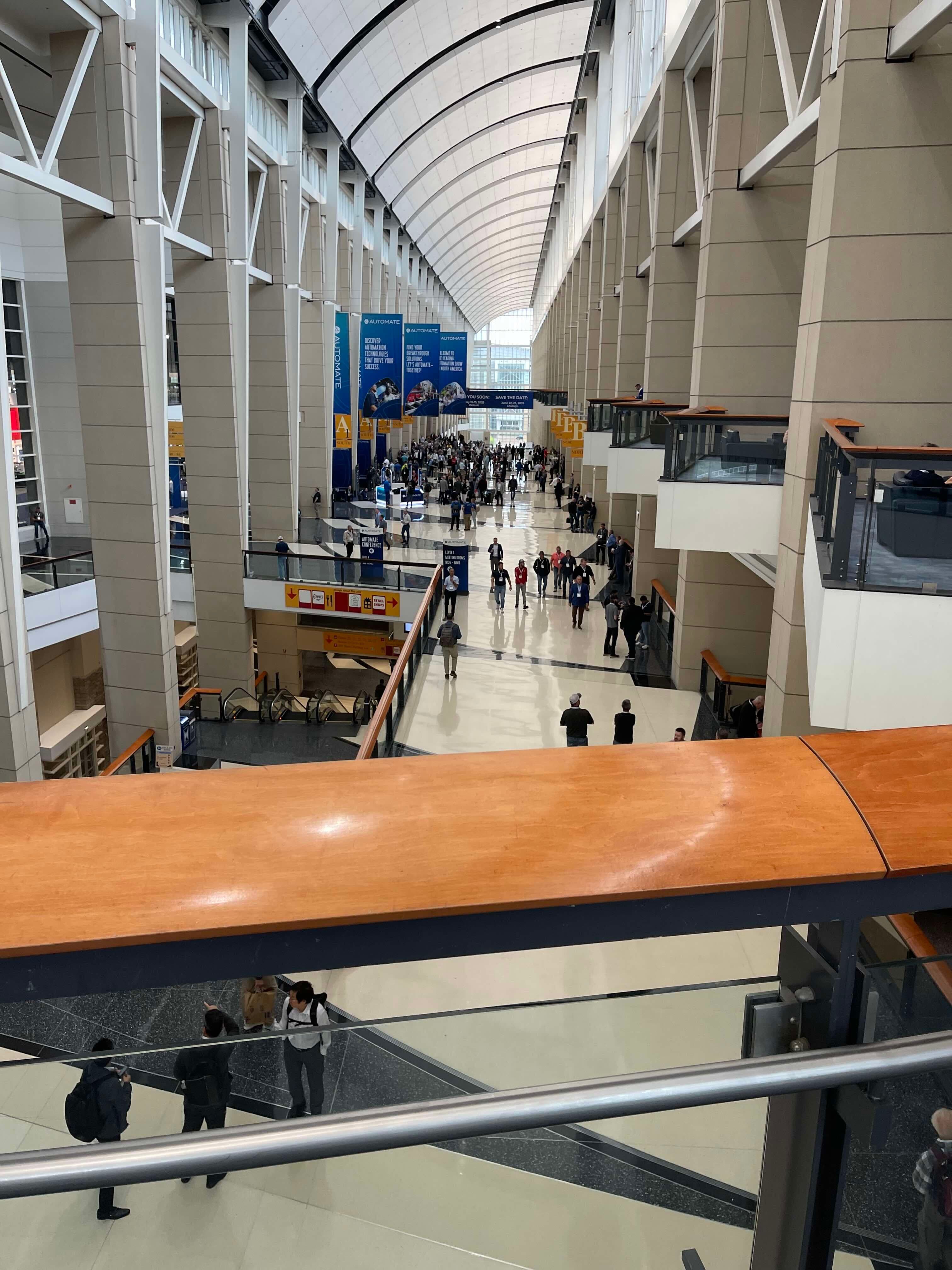
Automate is four full days — longer than most technology shows and long enough that capture fatigue is a real risk by Day 3. Here's the rhythm that B2Brain customers run at Automate:
Day 1 (Monday, June 22) — Conference + Tier 1 floor meetings
Monday is a hybrid day: the Automate Conference runs full sessions, the Humanoid Robot Forum opens (paid), and the show floor opens with morning traffic. The morning crowd skews toward conference attendees doing a floor walk between sessions — high intent, time-constrained. Use Monday for any pre-booked Tier 1 meetings and for capturing the early floor traffic while energy is highest.
The Opening Reception / Networking Party is Monday evening and it's worth attending. This is where Day 1 conversations extend into relationship territory — the people you met on the floor in the afternoon reappear in a social setting where you can book the follow-up meeting more naturally.
Day 2 (Tuesday, June 23) — Peak day. Run hard.
Tuesday is the highest-volume day at Automate. Attendees have arrived, found their bearings, and are actively walking the floor with intent. This is the day to run the hardest capture: your booth team should be aiming for 60–80 meaningful, contextual conversations per rep, not passive badge scans.Tuesday afternoon is when the enterprise buyer segments tend to concentrate — VPs and directors who flew in for a day typically land on Tuesday morning and walk the floor Tuesday afternoon. If you have pre-booked Tier 1 C-suite meetings, stack them Tuesday afternoon.
The Engelberger Awards Dinner is typically Tuesday evening — if your team is invited or sponsoring, attend. It's where the industry's most senior technical and commercial leaders congregate outside the booth environment.
Day 3 (Wednesday, June 24) — Floor intelligence and follow-up booking
Traffic remains solid Wednesday morning but tapers after 14:00. Use the morning for any Tier 1 targets you haven't captured yet and to walk competitive booths and note their messaging shifts from Day 1. Use the afternoon to sweep the Innovation Zone for Startup Challenge competitors and talk to the Series A/B companies that are often building the technology your product needs to integrate with in 18 months.
Wednesday is the day to convert warm conversations from Day 1 and Day 2 into booked follow-up meetings. Anyone you captured on Monday or Tuesday who didn't get a calendar invite — reach out Wednesday via the show app's messaging or via B2Brain's on-spot booking. The show is still live; it's easier to book a meeting while they're physically at the event than after they've flown home.
Day 4 (Thursday, June 25) — Close the loop. Exit clean.
The show floor closes at 15:00 on Thursday. By noon, roughly half the floor traffic has mentally departed. Use the morning to visit any remaining Tier 1 accounts you haven't touched, and to have any last conversations with SIs you've been circling. The pre-noon Thursday floor is often the least crowded window of the entire show — attendees who stayed through Day 4 tend to be the most committed buyers.
Book your team's travel for Thursday afternoon or evening, not morning. Booths that start packing up at 10:00 Thursday signal to the remaining floor that the conversation is closed — and you'll miss the late-decision buyers who used Thursday morning specifically because it's less chaotic.
Zones, sessions, and themes worth knowing at Automate 2026
Humanoid Robot Forum and Pavilion
The 2026 Automate is the year humanoids go from press releases to the show floor. The Humanoid Robot Pavilion is a dedicated zone featuring live demonstrations of humanoid and bipedal robotic systems. The Humanoid Robot Forum is a separate paid conference event running alongside the show — sessions cover design challenges, deployment logistics, safety certification, and the labor economics of humanoid deployment.
Even if your product is not in the humanoid space, understand the Humanoid conversation before the show. Your buyers are asking questions about it. If you can speak credibly to how your product fits into (or is unaffected by) the humanoid transition, you differentiate yourself from the dozens of competitors who are either overselling humanoid adjacency or ignoring the question entirely.
AMR Technology Demonstrations
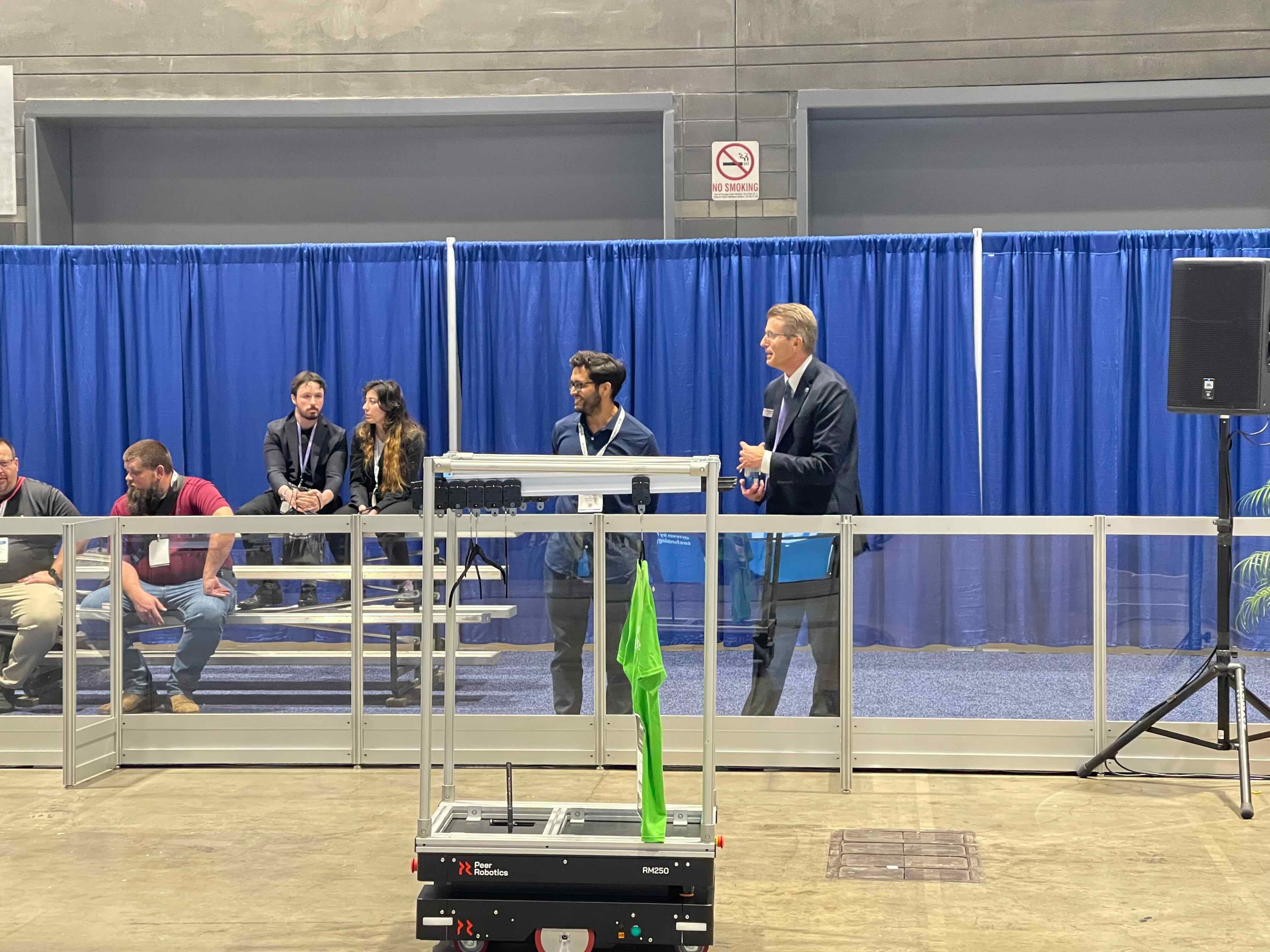
Autonomous Mobile Robot (AMR) demonstrations are a structured zone at Automate where vendors run live floor demonstrations of AMR navigation, fleet management, and warehouse integration. This zone draws the highest concentration of logistics and warehousing buyers — the VP of Distribution and Head of DC Operations profiles who control AMR capital budgets. If your product targets the warehousing or intralogistics space, position your team near this zone during peak demonstration windows.
Automate Innovation Stage and Innovation Awards
The Innovation Stage runs product demos and short-form talks throughout the show floor hours. It draws significant foot traffic during downtime between conference sessions. The Innovation Awards — announced at the show — recognize new products across technology categories. If you're shortlisted, your booth traffic will spike when the announcement is made. If a competitor wins in your category, know their positioning before the show so you're not caught flat-footed in conversations.
Startup Challenge and Startup Zone
Automate's startup competition and dedicated startup area surface early-stage robotics and automation companies that are often building the integrations, components, or competing approaches your buyers will evaluate in 12–24 months. Walking the Startup Zone on Wednesday afternoon is one of the highest-value 45-minute investments of the show for product and strategy teams.
Conference sessions by ICP alignment
AI and industrial software sessions draw the largest concentration of automation engineers and R&D leads. If these are your buyers, post a rep at session exits on Day 2.
Keynotes from Siemens and Standard Bots signal the themes dominating the buying conversation — open, software-defined automation and next-generation robot programming interfaces.
Safety, compliance, and certification sessions draw systems integrators and plant safety leaders — a segment that represents procurement influence disproportionate to their raw volume.
The cost math for your Automate booth
McCormick Place commands a premium. Automate is free to attend but not free to exhibit, and the operational costs of a large Chicago show add up fast. Here's the real breakdown:
10×10 booth (early-stage, single-product):
- Booth space: $4,500–$7,000
- Booth build and graphics: $2,000–$4,000
- Drayage, electrical, and rigging: $1,500–$2,500
- Travel (2–3 reps, 4 nights, Chicago rates): $5,000–$9,000
- All-in: $13,000–$22,500
20×20 booth (established vendor):
- Booth space: $18,000–$30,000
- Booth build and graphics: $10,000–$18,000
- Drayage, electrical, and rigging: $6,000–$10,000
- AV, demo equipment, and screens: $4,000–$8,000
- Travel (5–8 reps, 4 nights): $12,000–$20,000
- Lead retrieval and logistics: $1,500–$2,500-
- All-in: $51,500–$88,500
Large footprint (30×30+, inline or island):
- All-in: $120,000–$200,000+ for full-production booths with live robot demos, screens, and full team coverage
The LTM math — what this actually costs per meeting booked:
A well-trafficked 20×20 booth at Automate generates 400–600 meaningful conversations over 4 days (not passive badge scans — conversations where someone stopped and talked). At a 9% LTM rate (badge scanner + post-event SDR sequence), a 500-conversation booth books approximately 45 meetings. At a $70K all-in spend, that's $1,556 per booked meeting.
At B2Brain's customer median for manufacturing and automation shows (41% LTM), the same 500-conversation booth books approximately 209 meetings. Same spend. Same four days. Cost per booked meeting: $334.
The 5× difference is not explained by the market or the show — it's explained entirely by capture discipline and whether meetings are booked on the floor or delegated to a post-show SDR sequence that runs cold against a context-free CSV.
At Automate 2025, we ran B2Brain for the first time. We finished the show with 47 meetings already on the books. The year before with badge scanners, we left with 340 scans, sent 340 follow-ups, and booked 31 meetings over the next three weeks. Same team. Same four days. Very different outcome.
— Director of Field Marketing, industrial automation platform · Automate 2025 cohort
After the show floor closes Thursday
The week after Automate is when your pipeline either compounds or evaporates.
50,000 attendees walked that floor. Every exhibitor is sending follow-up emails on Friday and Monday. The generic "Great connecting at Automate!" email with a product brochure attached is already in the spam filter or the deleted folder before Monday morning is over.
The follow-up that lands is the one that references the specific conversation
- the production line they described
- the integration challenge they raised
- the competitive vendor they're evaluating alongside you.
That context lives in your booth team's memory for approximately 72 hours after the show closes before it starts degrading. By the following Monday, most of it is gone.
Teams running B2Brain at Automate have the Friday morning debrief report in the CMO's inbox before breakfast — pipeline sourced by rep, LTM rate, meetings booked with full conversation context already synced to CRM.
The AEs working Friday June 26 are working off a clean queue of booked meetings, not sifting through 500 badge scan rows trying to reconstruct who said what about which project.
There's a second-week problem too. Automation buyers — especially engineers — are heads-down when they return to their plants. They responded warmly at the show but won't respond to a generic follow-up two weeks later. The window for a high-conversion follow-up is Day 1–3 post-show. After that, the conversation has to restart almost from scratch.
Automate is four days of investment. The return window is seven days. Use them wisely.
B2Brain at Automate 2026
Daily walkthroughs at 08:00 and 11:30 CDT across all four days (virtual). Show up with your event questions and we'll run B2Brain live on real show data. Pre-show prep sessions available the week of June 15 (virtual) for teams loading target lists and briefing booth reps before travel.